
Every time OpenAI’s ChatGPT is asked to generate a snarky email to an annoying co-worker or Elon Musk’s Grok generates dubious imagery, it adds to the carbon emissions of data centres. But that’s not the only problem the surge in popularity of generative AI is creating.
Large quantities of high-speed memory are needed to fuel the servers processing the requests, which have driven ChatGPT to be one of the most visited websites in the world.
Trying to meet that demand for generative AI has led to a squeeze on the capacity of some computer hardware manufacturers.
Producers have also spotted an opportunity in this AI bubble.
Computer memory is typically a low-margin business. AI companies, bloated with venture capital money and happy to splash the cash, are offering these memory chip companies higher margins. Many have now pivoted to producing memory for enterprise-grade applications,
One of the largest memory chipmakers, Micron Technology, in December announced the closure of its consumer business, which had operated under the Crucial brand.
Producers such as Micron are being forced to choose between producing for AI infrastructure or serving an increasingly “noncore” consumer businesses.
 Old order ‘not coming back’ as Trump overshadows World Economic Forum
The company’s executive vice-president of operations, Manish Bhatia, described the situation as “unprecedented”, noting that AI is “consuming so much of the available capacity across the industry that it’s leaving a tremendous shortage for the conventional side of the industry, for phones or PCs”, Bloomberg reported this week.
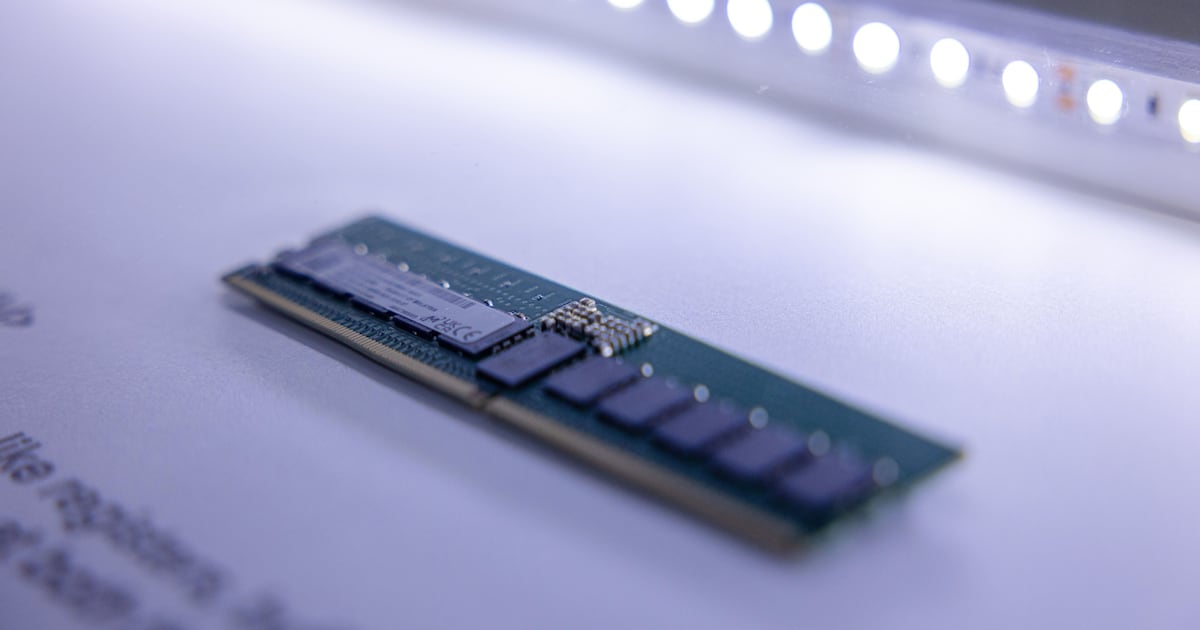
The result: prices for the latest generation of computer memory, DDR5, have skyrocketed. Data from PCPartPicker suggest the price of computer memory has quadrupled in the past six months – spiking from a steady price of around €120 in August to nearly €600 at the start of this year – even for the most affordable DDR5 Ram sticks.
That supply chain pressure is changing the dynamics of the consumer electronics sector.
There are suggestions that Sony may delay its leading console, the PlayStation 6, due to the implications the surge in the cost of hardware components would have for its intended pricing.
It means that the next year will be a really bad time to be a consumer in need of a new computer, a laptop or other chip-reliant consumer electronics product. Just one more unintended consequence of AI.