
From a return of humans to Lunar orbit, to Japan’s first crack at Mars, the trend of humans spending more and more time and money on and in space is set to continue in 2026.
Here are a few of the events to look forward to.
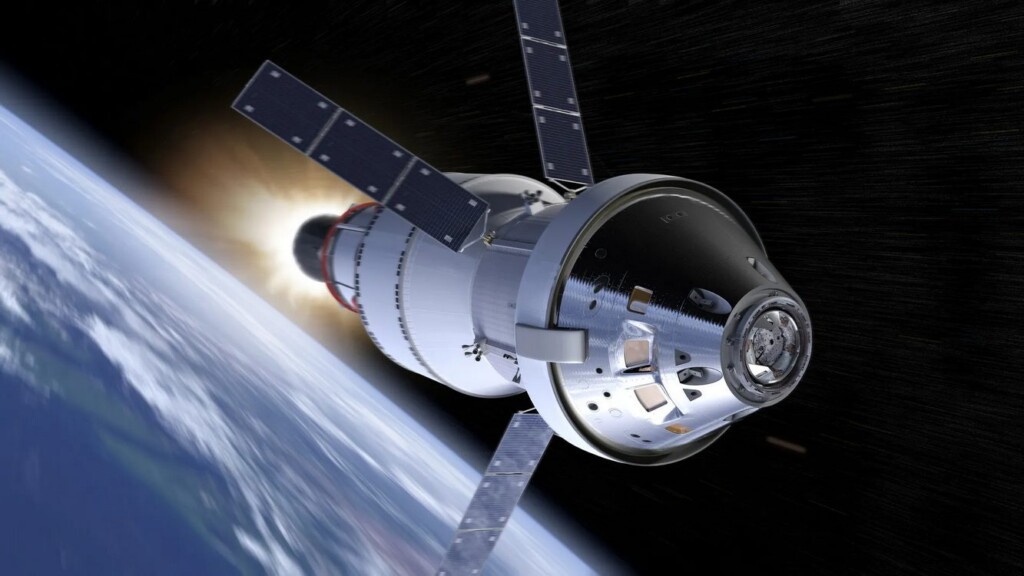 An artist interpretation of the Orion capsule – credit NASA
Artemis II and a return to the Moon
Since the conclusion of the Apollo program, NASA has long pondered when it will get another chance to send humans to the Moon. “No later than February, 2026,” Space.com reports, the Artemis II mission will send a team abroad the Orion capsule to Lunar orbit.
For a period of 10 days, the team will conduct tests of Orion’s capabilities and systems, including life-support, communications, and more, and validate the capsule as mission ready for Artemis III, the next crewed Lunar landing that will occur early in the 2030s.
GNN previously reported on the announcement that the Artemis crew had finished training preparations.
Mission Commander Reid Wiseman will be joined by NASA astronauts Christina Koch and Victor Glover, both of whom have spent over 100 days (over 300 in Koch’s case) on board the ISS. From the Canadian Space Agency there’s Jeremy Hansen, a first-timer, who admitted the chance to fly on Artemis II will be “an absolute privilege.”
The rocket and capsule have just been rolled out onto the launch pad at NASA’s Kennedy Space Center, signifying that the countdown is well and truly on for this historic, 50-year wait to return to the Moon.
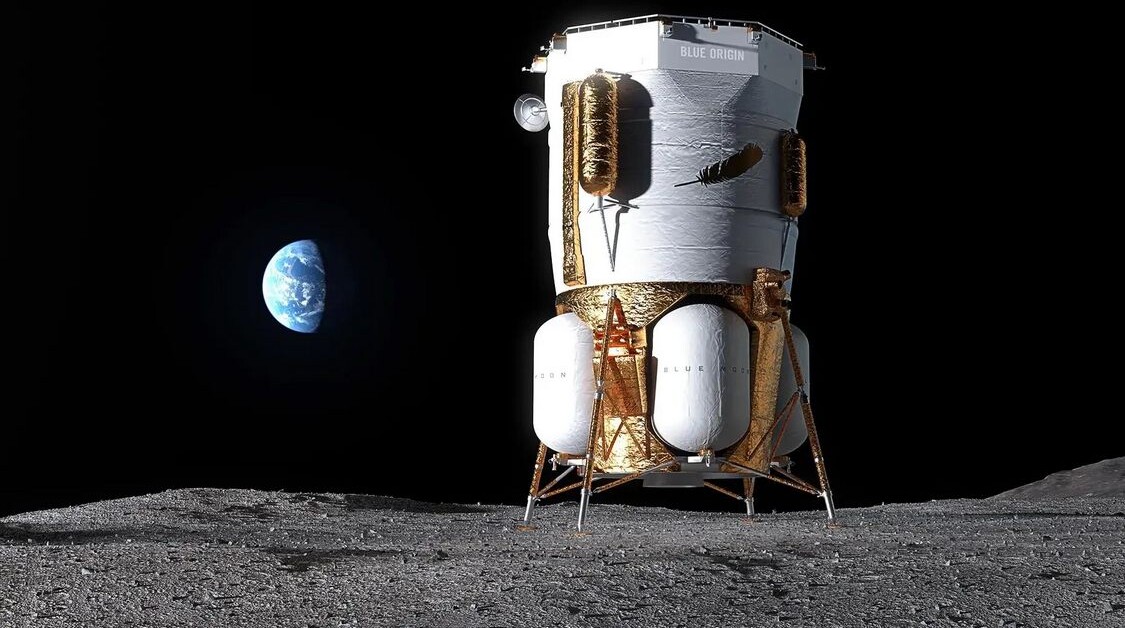
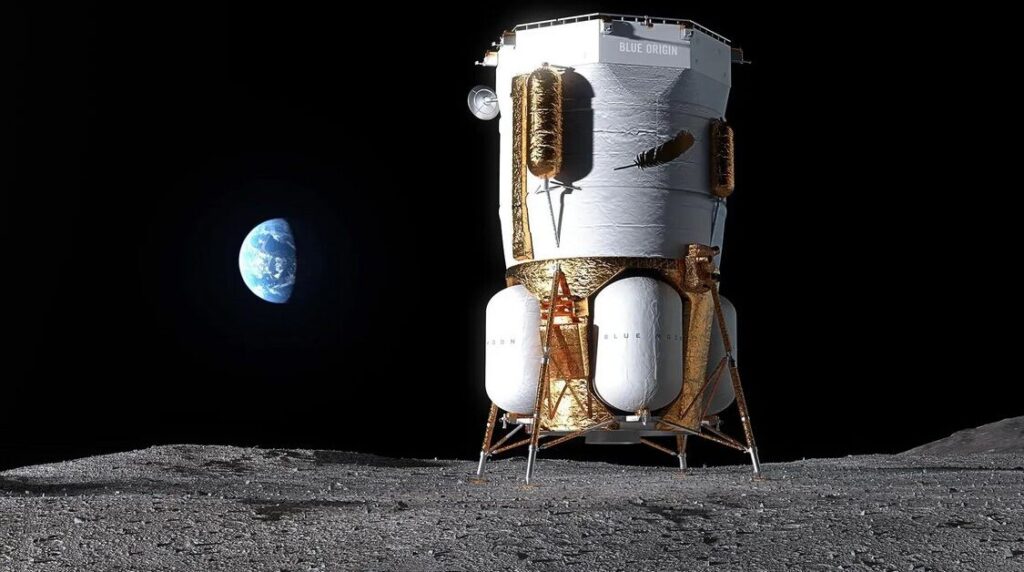 The Blue Moon Mark 1 – credit, Blue Origin, retrieved from the home page
Blue Moon lander’s launch
Also slated for a Q1 2026 launch is the very exciting debut of Blue Origin’s first attempt at a landing with the private firm’s Pathfinder 1 mission. Jeff Bezos’ spaceflight company will attempt a flight test and landing of its prototype Lunar lander called Blue Moon, developed as part of NASA’s Commercial Lunar Payload Services Program (CLPS).
CLPS offers grants and contracts for private space companies to develop and operate a suite of landers that could carry crucial supplies to future Artemis astronauts working on the Lunar surface. Blue Origin has mostly restricted itself to launching the wealthy into low-Earth orbit and satellite deliveries, so the Pathfinder mission represents a major shift in ambition from the company.
As a flight test for the prototype of the Blue Moon Mark 1 lander, the mission will demonstrate critical systems, including its BE-7 engine, cryogenic fluid power and propulsion systems, avionics, continuous downlink communications, and precision landing with an accuracy within 100 meters (330 ft).
Blue Origin plans to offer future Blue Moon Mark 1 missions to commercial, governmental, and institutional customers seeking Lunar payload delivery.
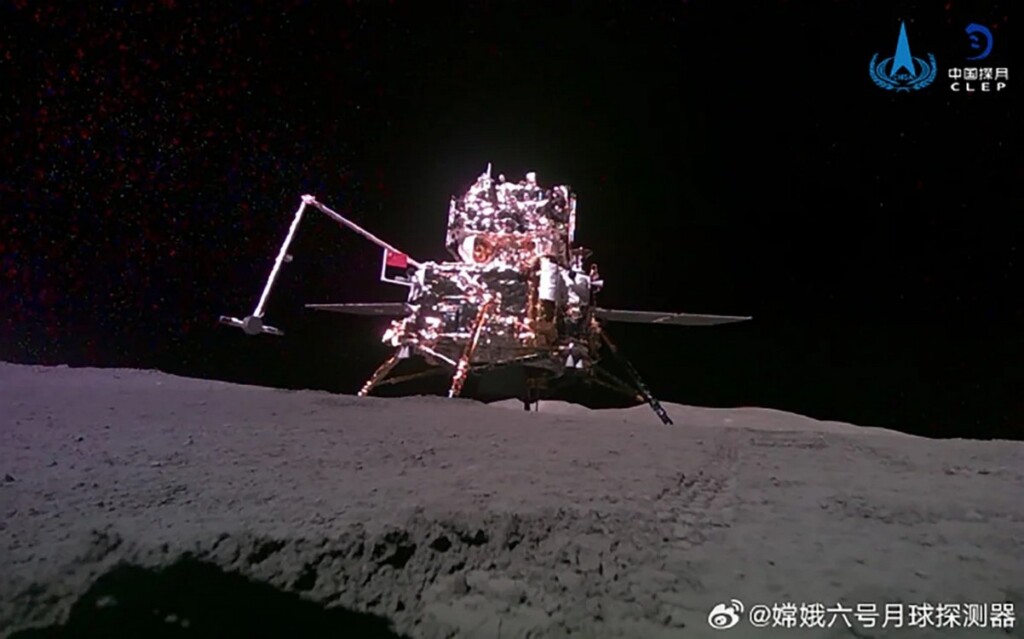 The Chang’e-6 probe on the Moon’s far side last year – credit, Chang’e-6 social media account
China’s asteroid sampling, 7th Moon mission
Whatever your opinions on China are, there’s no maneuvering around the fact that their space program has come on leaps and bounds, and now clearly shares the skies with us—just like we did with the dreaded Soviets, by the way, and like we still do with the Russian Federation.
This year China has 3 key missions that will light up East Asian summer skies, the first of which will be Chang’e-7. Named after the folkloric goddess of the Moon, Chang’e-7 will deploy an orbiter, lander, rover, and a small hopping probe to explore permanently shadowed craters, conduct surface surveys, and support international scientific instruments from Egypt, Bahrain, Switzerland, Russia, Thailand, Italy, and the US.
When the US will be celebrating the day of its 250th founding anniversary, the Tianwen-2 or “Heaven Question” sample-return mission will rendezvous with the asteroid Kamo’oalewa, a charismatic lump of debris around 330 feet in diameter. It orbits the Sun at an average of the same distance as the Earth orbits the Sun, and some have speculated it’s a piece of our very own Moon.
The samples collected by Tianwen-2 will return to Earth in 2027.
China will also be testing the believed-to-be unmanned launch of its Mengzhou spacecraft, which will become the standard in the coming years for transporting astronauts to and from the Chinese space station, Tiangong, and beyond.
Mengzhou will replace the Shenzhou spacecraft, which this year will fly its 23rd and 24th flight.
Mengzhou will feature a modular architecture with a re‑entry capsule and a service module, higher payload capacity and more internal volume, an ability to support deep‑space missions, including lunar orbit and potential lunar landing profiles, an improved safety systems, including a modern launch escape system and upgraded avionics, according to Editorialge.
A launch date hasn’t been confirmed, but is believed to be set for mid 2026.
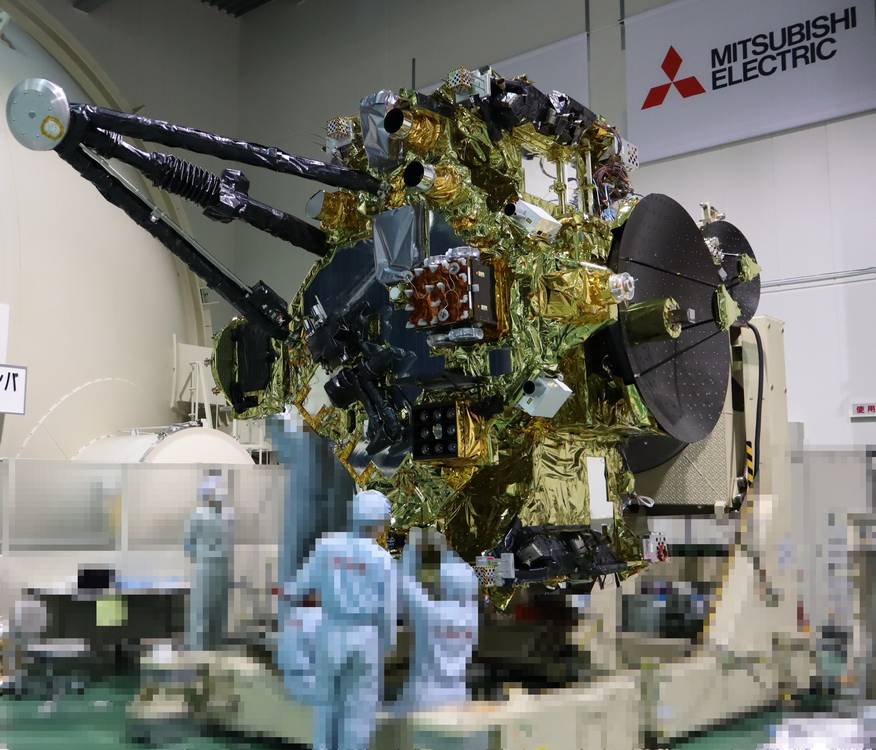 The MMX space probe under assembly – credit, JAXA, licensed for press use
Japan aims for Mars
The MMX mission will be Japan’s debut in Martian exploration. However, while virtually all of NASA’s travels and travails at the Red Planet involve the planet itself, the Japanese space agency JAXA will aim to visit the Martian satellites, Phobos and Deimos.
The spacecraft will explore both moons and collect a sample from Phobos to bring back to Earth. The MMX probe will have to be an agile little thing, as it needs to descend to one Moon, take and store a sample, then ascend and fly to the other Moon for another landing/take-off before bringing the precious cargo back home.
Japan has had stellar success with sample-return missions, with its Hayabusa and Hayabusa2 missions successfully returning samples from the asteroids Itokawa and Ryugu.
Any sample from Phobos and Deimos might help science determine whether they are ejected chunks of Martian rock—potentially during an impact event, or whether they are asteroids themselves captured by Mars’ gravity. Of all the missions thusly listed, MMX may have the highest chance of being postponed to 2027, after a failed rocket test in December cast doubt over the 2026 flight schedules.
SHARE This Exciting 2026 Schedule With Your Space-Loving Friends…