
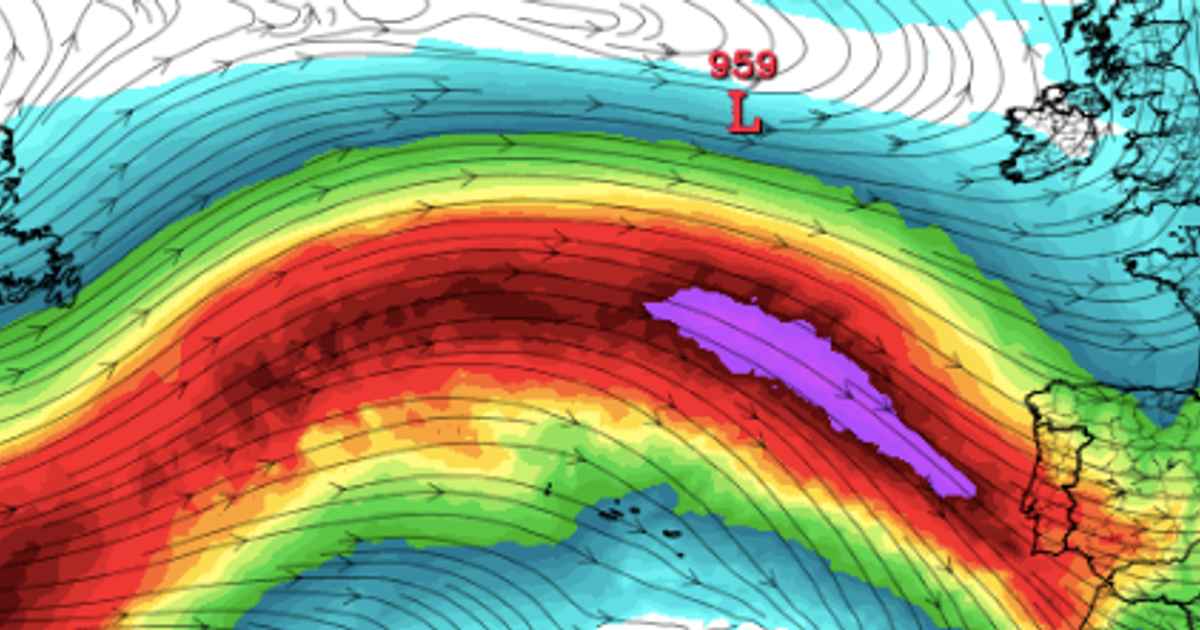
The deep low heading for Ireland has been named as Borrasca or Storm Ingrid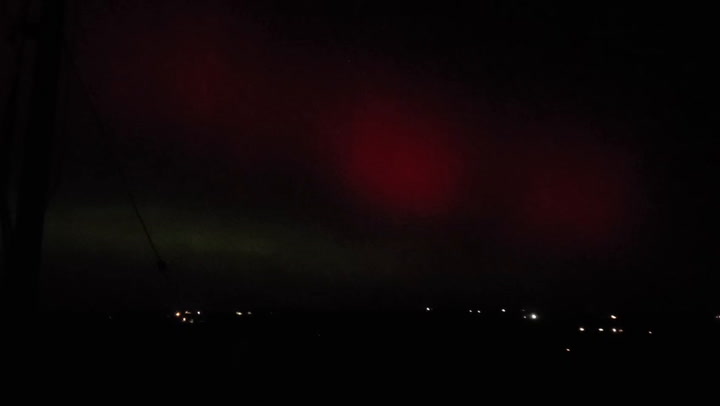 Northern Lights, or Aurora Borealis, seen from Athenry, Co Galway on Monday 19 January 2026
Met Eireann have issued their week long forecast as some experts have given alerts for Storm Ingrid heading towards the UK and Ireland.
Paul Blight, an expert with 36 years experience in Meteorology has alerted people of Storm Ingrid which will approach on Friday.
He told his followers on X: “The Deep low coming close to the SW approaches on Friday has been named as Borrasca or Storm Ingrid.
“Gusts to 65-70mph likely in the Western English Channel, south east Devon and Cornwall looks problematic and along the coast looks prone to big waves crashing in from the English Channel.
I’m afraid this is not good news for following the terrible destruction and weakened trees etc following the last store. Note ECMWF is tracking further east than the other global models such as UKMO and GFS.”
Amatuer forecaster Mike Enright added: “Looking at the weather ahead and Ireland is in a bit of a washing machine effect.
“Systems going around in circles and not able to go much more east due to high pressure. We are pretty much surrounded by high pressure so not much change in the weather for next week or so with easterly winds staying around.
“Most forecasters have done a runner from their beast from the east rubbish, Nothing too bad coming out of the artic, the polar vortex is stretching and twisting but no major split expected in the near future.
“A split in polar vortex is usually a precursor for deep cold easterly winds. But present indications is milder weather to return early Feb. So gloves and hat gone, enjoy the days getting longer.”
While Met Eireann do not mention Storm Ingrid just yet, there is some very unsettled weather which could be the aftermath from our neighbours getting the worst of the storm.
Met Eireann forecast: “Largely dry at first on Friday with some sunny spells. However, low cloud and patchy rain or drizzle will develop in the Southeast through the morning, spreading northwestwards through the day.
“Becoming breezy too in a freshening easterly wind. Drier weather will set in across southern counties later in the afternoon. Cool with highest temperatures of 5 to 8 degrees.
“Friday night will be cloudy with patchy light rain or drizzle continuing to move northwestwards with drier and clearer conditions following for a time before another spell of rain pushes up over the country from the southeast. Lowest temperatures of 3 to 7 degrees in a moderate to fresh east to northeast wind.”
For the weekend they said: “Saturday will be a dull and damp day as outbreaks of rain and drizzle are pushed up across the country through the day. Highest temperatures of 6 to 9 degrees in moderate to fresh easterly winds.
“Cloudy with scattered outbreaks of rain in the night time. Lowest temperatures of 3 to 7 degrees in light to moderate northeasterly winds.”There is some uncertainty in the forecast for Sunday with current indications suggesting patchy rain or showers at times but also some drier and brighter intervals. Highest temperatures of 5 to 9 degrees in light to moderate northerly winds.And for early next week, they said: “While the details are uncertain at this point, low pressure is forecast to remain in charge, bringing generally unsettled conditions. Potentially turning cooler also.”
A new nationwide survey has revealed deep concern among Irish households about losing electricity during severe weather events, with the vast majority saying power cuts cause stress, disruption and uncertainty and many admitting they are poorly prepared for extended outages.
The research, conducted by Irish solar company Ohk Energy, surveyed 262 homeowners across Ireland and comes as storms become more frequent and severe, placing increasing strain on the national grid.
The survey was conducted to mark the launch of Ohk Energy’s Storm Konnect, its new solar, battery and generator bundle, designed to power your home even when there is a power outage in your area.
The findings show that 84% of respondents are concerned about losing power during storms, with 34% saying they are very concerned and a further 50% somewhat concerned. Only 3% said they were not concerned at all.
Power cuts are also taking a clear emotional toll. Nearly seven in ten people (70%) described outages as stressful, with 32% calling them extremely stressful and 38% moderately stressful.
The survey highlights the real-world impacts of outages on daily life. Respondents reported experiencing: Internet or phone outages (82%), Loss of heating or cooling (78%), Spoiled food (43%), Inability to work from home (39%), and Medical or safety concerns (16%). Only 5% said they had not experienced any of these issues during a power cut.
When asked which device they would be most concerned about not working during an outage, freezers (34%) and fridges (27%) ranked highest, followed by phones (16%) and lights (14%).
But despite these widespread concerns and the increasing threat of more extreme weather events, preparedness remains low. Just 4% of respondents said they felt very prepared for an extended outage, while 56% said they were not very prepared or not prepared at all.
Confidence drops further when considering multi-day outages. Only 10% said they would feel very confident, while 41% said they would not be confident or not confident at all.
The survey also points to growing demand for energy independence. More than eight in ten respondents (81%) said they would be more likely to invest in solar if it came as part of an off-grid or backup power solution that could keep their home running during outages.
Gearoid Whelan, CRO at Ohk Energy, said: “Storms are no longer a once-a-year inconvenience, they’re becoming a regular source of anxiety for households and they’re set to become even more frequent. Our research shows people are increasingly worried and feel exposed when the grid goes down.
“This is why we’ve invested in Storm Konnect. We’ve listened to our customers and we want to help households stay powered, protect essentials, and remain connected even when the wider network fails.”