
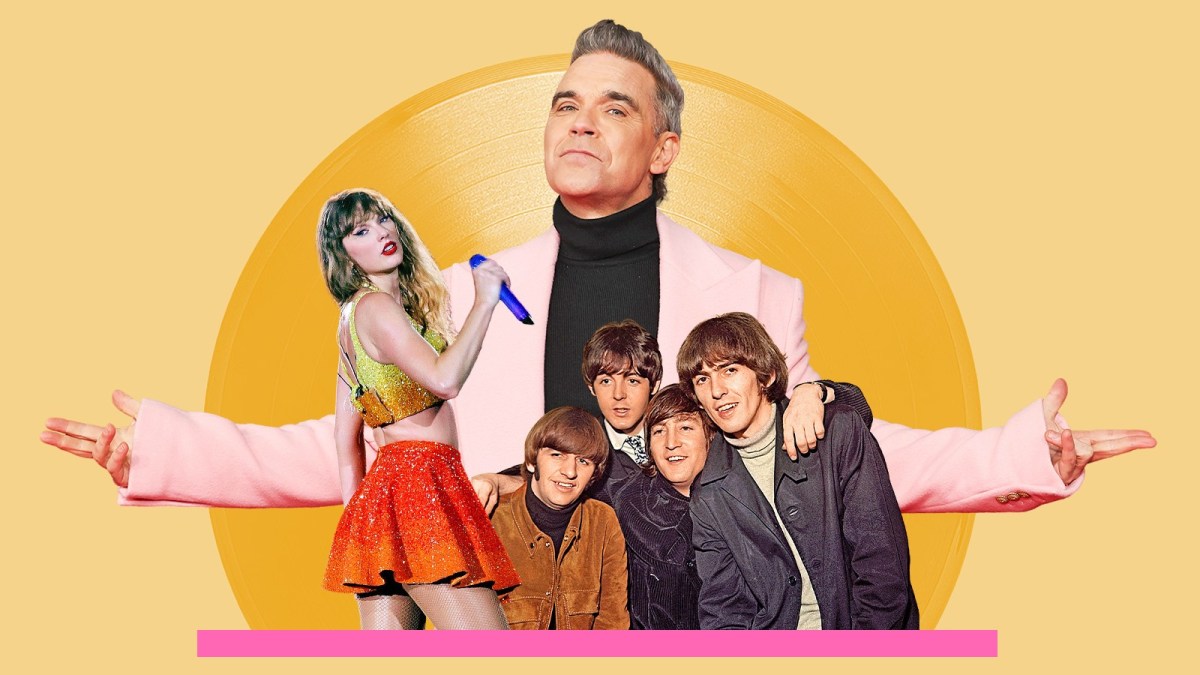
Take that, eggmen. The Beatles’ record for the most UK No 1 albums, which they share with Robbie Williams, looks set to be toppled on Friday afternoon as the singer’s Britpop charges to the golden number of 16. It’s every little boy band’s dream to be bigger than the Beatles and now Williams — on his own fantasy spreadsheet at least — can claim a sliver of that ultimate pop prize.
It’s no mean feat. Since the Fabs trumped Elvis’s record of seven chart-topping LPs with the release of Sgt Pepper’s Lonely Hearts Club Band in 1967, no one else has really come close to catching them. By their split in 1970 they’d scored 11, leaving the Rolling Stones playing catch-up for decades. Even with talk of a new Stones album on the horizon, potentially pushing their total to 15, their standard recording schedule of one album per decade might mean they bypass their old Sixties rivals by about 2034, if they’re extremely lucky.
With live albums and greatest hits compilations eventually pushing the Beatles to 15, Madonna and Bruce Springsteen (with 12 apiece) and Rod Stewart, Eminem, Kylie Minogue and U2 (all on 11) have yet to show the studio stamina and archive-raiding determination required to surpass them, despite having decades more to play with.
Williams, though, has made no secret of his lust for the record. “I want that more than anything in my career right now,” he told Radio 2’s Scott Mills Breakfast Show last week. “It massively makes my impostor syndrome come out to play and the first thing I feel is embarrassed about it. And then the other bit, where the ego steps in, is going, ‘It’s — outside of my family, my kids and my wife — the most important thing to me in the world.’”
Indeed he was so desperate for the title that he gamed the charts for it. The Beatles weren’t innocent of such tactics themselves — they famously conspired with the Stones to avoid each other’s release dates and ensure both bands had chart-topping records. But Williams holding back Britpop’s release from October until January had no such sense of respectful gentleman’s agreement to it.
At an intimate show for 600 fans at Camden’s Dingwalls club arranged to coincide with Britpop’s original October release date, Williams confessed to delaying the album for purely “selfish” reasons. “We’re all pretending it’s not about Taylor Swift but it f***ing is,” he admitted, bemoaning Swift’s decision to release her latest album, The Life of a Showgirl, at about the same time as Britpop. “I was worried about making you all wait but then I thought, ‘F*** it — I want a 16th No 1 album.’”
• Robbie Williams at Dingwalls review — a therapy session with 400 fans
Instead Williams released Britpop without warning on January 16, explaining on Instagram that “it’s been long enough. I’ve decided that I want to go now.” That his biggest chart rivals this week are Sleaford Mods — the only other act on the schedules who have hit the UK Top Five before — may have played into his heroic push over the top.
Where does this hunger come from? Williams has been very open about his personal and professional insecurities and the sources of them. In the 2023 Netflix documentary Robbie Williams he admitted to being “vengeful” over his treatment at the hands of Gary Barlow during his years as Take That’s youngest member in the 1990s — pushed to the sidelines, creatively dismissed and resented for fronting their first Top Five hit, Could It Be Magic, in Barlow’s place. A new documentary, Take That, released on Netflix on Tuesday, further explores the rivalry.

Williams in Take That in 1992
GETTY IMAGES
“You don’t realise that you’re a backing dancer until a few years in… I didn’t sign up for that,” Williams says, detailing his descent into depression and alcoholism during his final years in the band.
“The most insecure and emotional person in the band was Robbie and I feel quite guilty now for not recognising that,” Barlow admits.
And in the post-split Robbie versus Gary chart battles, a beast of ambition was born. “I wanted to make him pay,” Williams confessed in 2023, “by having the career that he was supposed to have.”
• The best new music to listen to this week
To which end, the solo Williams swiftly became an ego-stoking numbers man. When his stalling 1997 solo debut, Life Thru a Lens, finally went multi-platinum in the wake of the success of Angels, he appeared on the Channel 4 show TFI Friday to crow down the camera to his former bandmates about hitting a million sales. He became a solo phenomenon with further multi-platinum records such as I’ve Been Expecting You (1998) and Sing When You’re Winning (2000), almost doubling Take That’s mere 45 million album sales (their No 1 albums total is nine). In 2002 he landed the biggest record deal ever offered to a British artist — £80 million from EMI. At the press conference to announce it he famously yelled, “I’m rich beyond my wildest dreams!”
In 2003, when his rivalry with Oasis was at its peak, he made much of playing a record-breaking three nights at Knebworth to lord it over the Gallaghers’ two in 1996. To mark the event Williams sent a pair of tap shoes to Noel Gallagher, in reference to the Oasis guitarist dismissing him as a “fat dancer”: “Dear Mr N Gallagher. You said two nights at Knebworth is history. Well, I guess three is just greedy,” read the note, which also offered Oasis the support slot. All conveniently ignoring the fact that, if all 2.5 million people who applied for tickets to see Oasis there had got one, they could have played 20 shows.
After that, though, began a commercial slide through relative flops such as Rudebox (2006) and Reality Killed the Video Star (2009) towards a wilderness decade. During the 2010s he was most successful as a crooner covers act on Swings Both Ways (2013) and resorted to dressing as a Dickensian gent on the cover of the stocking filler The Christmas Present in 2019. So you can’t begrudge him a spot of satisfaction at being back among history’s musical big boys again.
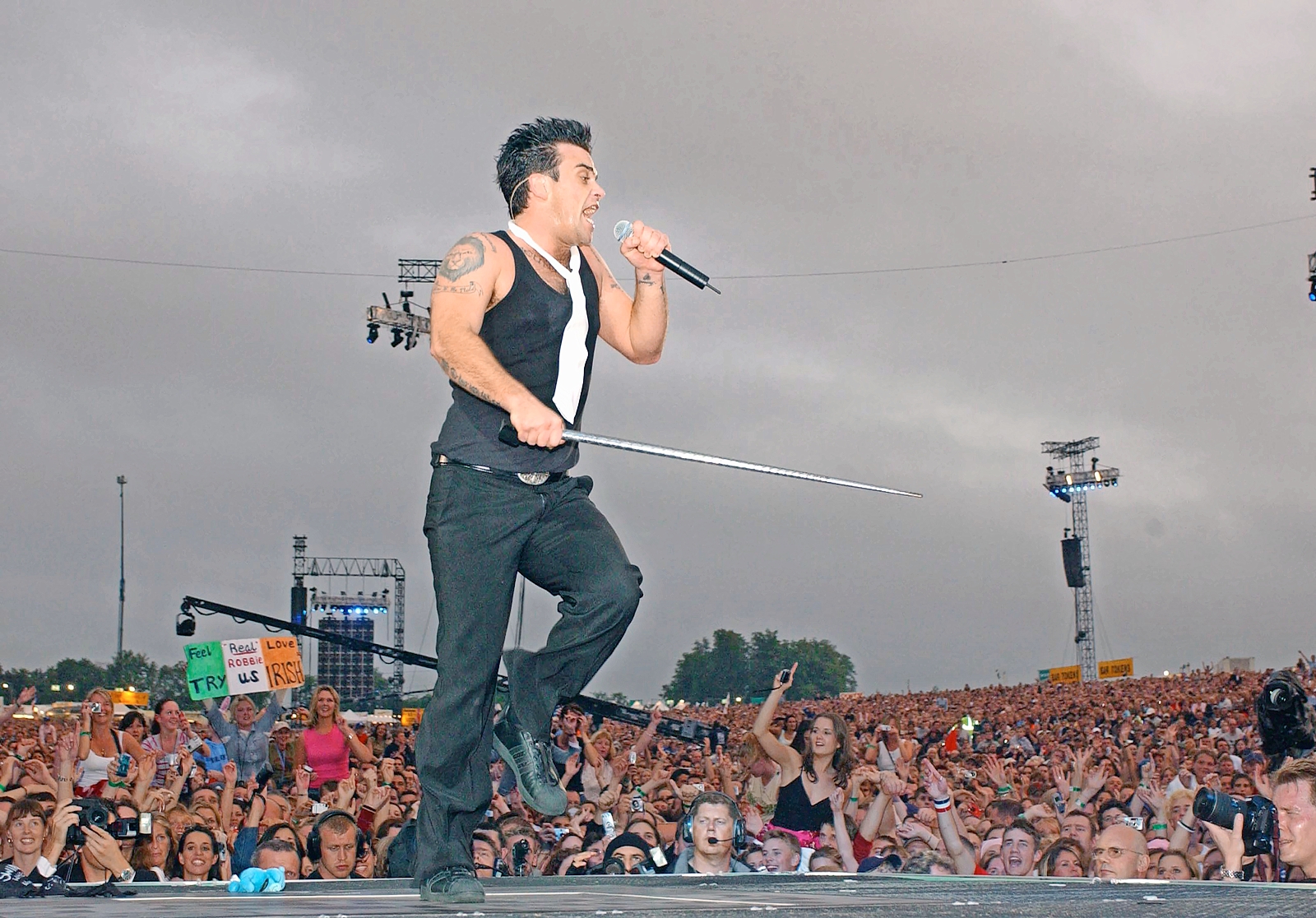
On stage at Knebworth in 2003
JON FURNISS/GETTY IMAGES
There’s also a dollop of delusion at play. Breaking the record is historic but to imagine that it makes him in any way bigger than the Beatles is a fallacy. His 75 million worldwide album sales make him one of Britain’s most successful solo artists but a relative Henman compared to the Beatles’ Federer. With sales records spotty in the Sixties, their figures vary from a documented 296 million record sales to a claimed 600 million, with more fanciful guesstimates, including streaming-equivalent sales, topping a billion. Any way you dice it, they’re the bestselling music act of all time.
With albums now selling a tiny fraction of their pre-streaming totals, Williams will never surpass the Beatles sales-wise. And neither, most likely, will anybody else. Likewise, the Beatles’ creative accomplishments are unlikely to be matched. The fact that this supremely talented group were working within a Sixties industry framework that expected at least one new studio album per year, had the global media spotlight on them from the off and were able to stop touring within three years to concentrate on musical innovation meant they could entirely reinvent pop culture inside seven years.
• Bob Dylan, Paul McCartney and the art of plagiarism
Still, Williams’s record is all but secured, but how hollow does the victory ring? By not taking on Swift directly, is this a scoundrel’s triumph? And all for an accolade that’s becoming increasingly meaningless?
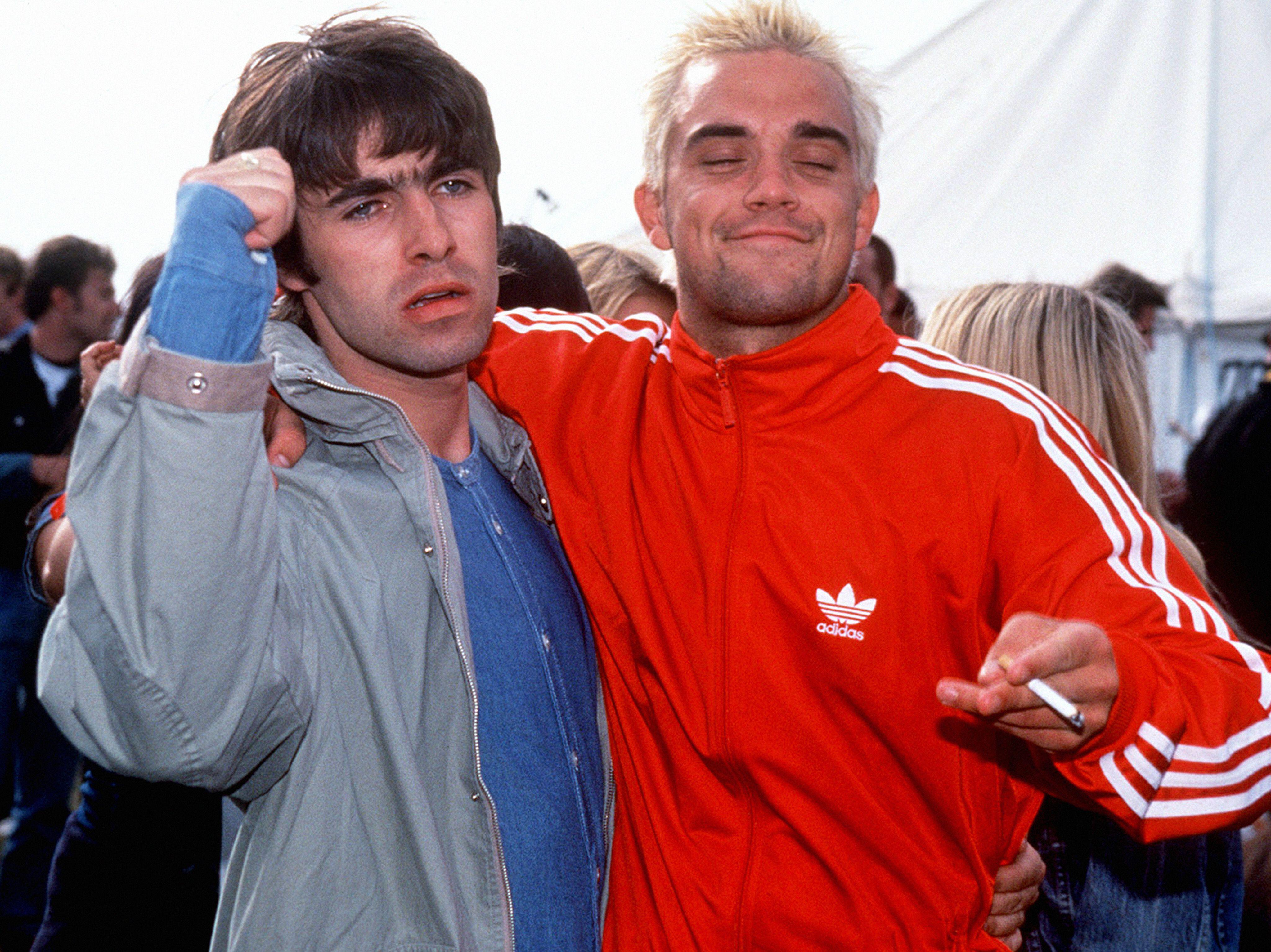
With Liam Gallagher in 1995
EMPICS ENTERTAINMENT/ALAMY
When the Beatles scored their No 1 albums they were selling hundreds of thousands of copies in the first week alone. Today 60,000 is a very strong showing for a chart-topping record, with albums regularly reaching No 1 with just 17,000 sales, particularly in the post-Christmas lull. In recent years several little-known bands with strong local followings — the K’s, the Reytons and so forth — have managed to become chart-topping superstars for a week.
• Read more music reviews, interviews and guides on what to listen to next
What’s more, Williams’s time at the top is likely to be short-lived. Hidden among the many legacy artists in the Top Ten list of No 1s, there’s a familiar, inescapable nemesis. In just 13 years Taylor Swift has racked up 14 UK No 1 albums. The Life of a Showgirl followed one year after The Tortured Poets Department and both were recorded during the world’s biggest ever tour.
Plus she has a “Taylor’s Version” of her debut album in the bank ready to “re-emerge when the time is right”; a further, final one almost finished; and she hasn’t even started on greatest hits packages yet. Barring some unimaginable Swiftian fall from grace it can only be a few years before she steals Williams’s crown. And in the spirit of the Beatles she is taking a vast pop fanbase in more adventurous and culture-shifting directions. In essence, then, Williams today becomes pop’s own Macbeth — killing the kings only for Taylor’s offspring to rule.