
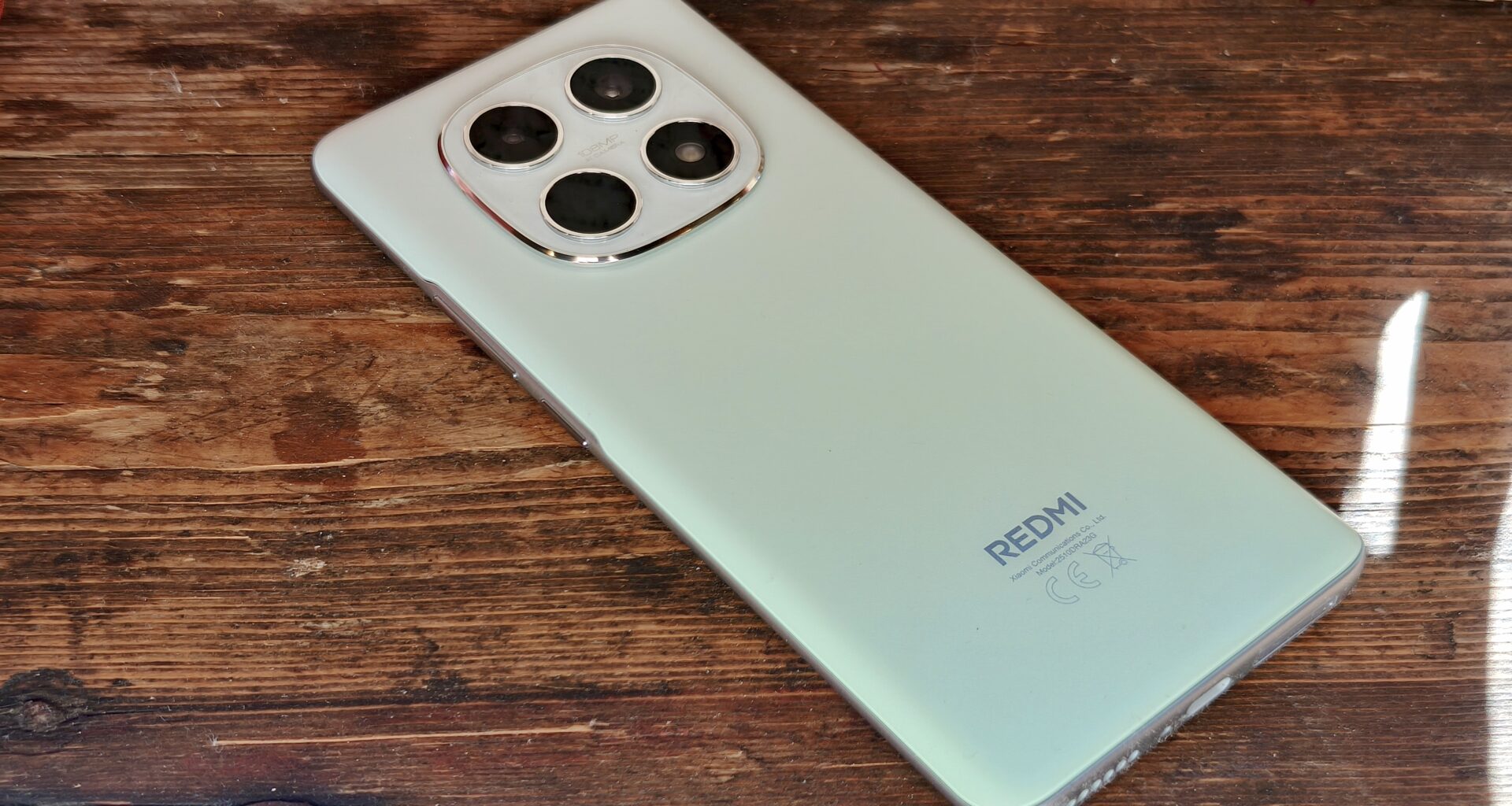
Budget smartphones have become quite good nowadays. Their performance is often sufficient for everyday use, and battery life is constantly improving. They’re also almost on par with much more expensive models in terms of security updates, although the new EU regulations have likely helped a bit in this regard.
The Xiaomi Redmi Note 15 4G, which we recently reviewed, also boasts an extremely bright screen and even HDR support. It also supports a wide range of 4G frequencies and even offers wired reverse charging.
Cameras often a weak point in budget phones
But manufacturers have to cut costs somewhere, which usually come in the form of quite inexpensive camera sensors. While these have improved in recent years, they often don’t match the image quality and versatility of more expensive models.
Let’s take a look at some photos from the main camera of the Xiaomi Redmi Note 15 4G and see how the image quality compares.
Camera features of the Xiaomi Redmi Note 15 4G
A 108 MP camera sounds great at first, but the full resolution can only be used in a special mode, and you lose a lot of light sensitivity because the individual pixels on the sensor are very small. Normally, 9 pixels are combined to create larger, more light-sensitive pixels, resulting in a 12.5 MP image, which is still perfectly adequate for most purposes.
There is a second camera sensor on the back, but this only serves as a backup for the main camera and does not take photos on its own. Lastly, there is a 20 MP camera on the front for selfies.
Image quality of the main camera
The Xiaomi Redmi Note 15 4G can take great pictures, but sometimes it’s a matter of luck. For example, while the shot of the streetlight appears very detailed, the view across the river is strangely blurry and the trees in the background lose contrast. The close-up of the flower heads makes for a nice photo, but more expensive cameras would probably have captured a few more details here.

I initially wrote about gaming laptops when I joined Notebookcheck in 2009. I was then involved with the setup of the comparison portal Notebookinfo and worked with social media concepts for large companies like BMW and Adidas, while also returning to work for Notebookcheck in 2012. Nowadays, I focus on smartphones, tablets, and future technologies. Since 2018 I have been Managing Editor for mobile device reviews, working alongside my colleague Daniel Schmidt.
 Translator: Jacob Fisher – Translator – 2735 articles published on Notebookcheck since 2022
Growing up in regional Australia, I first became acquainted with computers in my early teens after a broken leg from a football (soccer) match temporarily condemned me to a predominately indoor lifestyle. Soon afterwards I was building my own systems. Now I live in Germany, having moved here in 2014, where I study philosophy and anthropology. I am particularly fascinated by how computer technology has fundamentally and dramatically reshaped human culture, and how it continues to do so.