
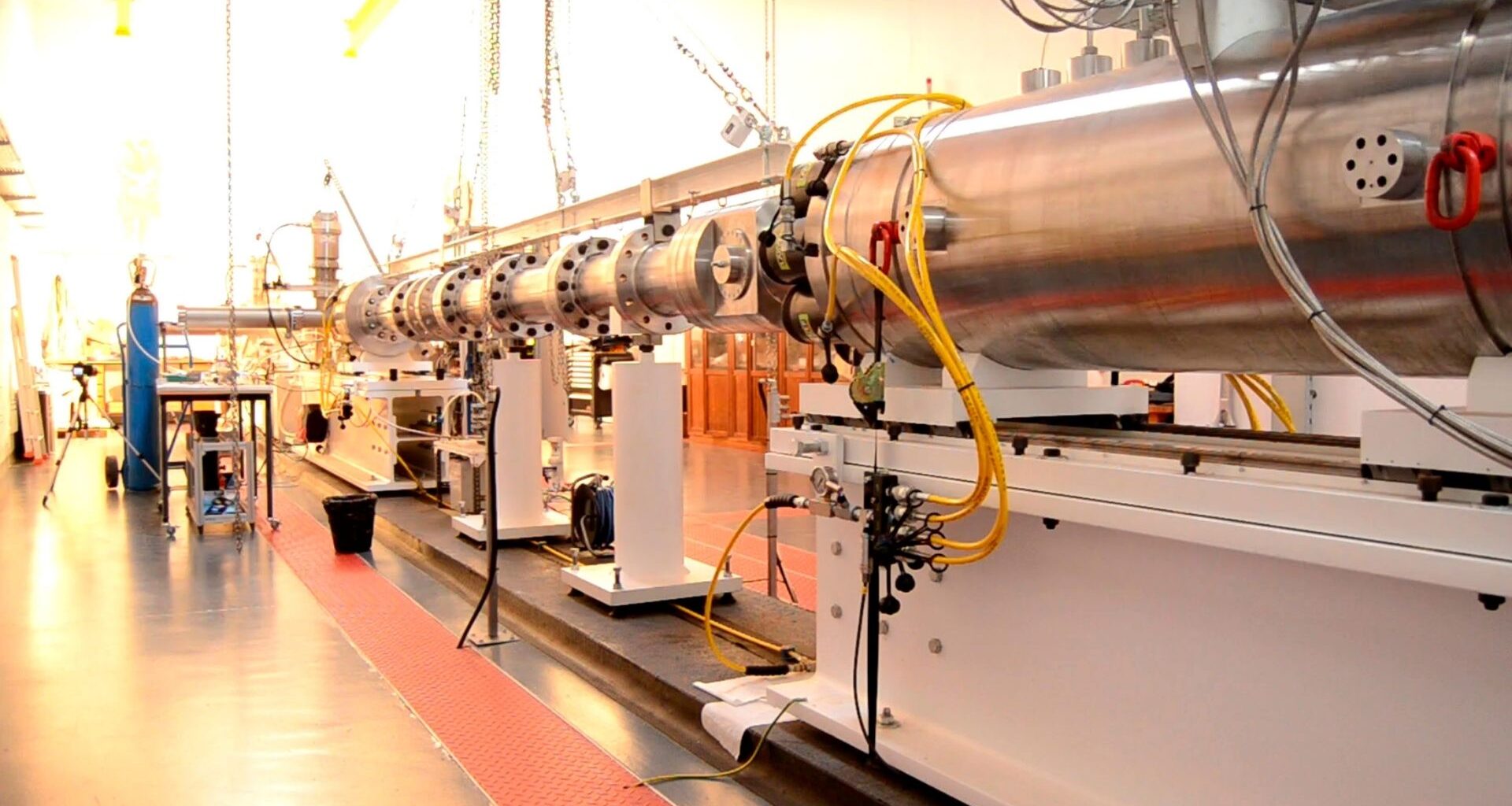
Portugal has entered the small group of countries with experimental capability in hypersonic research after completing its first test at the European Shock Tube for High Enthalpy Research (ESTHER).
In November 2025, tests at the Instituto Superior Técnico (IST) Loures campus generated hypersonic flow at approximately 8 kilometers per second, equivalent to Mach 25, the European premier space lab announced on Thursday.
According to IST, this speed is comparable to crossing mainland Portugal from north to south in just over five minutes.
The experiment was conducted by the Institute of Plasmas and Nuclear Fusion (IPFN), a major Portuguese research unit specializing in plasma physics and technology.
The hypersonic flow produced gas temperatures and pressures that reached extreme levels, exceeding those at the surface of the Sun. The resulting shock wave emitted a bright flash resembling a shooting star, a visible marker of the intense physical conditions inside the facility.
With this test, Portugal commences experimental research on a phenomenon that occurs at several times the speed of sound. These include conditions associated with the atmospheric re-entry of rockets and spacecraft and the exploration of planetary atmospheres such as those of Mars, Venus, Jupiter, and Saturn’s moon Titan.
A New Capability for Europe
In a statement, IST said the test was conducted under “real conditions” using the ESTHER shock tube, operated remotely for safety reasons. The facility relies on mixtures of hydrogen, oxygen, and helium at very high pressures.
Mário Lino da Silva, Professor and researcher at IPFN and Principal Investigator of the project, said the main operational risk is an uncontrolled explosion in a 50-liter combustion chamber at pressures of up to 100 atmospheres. To minimize these risks, the laboratory was designed with a reinforced structure, is partially buried, and is fully operated remotely.
In the official press release, Luís L. Alves, head of the N-PRiME group that hosts ESTHER, said the test represents the culmination of 15 years of project development. The initiative began in 2010 within the framework of an international consortium led by IPFN. The European Space Agency (ESA) later awarded the consortium a contract to build the infrastructure to support future planetary exploration missions.
For Mário Lino da Silva, the successful test constitutes “a direct contribution to Europe’s technological independence in the aerospace domain.” He added that the ability to generate and measure hypersonic flows places Portugal and Europe “within a very restricted group of countries with technological mastery in this field.”
Hypersonic flow refers to speeds above Mach 5, a zone where gases reach extreme temperatures and pressures. These conditions are essential for studying how spacecraft materials and structures behave during atmospheric re-entry and for understanding high-speed interactions in planetary environments.
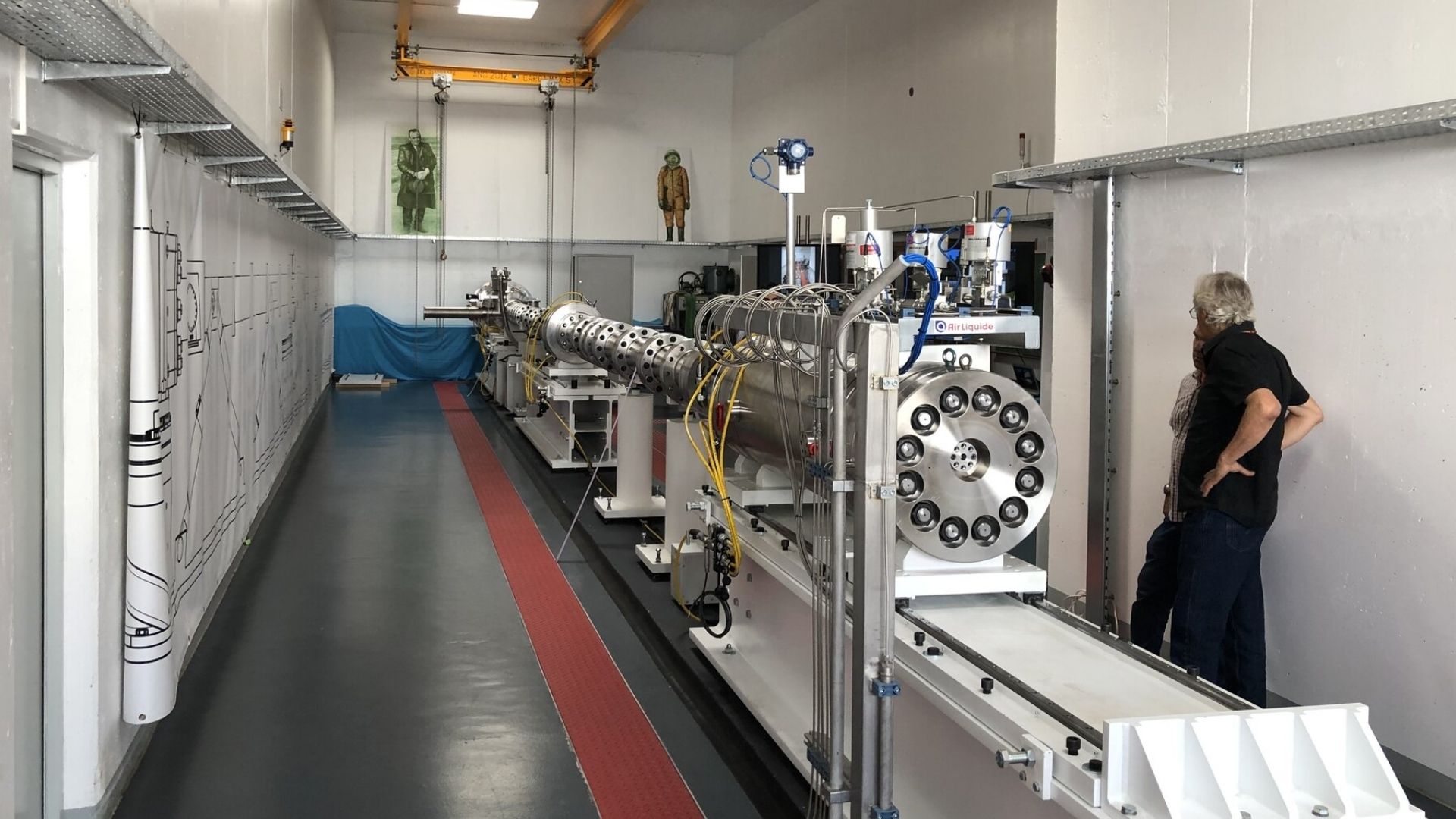 ESTHER was inaugurated on July 24, 2019, at 16:50, exactly 50 years to the minute after the splashdown of the Apollo 11 mission. – ESA
What ESTHER is designed to do
ESTHER is a state-of-the-art shock tube facility built to simulate the intense heat, pressure, and airflow experienced by spacecraft during atmospheric re-entry and hypersonic flight. It is the largest space research facility in Portugal and is intended to support studies relevant to Earth, Mars, Venus, Jupiter, and Titan.
Since 2019, following the assembly of the infrastructure, the project team has tested and validated several individual subsystems, including the combustion chamber, laser ignition system, high-vacuum system, and remote control and data-acquisition systems.
The next steps will involve gradually evaluating the facility’s operational capabilities, reaching higher speeds, and validating the technologies in an integrated manner.
In the medium term, ESTHER is expected to directly support ESA mission planning and contribute to the development of national capabilities in hypersonics through partnerships with academic institutions and Portuguese companies. With the facility now operational, tests of materials subjected to hypervelocity flows are also planned.
Bruno Gonçalves, President of IPFN, said the successful test is “a source of great pride for IPFN and for Técnico.” He added that the project honors Portugal’s scientific legacy while opening new pathways for space exploration.
The entry into operation of ESTHER, 76 years after the first hypersonic flight and on the 50th anniversary of ESA’s foundation, provides Europe with a new tool to study extreme aerospace conditions.
By enabling controlled experiments that previously required foreign infrastructure, the facility strengthens Europe’s technological independence and provides a foundation for future advances in spacecraft design, planetary exploration, and high-temperature materials research.