
Yesterday, ex-Corrie star HELEN FLANAGAN revealed in the Daily Mail the toll that being boxing champion David Haye’s mistress had taken on her mental health. In today’s extract of her bruisingly honest memoir, she lays bare her struggle with ADHD…
I can pinpoint almost the exact moment when everything shifted. When something in me changed, as if a switch had flicked inside my head – a switch I’m pretty sure has never flicked back.
It happened when I was eight years old and had a falling-out with my two best friends, Beth and Laura.
The three of us had formed a little girl band and every breaktime at our primary school in Bolton we’d practise, perfecting our dance routines and thinking we were going to be the next Spice Girls.
Until one day Laura pulled a proper Geri Halliwell and told me and Beth that she didn’t want to be in the group any more.
I was heartbroken. In a fit of pure petulance, I told Laura I was going to write to Girl Talk magazine about her so everyone would know exactly what she’d done. That’d show her. I mean, clearly I needed to chill. But it was just a stupid quarrel between friends, the kind that goes on in playgrounds up and down the land.
The next day Laura wasn’t in school and I was summoned to the head’s office, where I was shouted at for being a bully. It was a total shock. I was a goody-two-shoes who had always followed the rules and I’d never been in trouble before.
The whole episode left me completely shaken and seemed to lay the foundations for a series of psychological reactions which, in hindsight, I’ve been battling ever since. I’ve often wondered whether everything that came next might have unfolded differently had the situation been handled more sensitively all round.

Helen Flanagan says she first realised that something inside her shifted when she had a falling out with her two best friends aged eight… and was accused by her school head of bullying
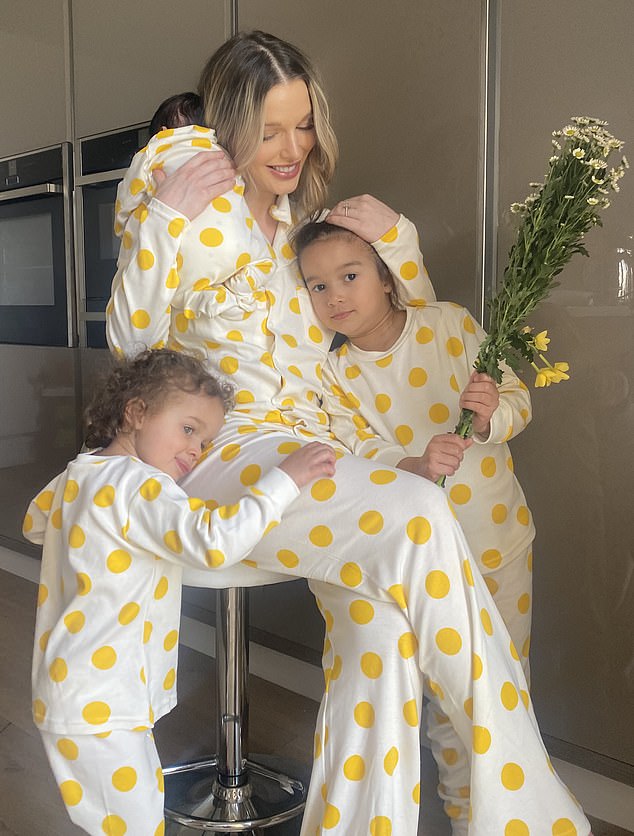
Helen says her ‘beautiful dreamlike state’ after giving birth to her son Charlie (here as a baby with his two sisters) soon turned to anxiety that he’d been swapped for another baby by the midwife. ‘I’d gone from pure elation to being riddled with OCD,’ she writes
From that day, I started to feel panicky about going to school. I became nervous about speaking in class, and developed an obsession over who wasn’t in school each day and whether their absence was because they thought I’d been bullying them too.
At the same time I began experiencing horrible, torturous and recurrent thoughts which made me question whether I was really my mum and dad’s child. I became fixated on the idea that I was actually my older sister Jane’s daughter.
These persistent thoughts became a complete preoccupation. I’d see things on the news and stew over them for days. I became focused on the cellar in our house and what was down there, torturing myself with thoughts of kidnap victims or dead bodies.
As I explained yesterday, I believe these were the early signs of Obsessive Compulsive Disorder, a mental health condition characterised by unwanted, intrusive and often very dark thoughts.
Some of the worst of these would occur in church. We were a committed Catholic family, and my parents would make us attend Mass every Saturday night. I’d often have to do a reading at the front of the church. In the days beforehand, I’d get thoughts about having an accident in front of the whole church. The more I thought about it, the more certain I was that it was going to happen.
When it came to the point I had to stand up and read, I’d race through my words as quickly as I could, and as soon as it was over I’d dash to the toilet to check it hadn’t happened. Which it never had.
There was nothing I could do to get these thoughts out of my brain. I was trapped.
Shortly before my 17th birthday, I was diagnosed with Attention Deficit Hyperactivity Disorder (ADHD) which meant very little to me at the time. But the more I found out about it, the more it made sense to me.
All my life I’d been away with the fairies, but now I had a reason for my scatterbrain and distractedness – and it wasn’t because there was anything actually wrong with me.
Being prescribed methylphenidate (known under the brand names Ritalin or Concerta, which is the one I was given) changed everything almost immediately. It felt revolutionary, like having this clarity for the first time.
What I didn’t realise was that this little pill, which appeared to be my all-singing, all-dancing cure, would also be my undoing. Over the next few years I would develop a dependency that would take me to the very edge of sanity.
I took Concerta for the best part of two decades. There was so much of it in my system, I’d actually call it a form of drug abuse.
There was no one keeping an eye on my prescription – I’d just get it renewed every few months, and I can see that I was addicted. I liked how they made me feel and I’d get very jittery if I’d gone too long between tablets.
I’ve since discovered it’s only recommended to be taken as a single tablet once daily and I was taking three times as much as that, so no wonder I was paranoid and irrational.
In 2012 I said goodbye to the cobbles of Coronation Street, following a bout of deep depression after 13 years of playing Rosie Webster.
On the surface I had nothing to be depressed about. I had a great job, a nice boyfriend, the footballer Scott Sinclair, and loads of friends and people who loved me.
But mental health does not discriminate and I had this constant feeling of desperation, hopelessness and an overwhelming sense of doom, like I had a grey cloud hovering ominously over my head.
I’d also developed social anxiety and begun to have regular panic attacks. I’d suffered them intermittently over previous years, but now they seemed to be happening all the time.
I could be on set at Corrie, in coffee shops, in restaurants, at Scott’s parents’ house – whatever I was doing there was a risk. I’d feel my heart begin to beat really fast. I’d feel short of breath and break out in a sweat.
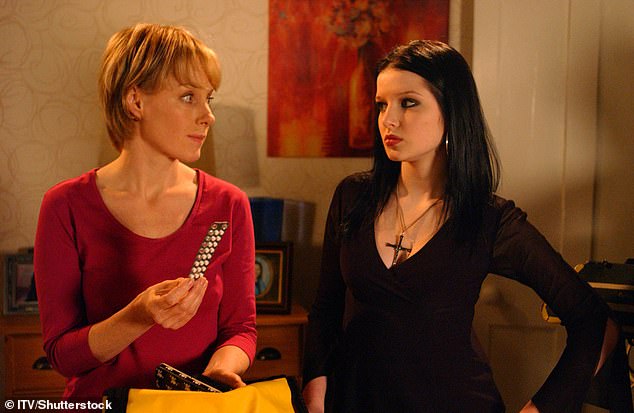
Helen with her on-screen mother played by Sally Dynevor. I hated being at Corrie, writes Helen. Trapped in this horrible, negative mindset, I’d come to loathe going in to work
If I was filming when it started, I’d rush to get to the end of the scene, knowing that within a couple of minutes I was going to be incapable. I’d also started doing this obsessive swallowing routine, where I would continually gulp and I was being plagued by tremors in my hands, which would shake uncontrollably.
I hated being at Corrie. Trapped in this horrible, negative mindset, I’d come to loathe going in to work where I felt paranoid that everyone was out to get at me. I spent a lot of time in my dressing room sobbing, but not knowing why.
The actor Antony Cotton, who played barman Sean Tully, once reduced me to tears when he took the mickey out of the fact I was on medication. ‘Here comes Helen Flanagan,’ he said. ‘You hear her rattling before you see her.’
To him it was a joke for a few cheap laughs, but this was my life. I didn’t respond, I was too broken. Instead, I went to the toilets and bawled my eyes out.
It must have been clear that I was finding it all extremely stressful, but no one ever tried to get to the bottom of what was going on, not even when I broke down very publicly in January 2010, the day after the National Television Awards in London.
A load of us from Corrie had travelled down to the capital for the do, where we were up for a ton of awards – I remember this trip because it was coming up to Scott’s 21st birthday and I paid a visit to Cartier to buy him a love bracelet.
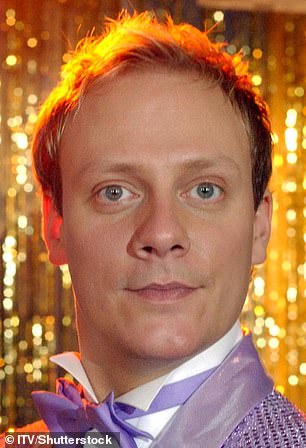
Antony Cotton, who played barman Sean Tully, once reduced me to tears when he took the mickey out of the fact I was on medication, Helen writes
Corrie scooped the coveted Most Popular Serial Drama gong and a couple more besides, and the night was a lot of fun. It was the next morning when it all went wrong.
As I was packing up in my hotel room, I checked underneath the bed to make sure I hadn’t left anything behind and that’s when I saw a man lying there, staring right back at me. I’ve never been so scared in my life. I screamed and, in the commotion as I tried to escape the room, I whacked my head on the door full pelt.
I went berserk. I thought someone was trying to kill me. I made a run for the lift, pressing the buttons repeatedly to try and speed it up, convinced my life was in danger. By the time I got down to reception, I could only collapse on the floor in a shaking heap.
Somehow, I managed to tell the staff that there was a man under my bed and the whole hotel was immediately put on lockdown. After about ten minutes, the manager and security team came to tell me that there was no strange man under the bed. What was there, however, was a discarded mirror and so it turned out that all I’d seen was my own reflection.
Everyone at work thought the whole thing was hilarious, so I tried to laugh along and give it the old, ‘Honestly, what am I like?’ act. But inside I was in pieces, because I recognised there was something going seriously wrong.
I only wish someone – maybe a producer or some other responsible adult, anyone with a duty of care – had asked exactly what tablets I was on and if I’d thought about the possibility they might be negatively affecting me. But there was none of that. No one ever brought that up or suggested reviewing what I was putting into my body, and it makes me sad now. There might have been an early exit route from the long road of misery that was to come.
It’s March 2021 and I am in the Royal Bolton Hospital having just had my beautiful son Charlie. I wish you could bottle that feeling of the first few hours with your new baby – this little human who is going to be part of your world for ever.
I was in this beautiful dreamlike state, wrapped up in the blissful early moments of motherhood, with no inkling of how quickly things were about to turn.
A midwife popped in to see us. ‘You must be exhausted,’ she said. ‘How about you get some rest – I can take baby for a little while and you could have a sleep.’
My instinct was to say no thank you, I’d rather keep my baby with me. But she’d offered so kindly that, against my better judgment, I accepted.
Within five minutes of her taking Charlie, I started to feel anxious and my brain was going haywire. I got it into my head that the midwife was going to swap him with the baby of an Asian lady on the same ward and who I’d seen when I was in early labour.

As far as work goes, I want to concentrate my efforts on acting and see where it takes me, writes Helen. I’m not sure if a return to Corrie is on the cards, but I’d be open to it
The Asian parents both had thick black hair like Charlie and the same skin tone and so it made sense that their baby could get mixed up with mine.
I rang the buzzer and the midwife came in. ‘I really want my baby back,’ I said.
‘OK, love.’
I could feel the panic rising. ‘Now. I want my baby back now.’
They brought him back in, but I couldn’t be sure he was mine. I was staring at him, trying like crazy to see a family resemblance or to recall what the baby I’d handed over just a few minutes before looked like.
Were there any distinguishing features? How could I be sure? In that small space of time – literally a few minutes – I’d gone from pure elation to being riddled with OCD. I started breastfeeding him and the only thing in my head was, ‘This baby isn’t mine. That midwife swapped him.’
My OCD was now in overdrive and any notion of rational thinking was out the window.
When I got home from the hospital the following day, I told Scott. ‘I’ve got something to tell you,’ I said. ‘I’m worried that the midwife swapped our baby.’
‘What do you mean swapped?’
‘I don’t think this is Charlie.’
‘Huh?’
I told him how the midwife had taken Charlie and that in those few minutes must have switched him with the baby of the Asian lady.
‘Come on, Helen. This is madness.’
‘I know it’s probably my OCD…’
‘Do you reckon?’ he said, rolling his eyes and not really taking seriously any of what I’d just said.
‘But I can’t shake it, Scott. It’s driving me insane.’
Scott is the most straightforward guy ever and everything is black or white with no grey areas. He doesn’t understand mental health or emotions, so he wasn’t being insensitive or dismissive with me. He just didn’t get it.
But mind you, neither did he make much attempt (if any) to.
I’d always tried to understand Scott’s frustration with his career, his upbringing, his life and who he was as a person. He never did the same in return, and although there were many reasons why we eventually fell apart, I have to say that was one of the biggies.
Postnatal depression and intrusive thoughts tightened their grip each day. I’d be breastfeeding Charlie while overcome with sadness because I yearned for the baby that I’d given birth to at the hospital. My baby.

Most of all I want to enjoy a calmer, steadier life with fewer surprises and less drama, writes Helen. One where I can put my energy into the things that really matter. I’m hopeful. Maybe the best part is yet to come.
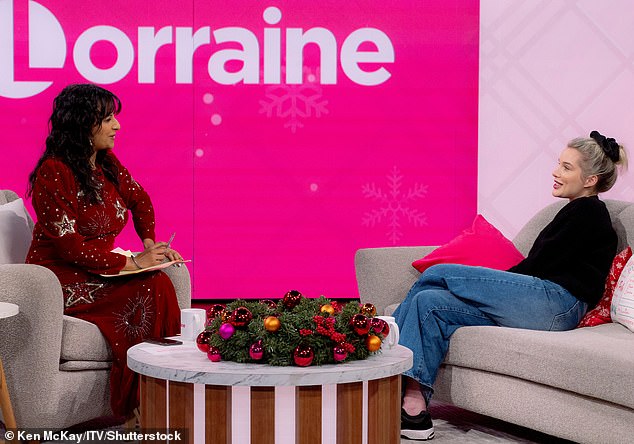
I remember doing an interview for Lorraine with Ranvir Singh on a day when my OCD was particularly active and it was telling me I was going to say something racist on TV, writes Helen. I was trying my utmost to get through this interview
I’m almost too ashamed to write this, but I want to be honest about it. Sometimes the thoughts would veer off into the most vile, racist thoughts, which is not me at all – I’m vehemently anti-racist and obviously I have mixed-race children. Horrific.
I remember doing an interview for Lorraine with Ranvir Singh on a day when my OCD was particularly active and it was telling me I was going to say something racist on TV. I was trying my utmost to get through this interview while these thoughts were crashing about in my brain.
I should have gone back into therapy. It wasn’t until Charlie was four weeks old that I admitted I needed help. This cruel condition was destroying me.
Finally being able to talk about it to someone who was completely neutral, sharing exactly what was going on in my head and rationalising it was key to the start of my journey back to health. Part of my recovery has been about accepting I am probably going to have spirals of OCD throughout my life. I’m prepared for that.
But what I have confidence in now is that this is never a permanent state. I will regain my peace because I refuse to let OCD win.
If medication works for other people then that’s amazing – but, for me, tablets just mask the problem. Therapy, talking, self-care, sleeping and eating well, making sure my alcohol intake is on the right side of sensible, they all really help me. I love being outside and that’s good for my anxiety. Being in nature and out in the countryside where I live and going for walks to clear my head is so beneficial to me. I know how to deal with it now.
I’m starting to enjoy being single. I’m getting used to it, anyway, because I don’t think now is the right time for me to be in a relationship.
I don’t know where I’d be without my three kids, Matilda, Delilah and Charlie. They have saved me in so many ways, because no matter what has been going on in my life, as long as they’re OK, I’ve been able to keep going and feel unconditional love. Even on the darkest days.
Which brings me to Scott. I can’t ‘unlove’ the father of my children and what I’m about to write is causing me great pain.
Whenever I’ve spoken publicly about Scott in interviews, I’ve always been generous to him.
We have three children together and, at one time, he was the love of my life and so I will go out of my way to protect him.

Recently it’s got to the point where I’m at the end of my tether with Scott Sinclair (pictured), writes Helen. The truth is, his decision to sell the home in Bolton where I and the children live has broken my heart.
But recently it’s got to the point where I’m at the end of my tether. The truth is, his decision to sell the home in Bolton where I and the children live has broken my heart.
I remember so clearly the day he surprised me with the house and all the hopes I had for us in it. I poured all my savings into making it beautiful and it really has been my haven.
Scott has other properties he could sell – his mother lives in a house similar to mine and yet that hasn’t been put up for sale.
Watching people coming to view my house has been degrading, humiliating and extremely upsetting. Although Scott covers the household bills, since he’s been without a club he has left me in a difficult position.
I know Scott loves his children deeply, but I need him to be a much more present father, not dipping in and out whenever he feels like it or seeing them once every fortnight.
I have to put my foot down with his constant demands that I meet him in Birmingham for handovers – that’s a big journey for me there and back when I have work commitments.
Even though he has massively let me down, I will always love Scott and I’ve cried while writing this. He was all I ever wanted.
I can only hope that, for the sake of the children, Scott and I manage to make our peace. I do love him and for a long time, part of me wondered if we’d find our way back to each other.
As far as work goes, I want to concentrate my efforts on acting and see where it takes me. I’m not sure if a return to Corrie is on the cards, but I’d be open to it.
I’m booked to do a play this month at Bolton’s Octagon Theatre, which starts next week and feels like a perfect first step back into the industry.
Most of all I want to enjoy a calmer, steadier life with fewer surprises and less drama. One where I can put my energy into the things that really matter. I’m hopeful. Maybe the best part is yet to come.
Adapted from Head & Heart by Helen Flanagan (Mirror Books £22, 288pp), to be published January 29. © Helen Flanagan 2026. To order a copy for £19.80 (offer valid to February 7, 2026; UK P&P free on orders over £25) go to mailshop.co.uk/books or call 020 3176 2937.