
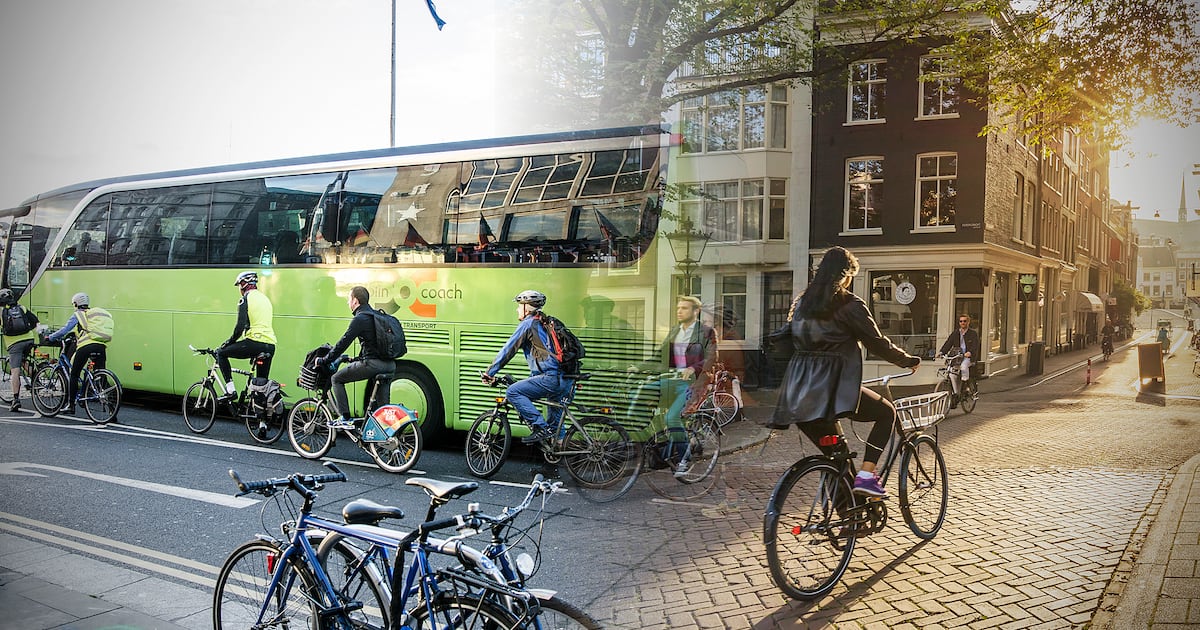
At this time of year, the headlights sweeping our hall flash off a panoply of reflective and hi-vis gear. We have jackets, tabards, gloves, gaiters, covers for backpacks, all in neon yellow with reflective silver stripes. Depending on your point of view, it’s dumped or kept sensibly ready by the front door.
You’d think we were all out mending the roads all day, but we’re a cerebral bunch. We just get around on bikes.
I am in favour of cyclists being visible, because I am in favour of cyclists being alive. I drive as well as cycle and I know the flash of horror when you realise almost too late that the dark shape ahead of you is a human being, moving fast on two wheels without lights in a place where drivers are navigating by traffic lights and street lights and indicator lights. I sometimes lean out of upstairs windows and command departing sons to go not one turn of the pedals further until I’ve assessed their visibility and run out in my socks to press additional kit on their bodies and bikes.
We have a family agreement that a person not in possession of a bike helmet is for functional purposes not in possession of a bike. Leave it, even in the city centre overnight, and get a bus. Wrestle it on to the Dart and wheel it home. Better a stolen bike or a long walk than a broken skull.
All that said, I prickle at the RSA’s injunctions to cyclists to “Light up” and especially the vests that say “Be safe, be seen”. Whether I am seen or not is not in my control. The slogan makes no sense anyway; worn on the cyclist’s back, it seems directed towards drivers, who are by definition already safe and seen because they are in cars. It has a tendency to reassure drivers that it is the cyclists’ responsibility to be seen rather than the drivers’ responsibility to see.
[ To normalise invective against cyclists is to miss the point spectacularlyOpens in new window ]
Anyone who thinks cyclists “come out of nowhere” should not be in control of a vehicle. If the bicycle brought teleportation, we’d be using it for something more exciting than commuting. We come from where we were before, usually farther down the bike lane, usually at about the speed we’re going now. Some drivers don’t look, but the more bikes there are, the more aware drivers become.
I have fewer near-misses on my bike than I used to, partly because Dublin’s cycling infrastructure is slowly, mercifully improving, and also because there is very much safety in numbers.
Still, every time I have come close to death under some driver’s wheels and had a conversation about it – I will catch up with you if at all possible and I will knock on your window and express my feelings because I am shaky and hammering with adrenaline and disinhibited by mortality – the driver says they “didn’t see me”. In some ways I suppose this is reassuring, the alternative being that they did see me and decided in cold blood to try to kill me, but it is no excuse.
I was there when you did not see me because you did not look. I am small but not invisible. I do everything in my power to “be safe, be seen”, but in fact I have very little power in this situation. A slogan like “Look, don’t kill” would be more to the point.
In cities where cycling is safe, people on bikes don’t wear high-vis. You’ll see very few helmets on cyclists in the Netherlands, Denmark and Belgium, certainly no laws mandating their use, because it is not cycling that is dangerous but driving. Where the built environment separates human skin and bone from lorries, cars and buses, there is no need for our frantic striving to make fragile bodies hyper-visible. The helmets and hi-vis are symptoms of the Irish problem, not the solution.
It will take time for Irish cities to feel safe enough for everyone from eight to 80 to cycle as they do elsewhere, but in the years I’ve lived here I’ve seen steady change that nourishes hope and courage. Parents and children are now cycling to school. Urban cycling is no longer the preserve of skinny men in Lycra, though, torchbearers, we thank you for your service. Step by step, in this aspect of life that is not small to many of us, things are getting better.