
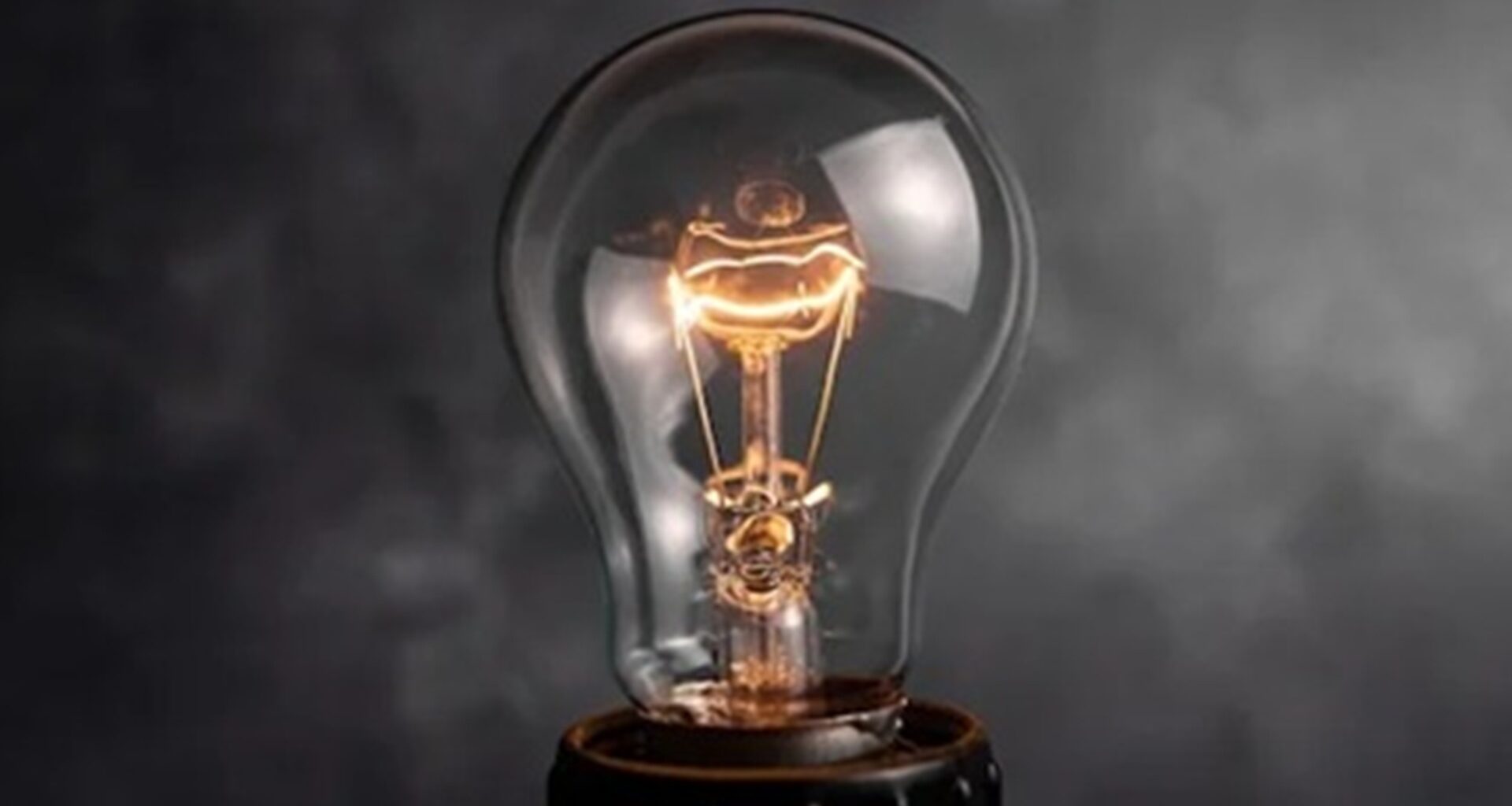
Researchers in the US have uncovered evidence suggesting that Thomas Edison may have accidentally produced graphene over a century before it was formally identified, while developing his first light bulb in 1879.
Led by James Tour, PhD, a chemistry and materials science and nanoengineering professor at Rice University, the study aimed to reconstruct Edison’s original light bulb experiments using modern analytical tools.
Tour’s team replicated the US inventor’s carbon-filament bulb design and applied electrical conditions similar to those used in the 19th century. They then realized that parts of the filament transformed into turbostratic graphene.
Turbostratic graphene is a form of multi-layer graphene recognized for randomly rotated, misaligned stacking between layers. It is highly valued for scalable, high-volume production, particularly in energy storage and composite strengthening.
“To reproduce what Thomas Edison did, with the tools and knowledge we have now, is very exciting,” Tour, who is the corresponding author on the paper, noted.
Recreating Edison’s bulb
Graphene is a single-atom-thick, two-dimensional sheet of carbon atoms that is arranged in a hexagonal honeycomb lattice. Considered the world’s thinnest and strongest material (about 200 times stronger than steel), it also ranks among the most electrically conductive substances.
In addition, it is highly flexible, transparent, and acts as an effective barrier against gases and liquids. Referred to as a “miracle material,” it was first isolated in 2004 by Andre Geim and Konstantin Novoselov at the University of Manchester, UK.
Ever since its discovery, graphene has become a crucial material in electronics and energy storage. One method for producing turbostratic graphene today is known as “flash Joule heating.”
During this process, an electrical current rapidly heats carbon-based materials to temperatures of approximately 3,600 to 5,400 degrees Fahrenheit (2,000 to 3,000 degrees Celsius).
In the late 19th century, however, Edison relied on carbon-based filaments, which were often made from natural materials such as Japanese bamboo, rather than the tungsten used in modern incandescent bulbs.
As electricity passed through these filaments, electrical resistance caused rapid heating that produced light. The team believes these conditions closely mirror modern flash Joule heating and may have been enough to generate graphene.
Carbon filament discovery
Lucas Eddy, a former Rice graduate and the paper’s first author, was trying to find the simplest equipment for mass-producing graphene when he remembered that early light bulbs often used carbon-based filaments.
“I was developing ways to mass produce graphene with readily available and affordable materials,” Eddy said. “I was looking at everything from arc welders, which were more efficient than anything I’d ever built, to lightning-struck trees, which were complete dead ends,” he continued.
To test the hypothesis, the researchers sourced artisan-made Edison-style bulbs from a small art store in New York City that closely matched the specifications from the original 1879 patent.
 James Tour, PhD, T.T. and W.F. Chao Professor of Chemistry at Rice University.
Credit: Jeff Fitlow / Rice University
The researchers then connected the bulbs to a 110-volt (V) direct current power supply, based on the original setup, and powered them for roughly 20 seconds. They noted that longer exposure times can lead to graphite formation.
After the tests, the scientists used optical microscopy and found that the filament surface had changed from dark gray to a silvery, metallic appearance. They then used Raman spectroscopy, a laser-based analytical technique that identifies materials by analyzing their atomic-level signatures.
The results confirmed the presence of turbostratic graphene within portions of the filament. While there is no way to determine whether graphene persisted in Edison’s original experiments, the findings suggest it may have formed briefly long before its discovery.
“Finding that he could have produced graphene inspires curiosity about what other information lies buried in historical experiments,” Tour concluded in a press release. The study has been published in the journal ACS Nano.