
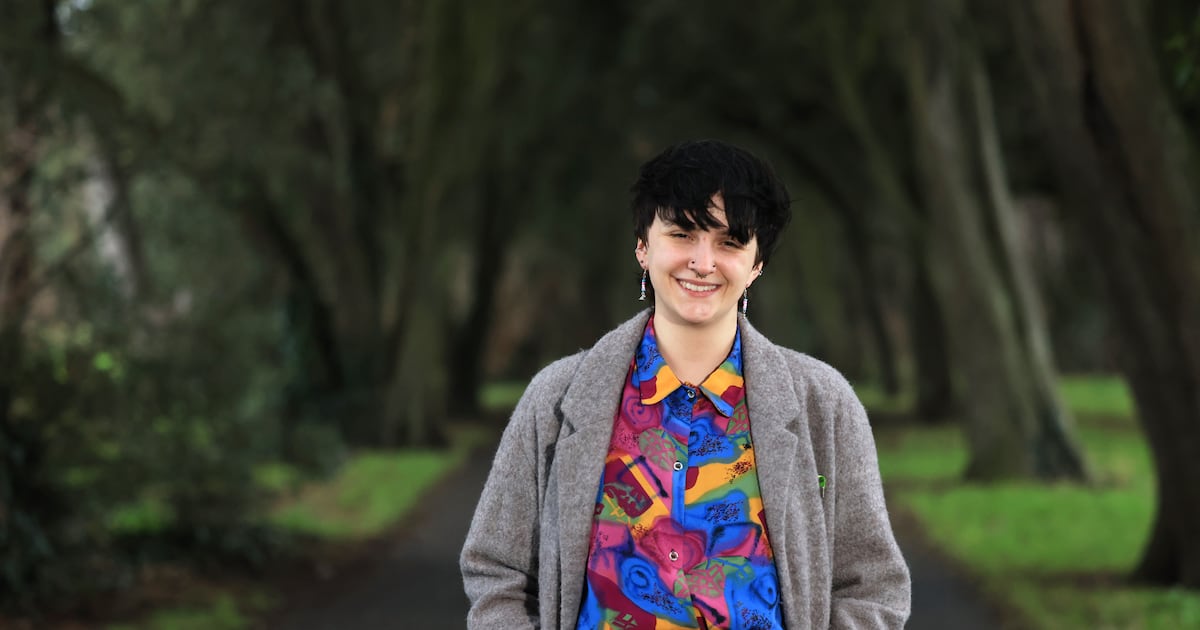
Coping with mental health issues from early teenage years fuelled Marysia Pachowicz’s long-held dream of becoming a clinical psychologist.
Until, halfway through doing a master’s, the Trinity College Dublin graduate realised it was the wrong career choice.
“As a clinical psychologist, you kind of have two options. You work in public services or you work privately. And I didn’t want to work in public services because I have had a really bad experience with public services. So I didn’t want to be part of that.”
They had little faith in the idea that the system could be changed from within.
“Irish services are so psychiatrist-led that, as a psychologist, your power is quite limited.”
Nor did Pachowicz want to work privately “because I wanted to provide care that would be accessible if I were to do it”. It left them knowing that, as they put it, “I don’t want to do this thing that I came into this master’s degree [in applied psychology] to do.”
However, for a thesis they did a qualitative study with people diagnosed with borderline personality disorder, asking how they had fared in navigating mental health care.
“I found that to be a very difficult but an incredibly rewarding piece of research to do. And it just made me go, ‘God, these are stories that people don’t hear. These are people that have been so just let down by the services and are so unheard and disempowered. And I would love to help give them a voice’.”
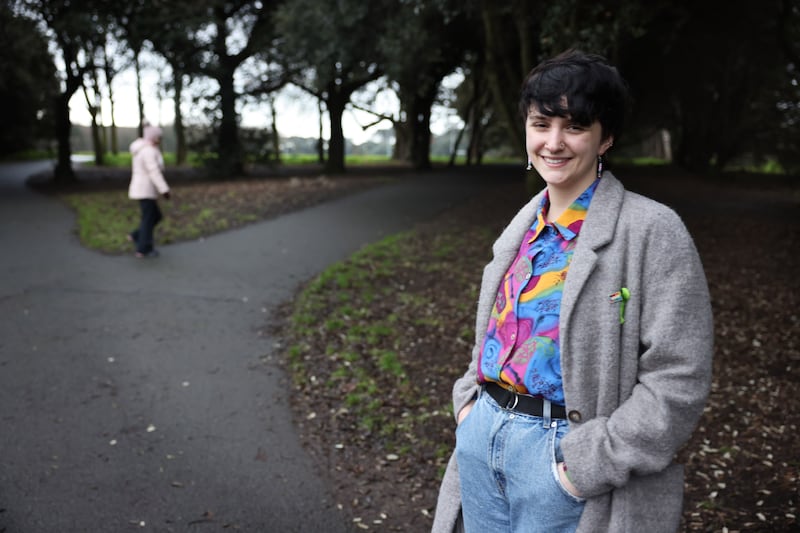 Marysia Pachowicz: ‘It really felt like they were just trying to get me through the system as quickly as they could.’ Photograph: Dara Mac Dónaill
At the same time, Pachowicz was using their own first-hand experience, as a member of the service users’ group for Sharing the Vision: A Mental Health Policy for Everyone, to advise the Department of Health on the implementation of mental health policy.
“My journey with my mental health has been quite long and complex but, in short, I have a recurrent major depressive disorder, which basically means that I experience repeated episodes of depression over the course of my life.”
[ Our psychology services are overwhelmed. It doesn’t have to be like thisOpens in new window ]
They have also struggled with problems such as anxiety and intrusive thoughts, body image, and food issues. “There’s a lot of layers to it.” They were in Child and Adolescent Mental Health Services (Camhs) briefly as a teenager. “It was not a great experience, which is why it was brief.” But they acknowledge being lucky in having peers who would talk openly about struggling with mental health, so self-stigma was not a big issue.
At TCD Pachowicz found professional support through the “incredible” student counselling service and was referred to one of the college’s attending psychiatrists. But it was a different story when attending public mental health services after college, where they say they were misdiagnosed and put on treatment – without being told initially what the diagnosis was.
“I was diagnosed with something, after nowhere near enough assessment. Then I was referred for treatment for this diagnosis that I didn’t know I was given and didn’t have.”
Once Pachowicz learned of and challenged the diagnosis, while explaining the treatment was not helping, the response was very much “you’re not trying hard enough”.
“It really felt like they were just trying to get me through the system as quickly as they could. Like what I wanted, what I felt, what I needed, didn’t really matter. That was definitely the greatest amount of stigma I’ve ever really encountered.”
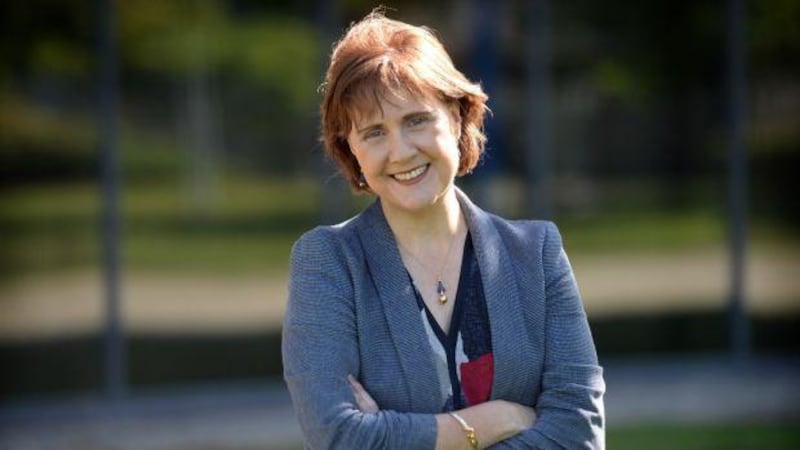 Prof Sinéad McGilloway of Maynooth University, principal lead of Co-Prime. ‘We recognise the research is not getting into policy and practice as quickly as it should’
Subsequent treatment through private services and ongoing medication has helped Pachowicz, now aged 26, manage their condition. Working as a researcher with the Think-tank for Action on Social Change (Tasc) in Dublin, they are also taking on a role with a new, all-island mental health research network, which will be driving involvement and proper remuneration of people with lived experience at every stage of any study.
“You may not believe this, but we do not have proper systems in our universities to properly reimburse people with lived experience to take part in the research,” says Prof Sinéad McGilloway of Maynooth University, who is principal lead of the new network Co-Prime (an acronym from Co-producing and Promoting Research and Innovation in Mental Health). “Universities need to sit up and take notice.”
Pachowicz is co-lead of Co-Prime’s lived experience core team, along with Conor Gavin, who is psychosis research centre co-ordinator in St John of God Research Foundation. They will, he says, be making sure that public and patient involvement is central to everything that is being done in the network. Currently Gavin regards lack of clarity around payment and parity of esteem as an ongoing barrier to involvement of those with lived experience in research.
“Their expertise is valuable, their time is valuable, we have to put a value on that.” Making this one of Co-Prime’s priorities is progress. “The next step now is to standardise how the contracts are managed, how people are trained.”
Without sufficient preparation, it can be intimidating for those with lived experience to participate in academic research. To boost recruitment, the team aims to raise awareness of the benefits of getting involved in the system but also ensure participants are supported.
 Conor Gavin, psychosis research centre co-ordinator, St John of God Research Foundation
“Oftentimes people might come in and agree to do it, but after a while they see that the right supports aren’t there. They’re not being supervised correctly. They don’t have someone to turn to if something does go wrong, or if they’re feeling uncomfortable with sharing something.”
The team also wants to see researchers “buy in” to true co-production with people with lived experience, rather than regarding it as just a box to be ticked. Conducting research and only then, retrospectively, consulting people with lived experience is one practice they want stopped.
Gavin (27) lives with mental illness. “I had a psychotic episode at age 16, just over 10 years ago. I went on to be diagnosed with schizoaffective disorder, which is a psychotic disorder with mood component, so depressive episodes and mania as well.” The condition is managed with medication and he has never had a second psychotic episode, although he has had mood highs and lows.
He was always interested in research science, and studied for a biochemistry degree before doing a master’s in clinical neuroscience. After years of experience with psychosis, “I did the master’s to transfer into the mental health field. I wanted to give back really and see what I could do.”
He acknowledges that the term “psychosis” often strikes fear in the minds of the public, due to its association with reports of violent attacks.
“It does happen, but it’s rare. Generally there is no association, statistically, between having psychosis and being violent.” Meanwhile, there are many positive stories coming out, highlighting how recovery is possible. This is “bridging the gap between what actual psychosis is and what the public thinks it is”.
Gavin talks of a “paradigm shift” in mental health over the past two or three decades towards recovery. “The public are the last to know about it, really,” he suggests, as waiting times and lack of beds attract most media attention. But there is great work being done – for instance, by the National Office of Mental Health Engagement and Recovery, which supports recovery colleges around the country.
He finds doing media interviews and creating online content encourages others to open up about their mental health issues. “Public stigma is obviously a big one but self-stigma is almost just important to tackle as well.”
McGilloway believes Co-Prime is “a huge step forward” for mental health research. With almost 150 individuals and organisations from North and South on the network, covering the huge scope of mental health, they are not aware of any similar network on the island of Ireland.
The Health Research Board (HRB) is providing €1 million over five years for the running of the network, while the Minister of State with responsibility for Mental Health, Mary Butler, has also announced an additional €2 million HRB funding for 10 mental health research projects, covering areas such as youth mental health, ADHD in adults and loneliness in older people.
The “unprecedented momentum in mental health research” is partly because of the impact of the Covid-19 pandemic, says McGilloway, who is working on Co-Prime with co-leads Dr Eve Griffin from the National Suicide Research Foundation and Prof Brian McGuire from the University of Galway. Administrative work for the network is already under way but the co-applicant team, consisting of 58 members, will gather online this Thursday, January 29th, for a kick-off meeting.
This all-island collaboration is about trying to make research more co-ordinated and to bring different disciplines together, says McGilloway, “because we tend to work within mental health research in quite siloed, fragmented ways”. One focus will be “knowledge translation”, ie better communication.
“We recognise that the research is not, maybe, getting into policy and getting into practice as quickly as it should,” says McGilloway, who was co-author of Ireland’s first National Mental Health Research Strategy (2024). She believes the public also need to be better informed “about all the really excellent research that’s happening in Ireland”.
Research can sometimes be regarded as an esoteric pursuit within walls of academic institutions, but it is of real relevance, she says. While obviously more State funding is required for improved mental health services and to reduce waiting lists, “we need this evidence to make our services better. You need to know how your service is working; what needs to be improved; what we can do better; who benefits from what and when and under what circumstances.”
Involvement of lived experience, or “co-production” as it is sometimes called, is vital “from the get go”, she says, “because sometimes we do research and it’s not responding to the needs”. Co-prime will promote and support the use of lived experience at every stage, from “formulating ideas right through to collecting data, training them up as peer researchers, getting them involved in presenting at conferences”.
In addition to the core team of 10 lived experience contributors, there will be workshops aimed at encouraging and training others, particularly from marginalised groups, to participate.
With Gavin and Pachowicz on Co-Prime’s leadership team, lived experience representatives have been given a key role, McGilloway points out, adding: “We want to be accountable, we want to be transparent, and we want to be seen to be relatable – not just in our institutions doing research that has no impact on anyone.”