
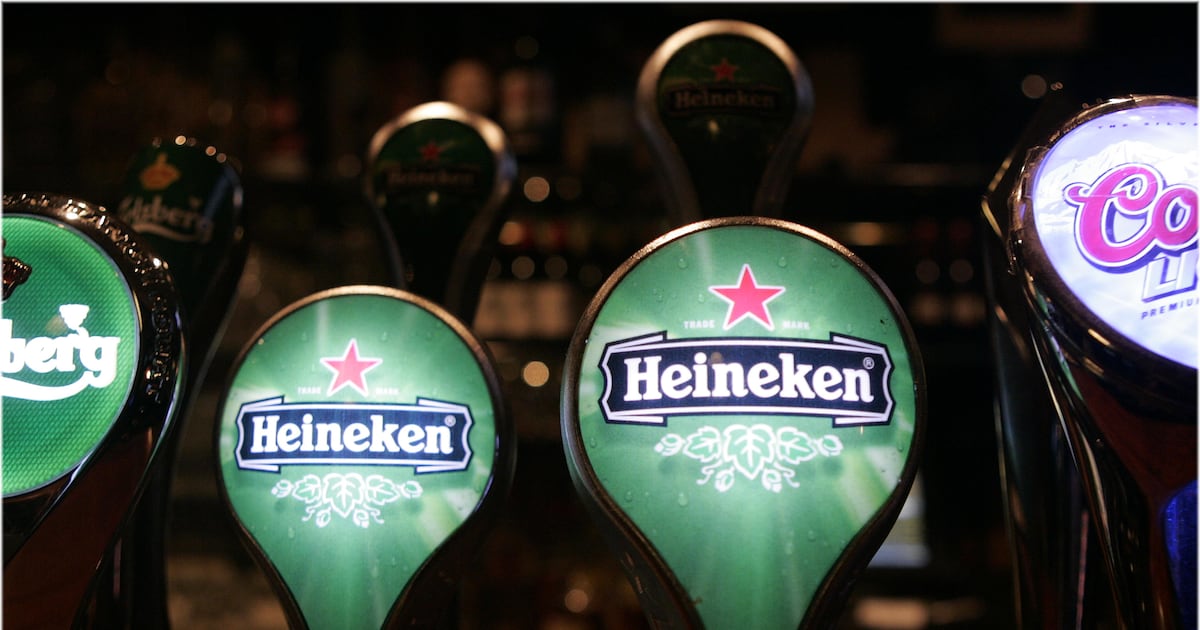
Heineken is to increase the price of all its draught products by 3.1 per cent from the middle of next month in a move which will see the cost of a pint of lager, stout and cider made by the brewer climb by around 20 cent.
The price hike is likely to be even more substantial in some pubs in urban centres.
In addition to Heineken, the brewing giant also makes Coors, Murphy’s and Beamish as well as Orchard Thieves, with all of its draught products impacted. Including Heineken 0:0.
In a statement sent to The Irish Times, the brewer said its business “continues to face cost increases and while we are committed to finding and acting on ways to reduce those costs, we unfortunately need to amend our pricing.”
That will see what it described as a “blended 3.1 per cent increase taking effect from February 16th across its draught product range.
The decision will see the wholesale price of a pint of one of its products climb by around 7 cent although when taxes and publican margins are included, consumers are likely to see the cost climb by around 20 cent.
[ Price of a pint of Guinness and 0.0 alternative set to climb by about 20 centOpens in new window ]
The move comes just two weeks after Diageo said it was increasing the cost of a pint of Guinness by the same margin. It also added 10 cent on to the wholesale price of its increasingly popular Guinness 0:0 range.
Publicans expressed dismay at the latest price hike and said it would increase the pressure on pubs that are already struggling to survive.
“The Vintners’ Federation of Ireland is extremely disappointed by Heineken’s decision to increase prices across its draught range,” a spokesman for the umbrella group that represents hundreds of publicans told The Irish Times.
“Coming so soon after a Diageo increase, this once again places the burden squarely on publicans, many of whom are already operating at the limits of viability,” the spokesman added. “Repeated supplier price hikes are unsustainable for the on-trade and further undermine the future of Ireland’s pubs. Publicans cannot continue to absorb or pass on these costs indefinitely.”