
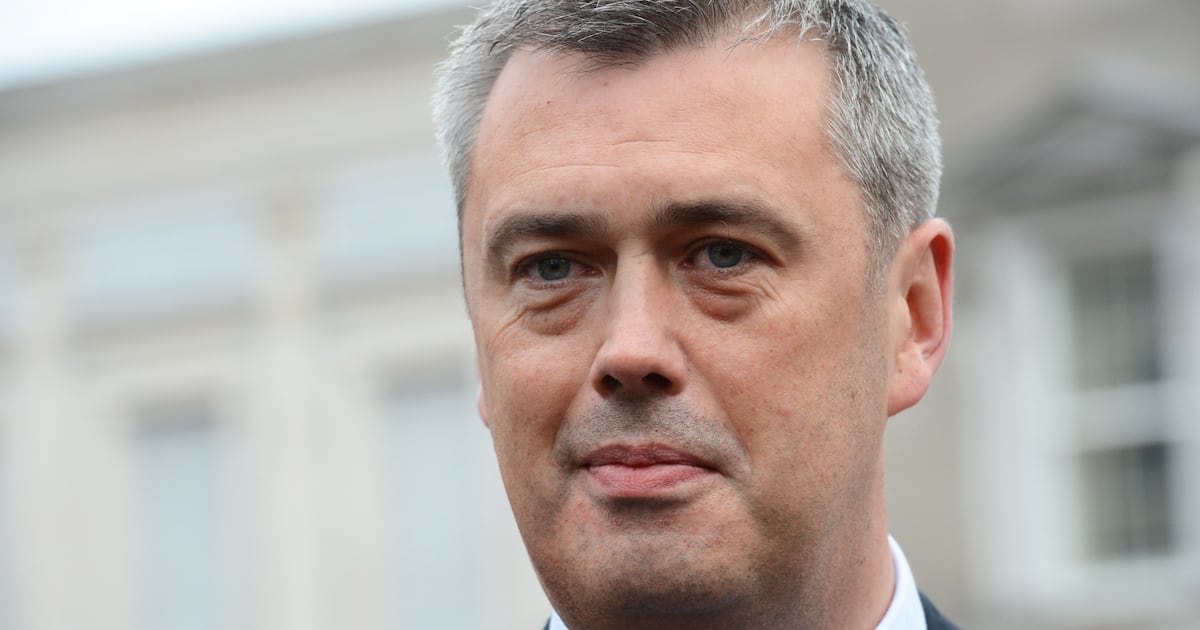
The life of former TD Colm Keaveney (55) had already taken a turn for the worse when he lost his seat in Galway East in the February 2016 general election.
Since then, matters have continued to go downhill.
In September last year, the District Court in Tuam, Co Galway, was told Keaveney was on disability benefit and had attended residential treatment for his cocaine addiction.
He lived with his parents, Vincent and Margaret, up to the end of 2023 when they died within less than two weeks of one another.
After that Keaveney left their home in Tuam and moved into rental accommodation in a nearby town, according to people who know him.
“He had everything going for himself, but things went horribly wrong,” said a former colleague from the world of Galway politics.
“God, where he has landed now. It is sort of a sad story.”
[ Former TD Colm Keaveney avoids jail after pleading guilty to drug drivingOpens in new window ]
The child of well-regarded parents who ran a farm outbuildings business, Keaveney has a degree in industrial law and economics from University College Dublin.
He served two terms as president of the Union of Students of Ireland and got a job as a union official with Siptu in Galway after leaving his student years behind.
“He had an ability to work a room, organise a campaign,” said a friend from the student union days.
“But I think that same personality might have been his undoing. He sort of needed things to be a bit hectic, all of the time.”
A member of the Labour Party, Keaveney was elected to Tuam Town Council in 1999, Galway County Council in 2004, and the Dáil in 2011.
The following year he was elected chairman of the Labour Party, but his relationship with the party was already proving difficult.
In early 2013, he resigned from Labour, having adopted a conservative attitude to legislation liberalising abortion. In December 2013, he joined Fianna Fáil.
The switch in parties did not help in the 2016 general election, where he failed to retain his seat. He ran successfully for Fianna Fáil in the Galway County Council local election in 2019. It would be his last outing in Irish politics.
In December 2009, ACC Bank lodged proceedings against Keaveney and his wife, Deirdre. A judgment in default was registered in 2010 but nothing much happened while he still had his Dáil seat.
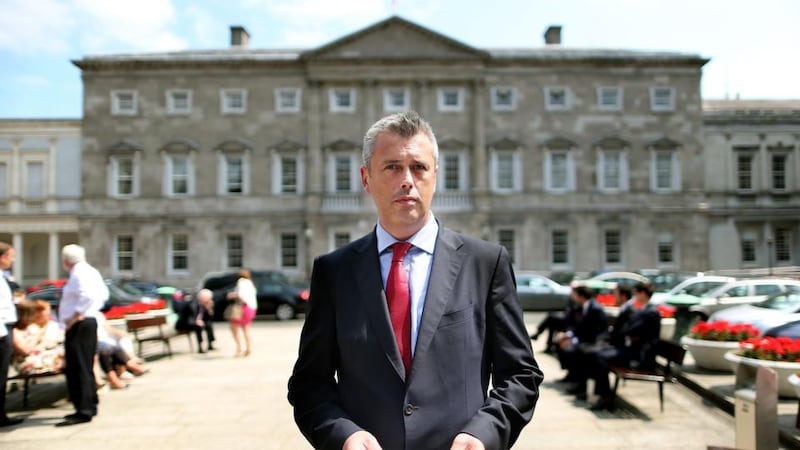 Colm Keaveney outside Leinster House in Dublin after he quit as chairman and member of the Labour Party in 2013. Photograph: Julien Behal/PA
A few months after losing his re-election bid, Keaveney was adjudicated bankrupt. Court papers showed he owed more than €1.23 million.
In a sworn statement Keaveney said he was joint owner of the family home, which had a value of €130,000 but carried a mortgage of more than €158,000. He and his wife had the ACC judgment mortgage of almost €1.03 million against them, arising from the failure to repay a loan. The loan arose from a failed property venture.
Meanwhile, Keaveney had become embroiled in an extraordinary row involving the billionaire businessman Denis O’Brien, the Galway entrepreneur and one-time political activist Declan Ganley, and a PR consultancy called Red Flag.
As was later outlined in court documents, Keaveney in 2013 had considered the idea of running for the European Parliament and met on several occasions with Ganley, who had run an unsuccessful but not disastrous campaign in 2009, to discuss the idea. In the event it came to nothing.
In 2015, in the Dáil, Keaveney made a speech that was heavily critical of O’Brien. Prior to delivery, a copy of the speech was shown to a PR executive, Karl Brophy, of Red Flag Consulting. Amendments were suggested but, in the end, Keaveney delivered the speech in its original format.
When O’Brien later took proceedings against Red Flag, alleging defamation, the amended text was among the material that featured. And Keaveney, after he had lost his seat, took proceedings against the Independent Newspapers group, in which O’Brien was then the largest shareholder, alleging a graphic illustrating an article about him was defamatory.
Then O’Brien took defamation proceedings against Keaveney, not on the basis of the Dáil speech, which was covered by privilege, but based on the alleged publication of the draft, which it was claimed (unsuccessfully) had been “published” when transferred to a Dropbox.
Ten days after O’Brien lodged his proceedings, Keaveney was adjudicated bankrupt. Then, after meetings between Keaveney and representatives of O’Brien, the billionaire’s action against the former TD was dropped.
At the same time, Keaveney swore an affidavit that was used by O’Brien to launch a claim that Ganley was behind an alleged campaign against O’Brien being run by Red Flag.
In the event none of the legal actions, including Keaveney’s against the Independent group, went anywhere, but they generated a significant amount of legal bills, media coverage and, no doubt, stress.
Keaveney was re-elected to Galway County Council in 2019, for Fianna Fáil. But someone who had always been known to enjoy a drink, and was rumoured to occasionally indulge in recreational drugs, was getting into more serious difficulty.
[ Cocaine users are now older, better educated and more likely to be workingOpens in new window ]
He left the family home at some stage and moved in with his parents, telling fellow councillors he was acting as carer for both. When both parents later died, Keaveney moved again, this time to more modest accommodation.
In June 2023 he was stopped at a Garda checkpoint and failed a drug test. Subsequent analysis of a blood sample revealed the presence of cocaine.
On two dates in July 2024, he was stopped for failure to display a valid insurance disc on his car. He later produced an invalid certificate, a court hearing on the matter was told.
Then, late one night in October 2024, gardaí spotted a Ford Focus driving through the lights at Boyle, Co Roscommon. The Ford veered across the road and collided with a car waiting at a junction but did not stop. When the gardaí approached him, Keaveney, who had been driving the Ford, was unsteady on his feet, had glassy eyes, and smelled of alcohol, a hearing of the District Court in Carrick-on-Shannon was later told.
Keaveney refused to comply with a demand for a blood or urine sample. He subsequently pleaded guilty to failing to provide a specimen under Section 12 of the Road Traffic Act and failing to stop after a collision. He was banned from driving for four years.
At the time his solicitor told the court Keaveney had been under significant personal strain, including from the recent deaths of both parents and ongoing chronic pain from spinal surgery.
At a hearing in September last year, in relation to the drug-driving and driving with no insurance charges, his solicitor said that at the time of the offences Keaveney had been caring for his parents and had developed a cocaine addiction.
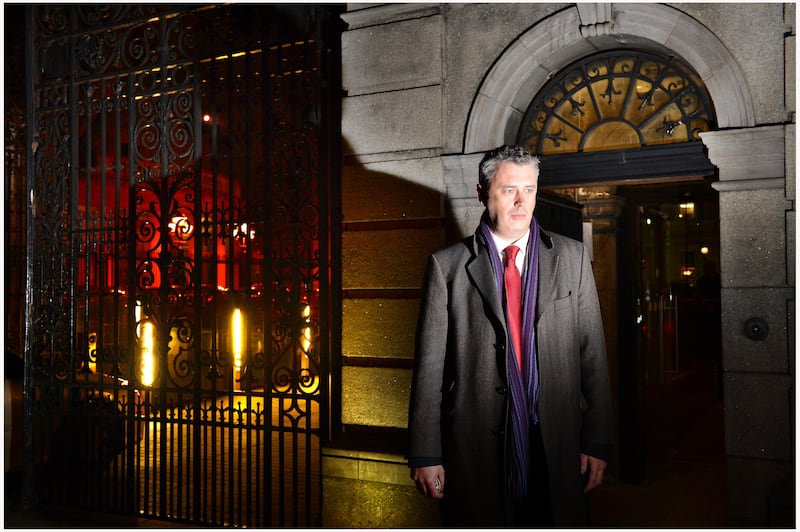 Colm Keaveney had considered the idea of running for the European Parliament. Photograph: Brenda Fitzsimons
He had attended a residential addiction treatment centre and remained in aftercare during his ongoing recovery, the court heard.
“I reached out to him a few times,” said a former political colleague who had read about the court cases in the media and wanted Keaveney to know that he wasn’t a complete outcast. “But I haven’t heard an iota from him.”
There is speculation among people in Tuam about how long Keaveney’s drug problem has been in existence, and the extent to which it might explain all his difficulties.
“I would say Colm was probably never too far away from [drugs], if I’m being honest,” said one. “He had a sort of weakness from his popularity, and I think he relied on them a little to prop things up from time to time.”
Keaveney, a politician who knew him said, could be arrogant, but when you got to know him, you ignored this.
“I liked Colm,” he said. “It all went pear shaped, but behind that is a nice guy when you really get down to it.”