
A Looping Showroom by Studio DOT Organized Around Movement
The Loop by Studio DOT is an experience-led showroom designed for The Wardrobe Company, a brand centered on flexibility, customization, and collaborative design processes. Located in Okhla, India, the 3,700-sqft space is organized as a continuous circulation sequence that connects areas for discussion, making, and product exploration into a cohesive spatial narrative. Rather than functioning as a conventional display environment, the showroom is structured to support gradual discovery through movement, interaction, and pause.
The plan is developed around a looping circulation path that links all programmatic elements without clear beginnings or ends. This organizational strategy allows visitors to move fluidly between zones for conversation, consultation, and product engagement while maintaining spatial continuity. The showroom brief emphasized the need for a space that operates as both a product environment and a platform for dialogue, where kitchens, wardrobes, and objects could be encountered as part of an integrated design process rather than a catalogue-style display.
all images by Saurabh Suryan
Circulation is the Primary Organizing Element of The Loop
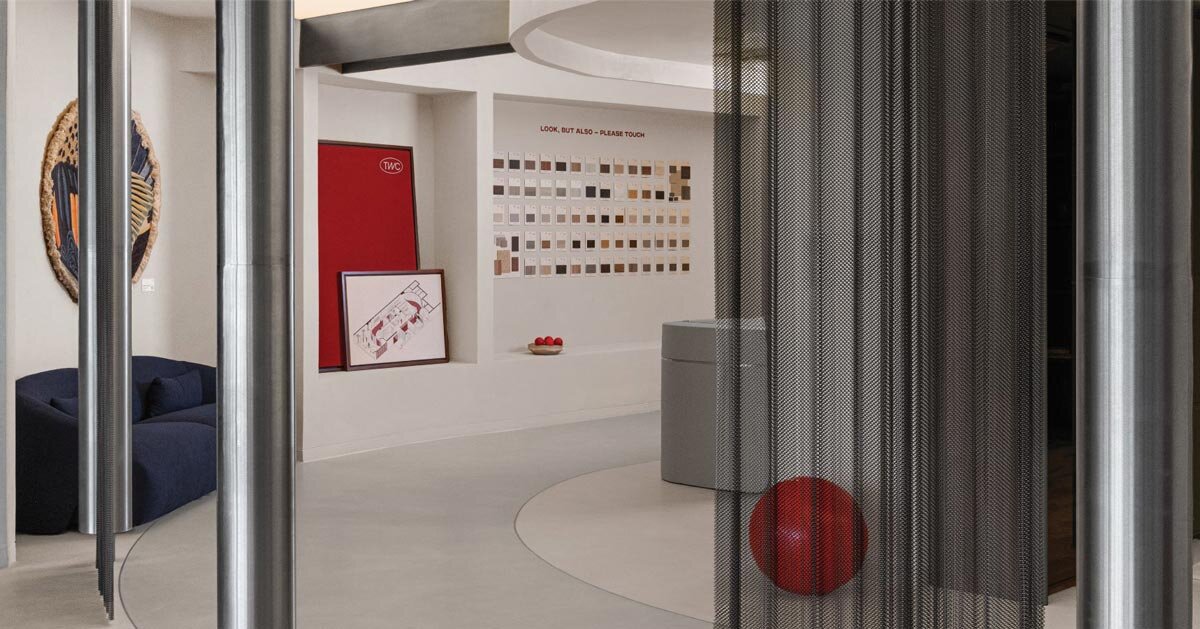
The experience begins at the lift lobby, where a steel-clad wall with integrated branding establishes the material and tonal language of the interior, designed by New Delhi–based practice Studio DOT. Proportions, surface finishes, and controlled lighting introduce a restrained spatial character through detailing rather than overt graphic expression. This approach continues into the front zone, which houses the Idea Lab and Client Workshop, spaces intended to anchor initial engagement with the brand.
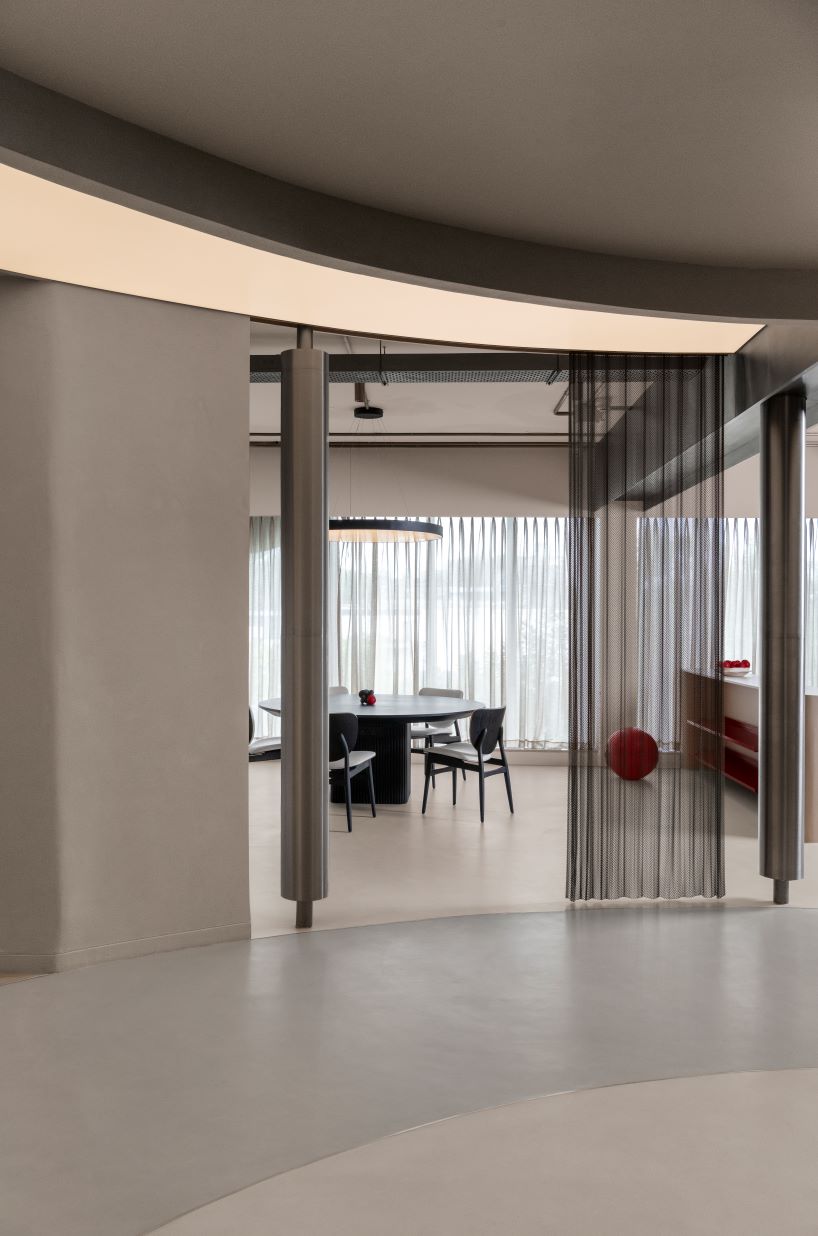
A stepped seating element formed in micro concrete occupies one side of this area, its softened edges giving the impression of a lifted floor plane. Opposite, a recessed wall volume contains linear shelving for material samples and display. Stainless steel columns introduce a rhythmic structural presence, while woven metal curtains act as semi-transparent partitions, allowing light to filter through and mediate between public and private zones.
As circulation moves inward, the loop becomes the primary organizing element of the showroom. Kitchens, wardrobes, and accessories are arranged along this path as a sequence of spatial encounters rather than isolated displays. Informational touchpoints are distributed throughout, offering material and construction details and encouraging tactile engagement. Overhead, a custom steel lighting installation traces the curvature of the circulation route, reinforcing orientation and pace while visually linking the spaces.
The Loop showroom by Studio DOT in Okhla, India
consistent material palette maintains rhythm along the loop
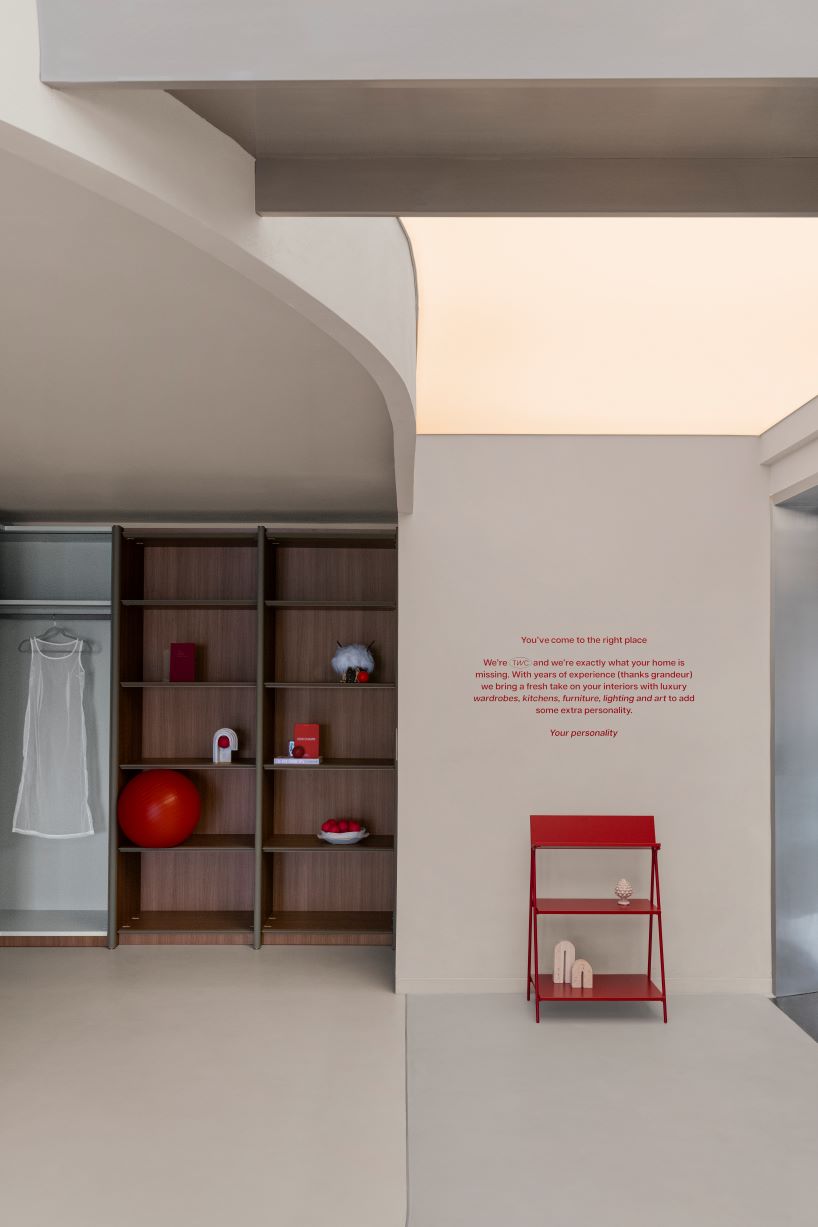
The material palette remains consistent throughout the showroom. Floors alternate between two tones of micro concrete, separated by stainless steel inlays that outline circulation paths. Walls are finished in lime plaster, introducing texture and subtle variation in light reflection. Exposed structural beams are wrapped in brushed steel, emphasizing the existing framework. Typography is applied sparingly as floor-based graphics, functioning as directional cues rather than signage.
Toward the end of the loop, the spatial atmosphere shifts into a more contemplative zone dedicated to art objects and brand extensions. Pedestals of varying heights support sculptural elements, while warmer lighting and curved forms slow movement and introduce a sense of closure. This area functions as both the conclusion of the circulation sequence and a moment of reflection within the overall experience. Service spaces, including the pantry, washrooms, and utilities, are positioned behind curved walls and concealed doors opposite this zone. These areas follow the same material and geometric language, maintaining continuity across functional and public spaces.
Through its looping organization, controlled material palette, and emphasis on movement and interaction, The Loop reframes the showroom as a spatial system shaped by time, dialogue, and use. The project positions retail architecture as a framework for engagement and collaboration, where design is experienced through progression rather than immediate display.
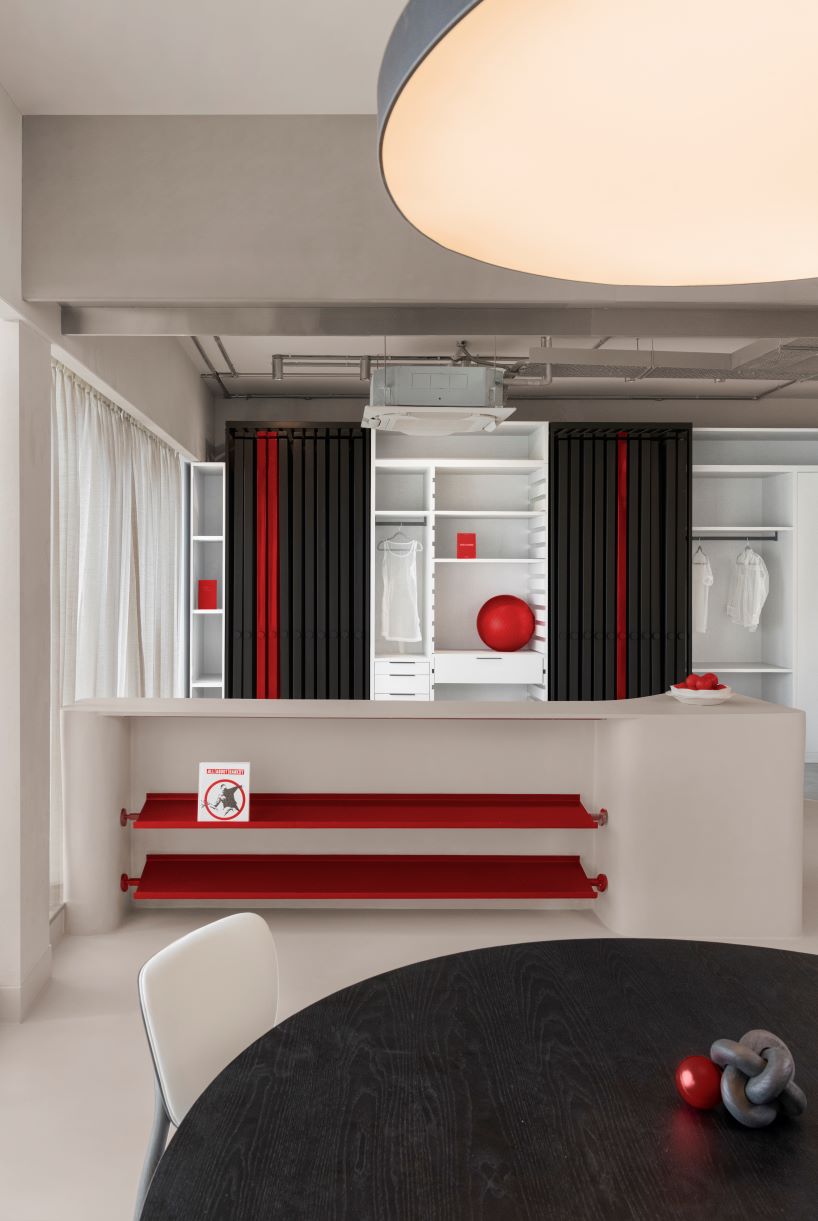
retail space structured around movement, pause, and interaction
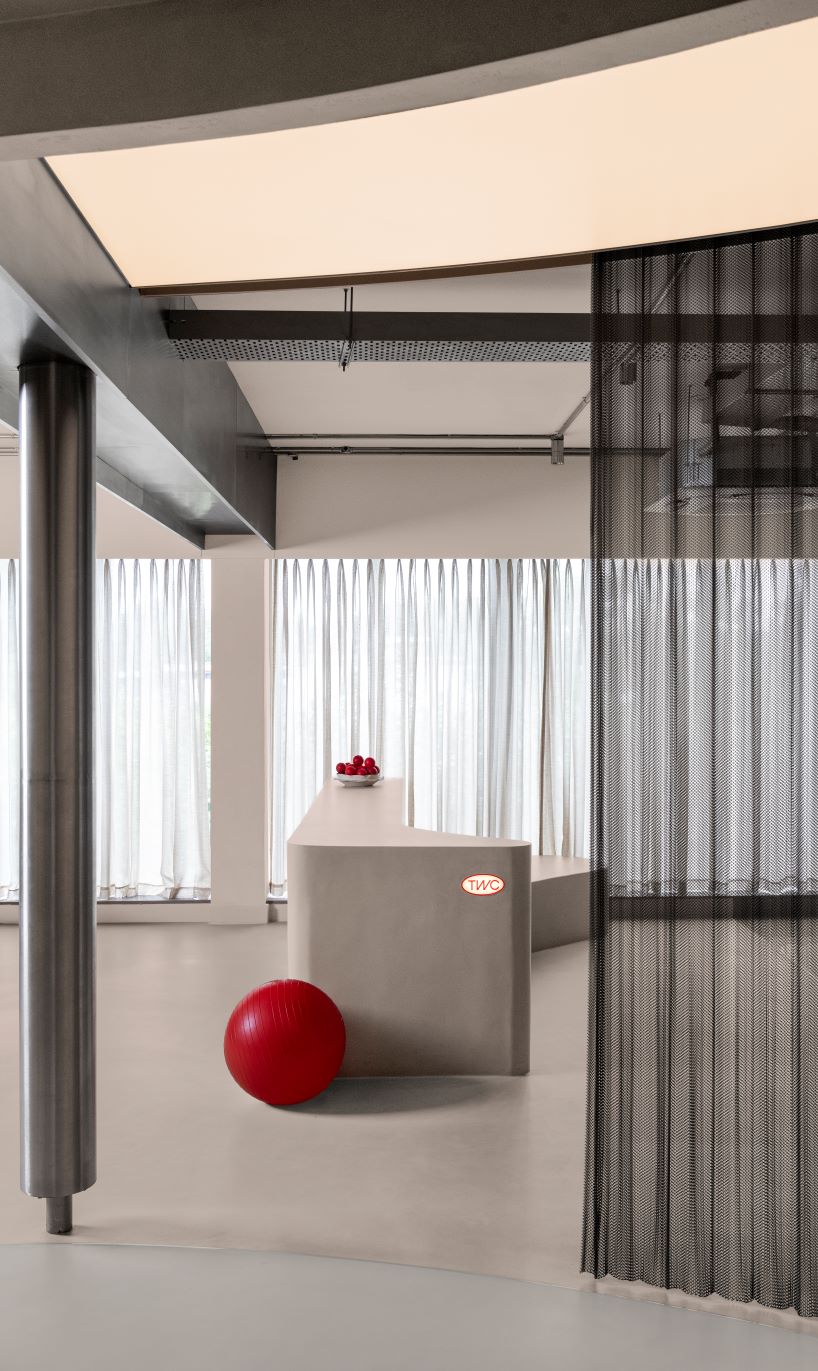
a 3,700-sqft interior organized as a continuous circulation sequence