
Long overdue, Best Album Cover will rightfully return at the 2026 ceremony this Sunday, and now exist alongside its former replacement. This year’s nominees include Tyler, The Creator’s Chromakopia, Djo’s The Crux, Bad Bunny’s Debí Tirar Más Fotos, Perfume Genius’ Glory, and Wet Leg’s Moisturizer. Best Record Packaging will continue to celebrate innovation in the physical design of CDs and vinyl. How the restored prize will be judged 50 years later will be determined on 1 February. The role and form of the album cover have drastically changed since 1973, thanks to streaming and the digital universe we all inhabit. Case in point: none of this year’s nominees have any typography on the covers – an essential design element for the category’s earliest contenders. To market a product without a title or the artist’s name?! Unfathomable 50 years ago and rare even a decade ago.
Among the nominees, I personally would’ve loved to see Amaarae’s Black Star on the list for its beautiful homage to the Ghanaian flag (although controversially inspired by photographer Gabriel Moses’ work), along with Sabrina Carpenter’s Man’s Best Friend for some more uproar. As Will Ferrell famously lamented in Blades of Glory, “No one knows what it means, but it’s provocative… it gets the people going!” In retrospect, controversy is all Carpenter’s cover has to offer, as opposed to Bad Bunny’s Debí Tirar Más Fotos, one of this year’s contenders.
At first glance, the Puerto Rican popstar’s eighth album cover appears quite simple: two white chairs set against an empty green landscape. But as Grammy-nominated writer Judy Cantor-Navas aptly points out on her Substack, these fixtures are more than just plastic furniture – they are the Monobloc chair. “Particularly potent in the Latin American landscape and social fabric,” as Judy writes, you’ll find them everywhere, from restaurants to beaches, sidewalks, churches, weddings, and porches. Debí Tirar Más Fotos has been described by many as Bad Bunny’s ode to his home, and on the cover, the singer continues to pay respect to the infinite memories spent in these everyday objects. He proves that a minimalist image can carry cultural gravity for millions of fans. It’s approachable. It’s music for everyone.
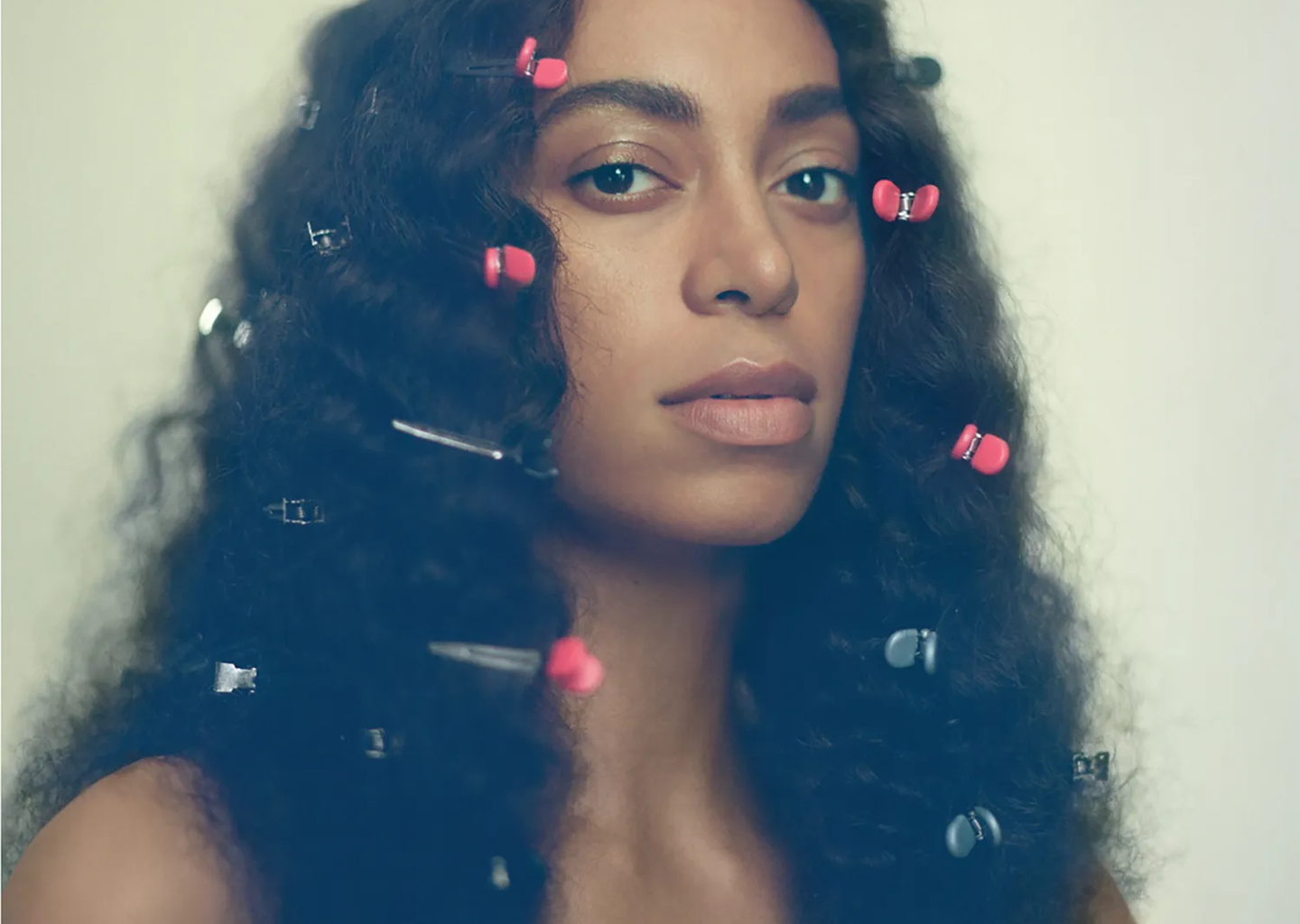
Which begs to ask, which covers might the Grammys have missed during this category’s hiatus? Which musicians challenged genre norms, the cultures in which they were crafted, and ultimately, the very idea of what an album cover can be? We’ve chosen one (or in some cases two) for each year of the past decade – let’s examine the context in which these album covers were created and the visual artists who helped bring them to life.