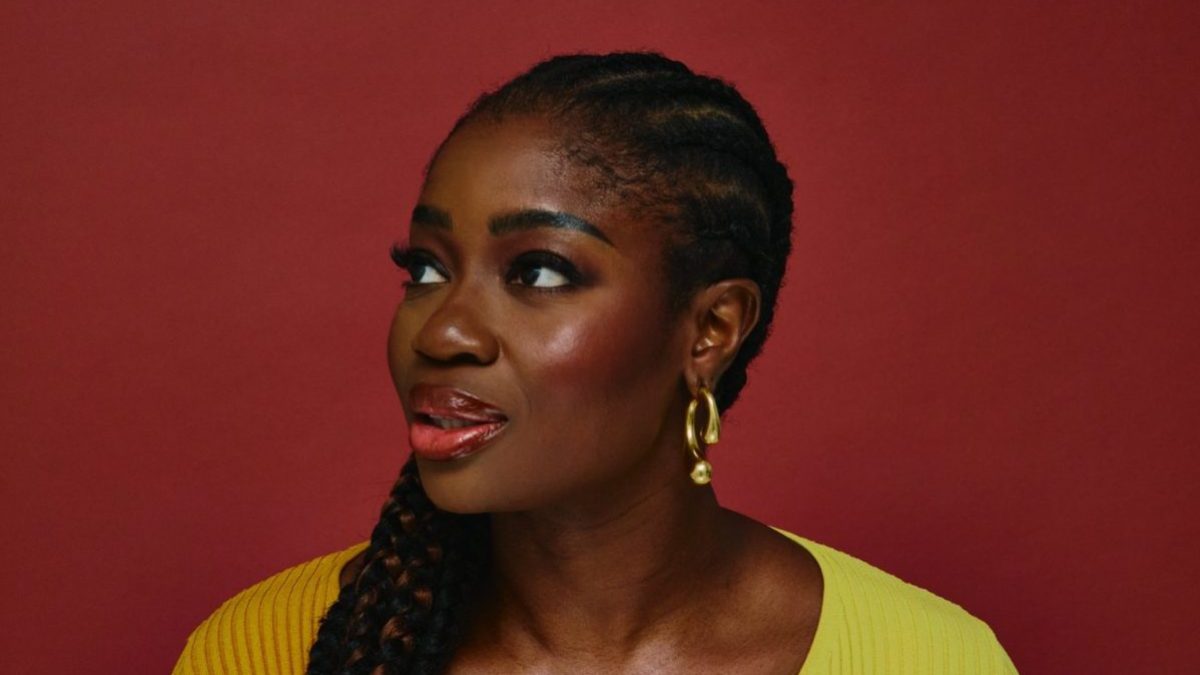
“I’m not a winter person at all,” says Clara Amfo. “I despise being cold and I really hate slow, dark nights.”
The 41-year-old former Radio 1 DJ and TV presenter is not alone. While traditional understanding of the “January blues” tends to focus on a single low point – “Blue Monday” – new research flags the grim, emotional long haul of “quiet coping”, with a population suffering from lowered mood and “prolonged social fatigue”.
Amfo is the face of a new campaign by Odeon cinemas, in support of the mental health charity Mind, arguing that the cinema can provide a little “Big Screen Therapy” to help take the edge off the midwinter funk.
Amfo often lives in a fizz of high-octane social activity, and finds films offer a powerful decompression valve. “Sometimes you crave cheesy escapism,” she says, talking via video call from the back of a car on her way to present The One Show. “Sometimes it can be helpful to confront issues you’re struggling with: grief, illness, a break-up, self esteem problems… Seeing those things on screen can help you to heal.”
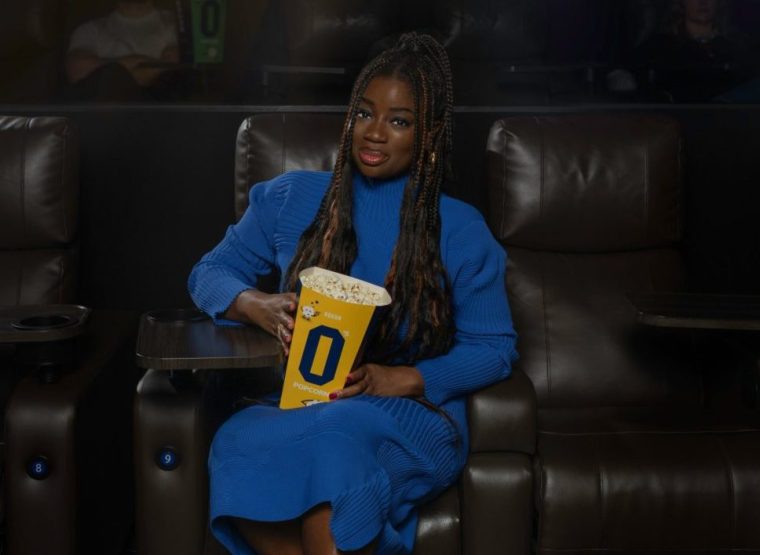 Amfo lovs the ‘anonymity’ of the cinema (Photo: Sean Collymore)
When she quit Radio 1 last year (later beginning to host ITV’s Studio Sessions), media reports suggested that Amfo’s struggle with depression drove her departure. But today she tells me that isn’t really the case.
“I did an interview with my mate in July of last year,” she says, and a mention of depression “got blown up into a huge headline, which I found extremely frustrating, I can’t lie. It got completely sensationalised and that ground my gears”. She exhales. “Depression is something I have experienced and there is no shame in that. But it isn’t my defining thing. I have friends who have dealt with clinical depression in ways that I have not…” She wants to put her own “dark moments” in a context that is “respectful to them”.
One of five children born in London, to Ghanaian parents, Amfo says her favourite childhood films were Sister Act II and The Lion King. “The Lion King was a much harder watch for me after my dad died in 2015,” she says. But she also recalls how her dad – who “absolutely loved Denzel Washington, who was refined, measured, and principled like him” – would rent Sister Act II for her. Some of the appeal was “about representation”.
“Seeing Whoopi Goldberg and Lauryn Hill together on screen was really powerful,” she recalls. “Two beautiful, dark-skinned, black women. Colourism is still very prevalent in our society, within my community for sure. Seeing Whoopi and Lauryn lead that movie made me feel good about myself.” Having “met so many of my heroes in my job”, she expected to be able to keep things professional when she met Hill. “But when I met Lauryn I just sobbed on her: I told her I had seen everything she has done and how grateful I am and… wahhhh!” She pantomimes the tears for comic effect.
![From ITV ITV Studio Sessions SR1: on ITV1 and ITVX Pictured:Clara Amfo This photograph is (C) ITV Plc and can only be reproduced for editorial purposes directly in connection with the programme or event mentioned above, or ITV plc. This photograph must not be manipulated [excluding basic cropping] in a manner which alters the visual appearance of the person photographed deemed detrimental or inappropriate by ITV plc Picture Desk. This photograph must not be syndicated to any other company, publication or website, or permanently archived, without the express written permission of ITV Picture Desk. Full Terms and conditions are available on the website www.itv.com/presscentre/itvpictures/terms For further information please contact: michael.taiwo1@itv.com ITV Studio Sessions TV Still ITV](https://www.newsbeep.com/ie/wp-content/uploads/2026/01/SEI_282462526-e1769538356317.jpg) Amfo hosts ITV’s ‘Studio Sessions’ music series (Photo: Melody Berkery/ITV)
Amfo hosts ITV’s ‘Studio Sessions’ music series (Photo: Melody Berkery/ITV)
After studying media arts at St Mary’s University College, Amfo began her career as a marketing intern for Kiss FM before joining BBC Radio 1Xtra as host of the weekend breakfast show in 2013, and beginning to host MTV’s Official UK Top 40 the same year. Soon, she took over from Fearne Cotton hosting Radio 1’s mid-morning show and hit the headlines in 2020 for making a powerful speech on air about the murder of George Floyd, racism and the effect on her own mental health.
Living and processing her emotions so publicly meant Amfo has always enjoyed the privacy of the cinema. “I love the darkness of the cinema, and I do love the anonymity it offers. One of my favourite things is choosing where to sit,” she explains. “I’m definitely a last-three-rows type of girl. I usually go for a corner so I’m not stepping over people or having people step over me, but I guess that’s sort of inevitable, isn’t it?”
She loves “the feeling of everyone being together, submerged in darkness, with a quiet understanding of the rules: like, don’t talk too loudly, eat your food responsibly” – she’s a chocolate buttons and sweet’n’salty popcorn fan, but doesn’t care for fizzy sweets – “and react appropriately to the film”.
Amfo would urge anybody battling a low social battery to try going to the cinema alone. She notes that the “pressure” to enjoy ourselves in groups begins “the minute you start school. You come home and your mum asks: ‘Did you make any friends?’ Then you get a job and you want to be invited to after-work drinks…” she shakes her head. “But when you make that first adult decision: ‘You know what, I’m doing something by myself,’ it feels quite a nice milestone.”
When did Amfo first start going to the cinema alone? “Probably when I was about 26, 27,” she says. “I’m a super social person – I love to be in community. But I also really cherish my alone time. I’m also quite impatient and I don’t always want to co-ordinate all my friends. I’ve never regretted going to see a film alone. You’re watching with your own eyes, ears, biases. You’re not having to confer with somebody else. Then you might have that lovely little moment of interaction with a stranger on your way out. You might never see that person again but it’s a cute little exchange, a connection.”
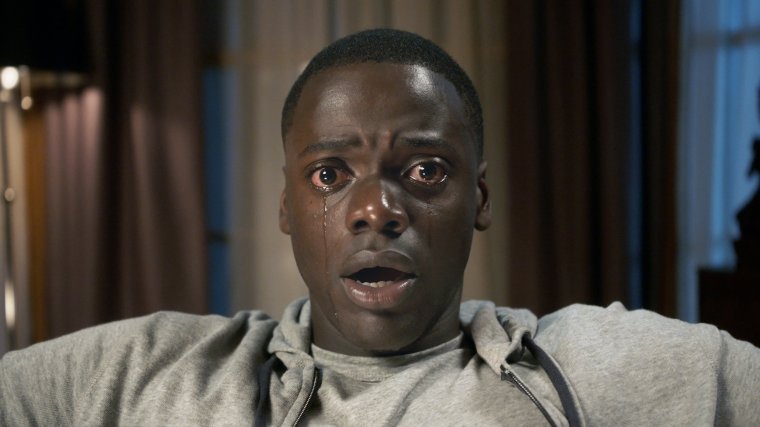 ‘People couldn’t wait to discuss it,’ Amfo remembers of hit 2017 film ‘Get Out’ (Photo: Universal Pictures)
Amfo also hymns the buzz you get during “culture-shifting” event films such as 2017 horror-mystery Get Out, in which a young black man discovers shocking secrets when he meets the family of his white girlfriend. “I remember walking out and the cinema was buzzing with debate,” she recalls. “People couldn’t wait to discuss it – they were laughing together, screaming together, shouting. In my circle of friends, people say things like, ‘That person’s in the Sunken Place now’, and everyone instantly knows what it means because they’ve watched Get Out.”
As somebody who “was born for the sun”, Amfo is hoping that movie-going continues to boost her spirits through these murky winter days. “Escaping into films, music, TV, books, or just enjoying warming food, that’s my solace.”
Clara Amfo fronts Odeon’s latest campaign, drawing on research into changing attitudes towards being alone and shared cultural spaces such as cinema, in support of mental health charity Mind
Your next read