
When Pauline Scanlon was “10 or 11”, she noticed a change in her mother, Eileen. “There was a darkness,” the traditional singer recalls in the beautifully raw and mournful documentary Amhráin do mo Mháthair (TG4, 9.30pm). Eileen was overwhelmed with “memories she had buried deep inside and kept hidden” but which had now resurfaced. “There was a different atmosphere in the house.”
The defining trauma of her mother’s life, Scanlon would learn, was the child Eileen and Scanlon’s father, Paul, had together before they married and which they had been forced to give up for adoption. Eileen was never able to make contact with her oldest son, Graham, and it haunts both him and Pauline that she died without having met him or discovering the life he had made for himself in Dublin. “She was angry, but very quickly the anger turned to shame,” Scanlon says. “She had never stopped looking; she longed to meet the child, but it was not allowed.”
In 2022, Scanlon paid tribute to her mother, who died in 2012, with the album The Unquiet: Songs for My Mother. This accompanying film features live restagings of central moments from the record. They are a reminder of how music can express emotions that words alone cannot, whether those feelings are torrid and traumatic or full of love and warmth.
Amhráin do mo Mháthair also explores Scanlon’s activism – including her work in founding FairPlé, an organisation advocating for gender equality in Irish traditional music. She didn’t get much thanks for her efforts – as is too often the case in Ireland, there was a sense that some things were best buried. “There was a backlash. I was made to feel ashamed,” she says. “That shame was handed down one generation to the next. I wanted to address that feeling and deal with it within my personal life.”
The film has a dreamlike aspect to the point where it risks being a little bit all over the place. One moment, Scanlon is reminiscing about a misbegetton youth attending raves in Kerry. The next, her father is recalling his days playing inter-county football – a reminder that, alongside all the pain and trauma, life often just carried on regardless. Yet this wooziness ultimately gives the documentary a powerfully impressionistic quality. It is as if the audience is experiencing Scanlon’s emotions as they rise up within her in real time. Our feelings obey no logic, but their own, and that is captured here.
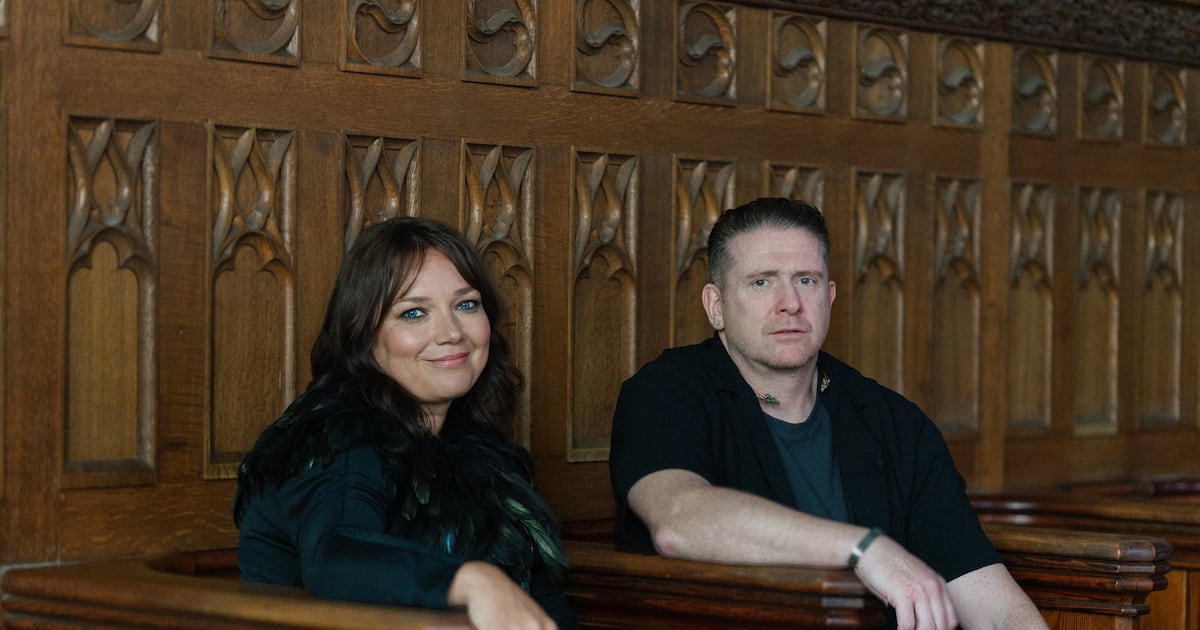
Amhráin do mo Mháthair concludes with Scanlon and her band performing the folk standard Óró, sé do bheatha ‘bhaile in a church. It is a jagged, angry take, fuelled by squalling guitar and Scanlon’s voice rattling with feeling. “I have a lot of rage,” she says. “It’s just red-hot rage I’ll always feel. My mother felt it too, and she had every right to.”