
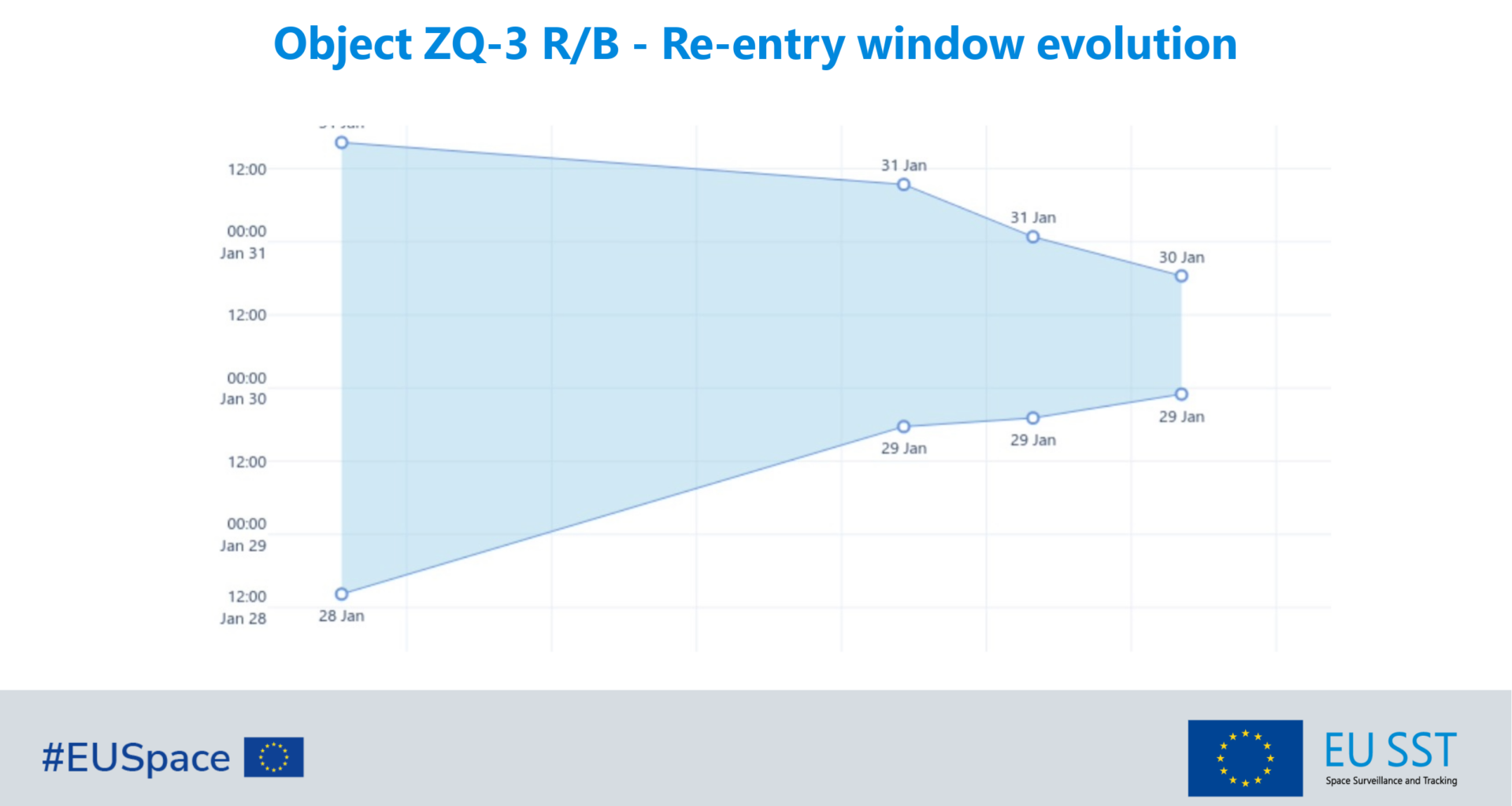
Due to its inclination of approximately 56.94 degrees, the object can re-enter within a latitude band of ±57 degrees, covering a vast area of the Earth’s surface, although most of it is ocean or uninhabited. The Italian Operations Centre, responsible for the EU SST Re-entry Analysis service, is working to narrow down the possible re-entry location and time. As the re-entry approaches, the predictions will become more accurate, but uncertainties remain due to the object’s uncontrolled nature.
The EU SST contributing sensors are playing a crucial role in observing the object and providing data for analysis. This data is being used to produce the best possible estimation for the expected re-entry location and time. A ground track for the re-entry window is being continuously updated, and the current window will be refined as more data becomes available.

Map of the whole ground track.
Yellow lines: ground track before the centre of the re-entry window. Green lines: ground track after the centre of the re-entry window. Red: overflights inside European countries and overseas territories.
Note: the possible re-entry locations lie anywhere along the yellow and green lines. The re-entry point is considered to be at an altitude of 80 km.
The ZQ-3 R/B is quite a sizable object deserving careful monitoring, with an estimated total mass of 11 tonnes and an estimated length of 12-13 m. Its maiden launch on 3 December 2025 seemingly included a dummy payload, which could have remained attached to the second stage of the launcher. The object has been decaying since then, apparently uncontrolled.
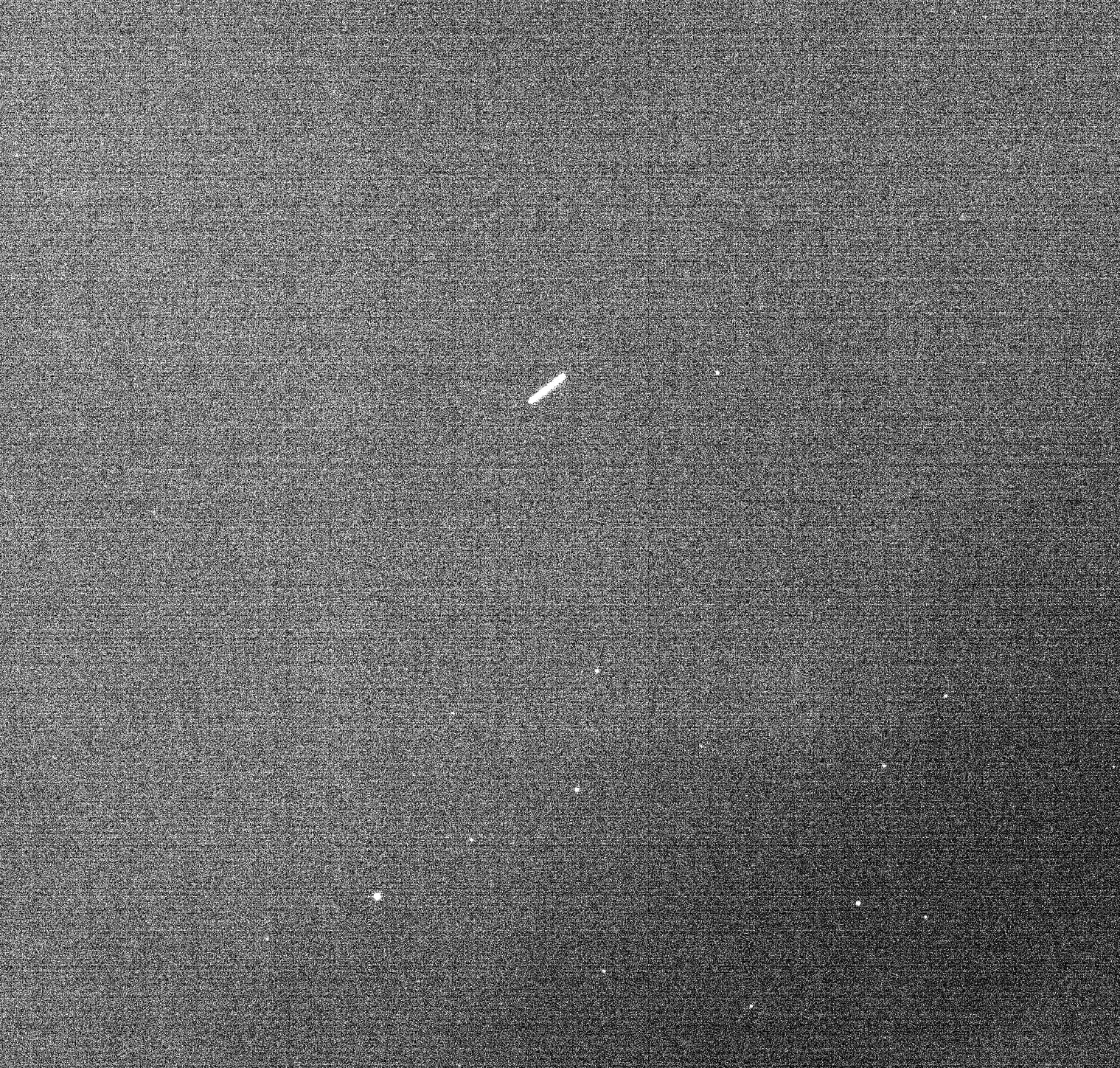
Passage of ZQ-3 R/B taken with the T2 telescope of the EU SST contributing sensor CASSINI-TANDEM, 0.09s exposures. Loiano Astronomical Station managed by INAF-OAS (Italy).
Image credit: INAF-OAS.
As the re-entry approaches, the EU SST Operations Centres will continue to update their predictions and provide the latest information. This article will be updated accordingly, reflecting the latest developments in the monitoring of the ZQ-3 R/B’s re-entry.