
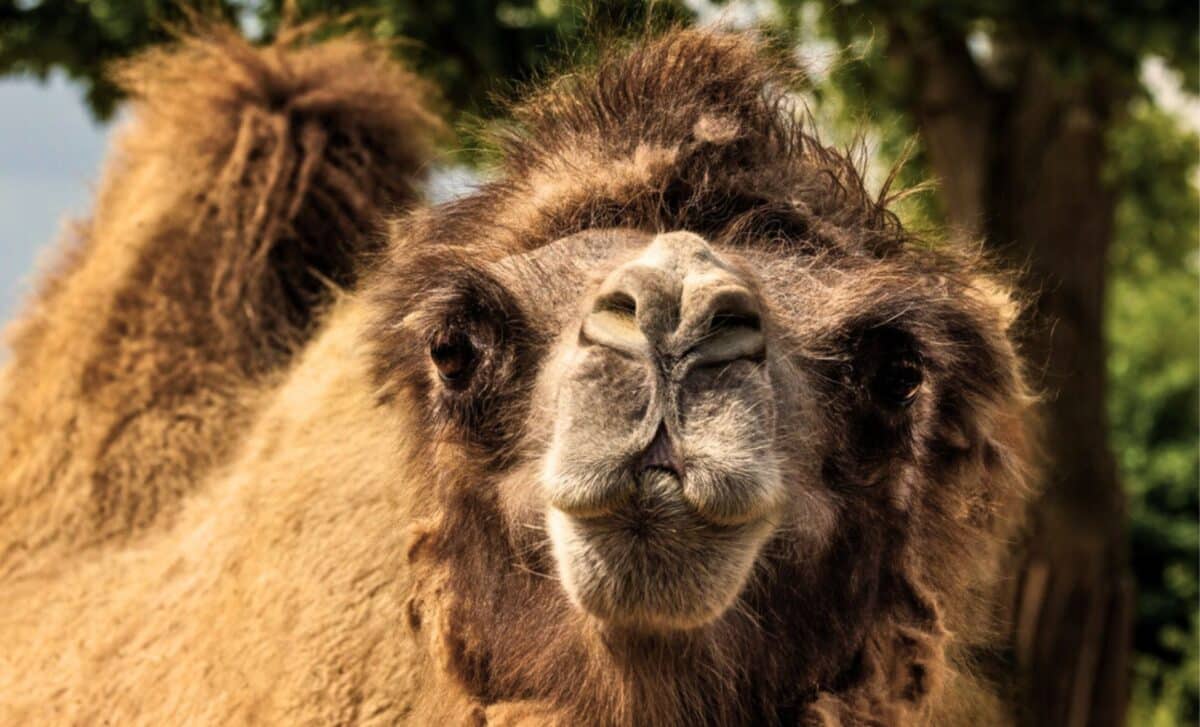
In a forgotten corridor of Central Asia, a large mammal continues to evade extinction despite inhabiting one of the most inhospitable regions on Earth. Few scientists encounter it in the wild. Fewer still understand how it survives.
Its presence is nearly invisible in mainstream conservation media. It is absent from most donor campaigns and wildlife calendars. Yet it possesses traits no other known land mammal has developed.
High salinity, zero fresh water, nuclear radiation, extreme dehydration: all are part of its daily reality. Still, it survives.
Physiology Defies Known Limits of Mammalian Survival
The wild Bactrian camel (Camelus ferus) lives across remote sectors of the Gobi and Taklamakan deserts in northwest China and southwest Mongolia. Genetic tests conducted in 1999 by a Sino-British research team found a 3 percent DNA difference between the wild and domesticated Bactrian camel, a level of divergence greater than that between Homo sapiens and Pan troglodytes. The data suggested the wild camel may be a separate species, never domesticated.
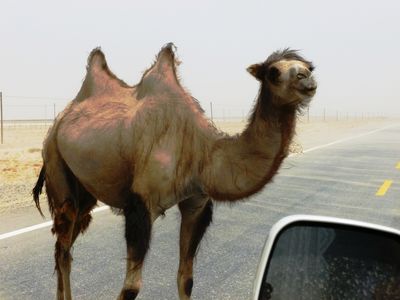 Wild Bactrian camel spotted at the Southern Silk Road between what was once Yarkand and Khotan (now in Xinjiang), seemingly asking for directions. Credit: John Hill via Wikimedia Commons (CC BY-SA 3.0)
This camel is the only known large terrestrial mammal capable of surviving on saltwater more saline than the ocean, as confirmed by field observations published in Science et Vie and reported by IFLScience. Typical mammalian kidneys fail to process such saline intake. In contrast, the wild Bactrian camel filters it efficiently through a specialized renal system.
Physiological analysis shows its oval-shaped red blood cells maintain integrity even under severe dehydration and rapid rehydration, a process that ruptures human cells. Research in Respiration Physiology confirmed these cells do not change shape or volume even after 11 days without water, followed by immediate high-volume intake.
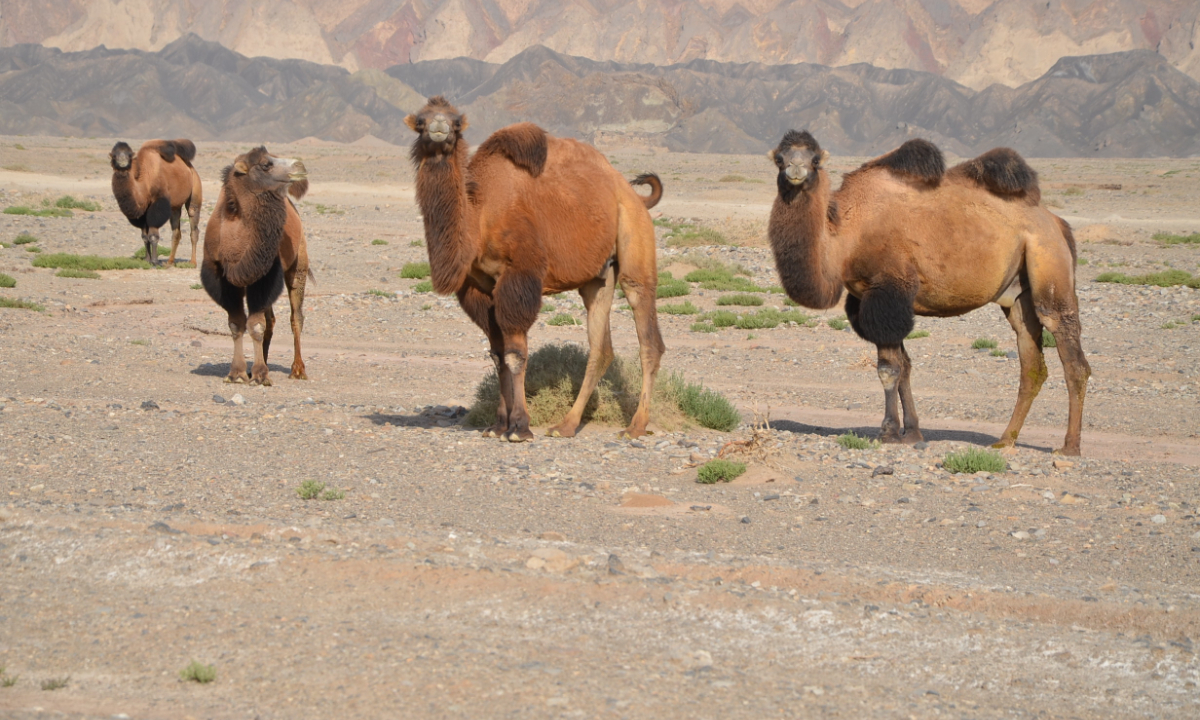 Wild Bactrian camel in the Xinjiang Uygur Autonomous Region. Credit: IC
Its humps, often mischaracterized as water reservoirs, serve instead as fat stores. The species can consume up to 200 liters of water in under three minutes when available, making it one of the most efficient rehydrators in the animal kingdom.
Nuclear Test Zones Delayed Extinction, Not Recovery
The species’ largest habitat, Lop Nur in China’s Xinjiang province, was used for nuclear weapons testing from 1955 to 1996, as confirmed by BBC News. With human access restricted, camel populations endured in isolation. That changed after testing ceased and commercial access resumed.
Data from the Wild Camel Protection Foundation documented brutal poaching practices, including land mines placed near salt springs to kill animals for meat. Founder John Hare stated in 2001 that camels were “blown to pieces and picked up as meat,” citing field findings near water sources in Lop Nur. No further verified quotes from Hare appear in the public sources reviewed.
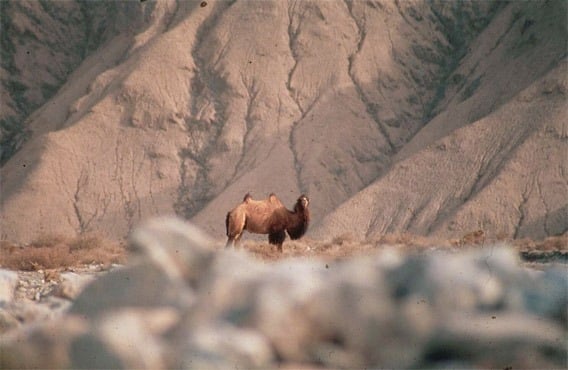 Wild camels are exceedingly rare today for a variety of reasons, most significantly because of man’s ambition to convert them into beasts of burden. Credit: John Hare
The Arjin Shan Lop Nur Nature Reserve, partially funded by the United Nations Environment Programme (UNEP), covers an area larger than Poland. UNEP allocated $750,000 to its development. A second protected zone, Great Gobi A Strictly Protected Area in Mongolia, received over $1.6 million from UNEP and the Global Environment Facility in 1979. Combined, these zones support the only two confirmed populations of the species.
Yet both face challenges. Mining, hunting, and hybridization with domesticated camels are reducing the already fragmented population. As of early 2026, the global wild population is believed to be under 1,000, including fewer than 30 individuals in captivity. The IUCN classifies the species as critically endangered.
Conservation Tools Outpaced by Terrain and Politics
Efforts by the Zoological Society of London (ZSL) since 2019 have aimed to track the Mongolian population using over 180 camera traps, as reported on ZSL’s project page. The data helps estimate population size and map movement patterns. Results from this monitoring have not yet been published in peer-reviewed literature.
Cross-border cooperation between Mongolia and China remains limited. Political sensitivities in Xinjiang continue to restrict foreign researchers from accessing large parts of the Lop Nur reserve. Local enforcement in both countries is under-resourced, and hybridization with domesticated camels remains unregulated in buffer zones.
Fieldwork is further hindered by extreme temperatures, low camel densities, and geopolitical restrictions. The desert terrain limits the frequency and accuracy of ground surveys, leaving population figures based on rough estimates.
No global conservation treaty currently prioritizes Camelus ferus. It is listed in Appendix I of the Convention on Migratory Species, but enforcement provisions do not extend to hybridization or genetic dilution.
Unique Traits Raise Questions in Climate Science
The camel’s saltwater tolerance remains scientifically unresolved. With no peer-reviewed studies published since 2001 detailing the biochemical processes involved, the species’ renal adaptation is still poorly understood. Researchers continue to investigate whether these mechanisms may inform studies in climate adaptation, kidney efficiency, or biomedical stress tolerance.
The animal’s ability to withstand radiation-contaminated land without obvious signs of genetic damage has also drawn intermittent interest from radiobiologists, but no formal studies have confirmed any heritable resistance traits. As of January 2026, no large-scale academic project is known to be underway on this subject.
Despite its genetic uniqueness and potential biological value, public and institutional awareness remains low. The wild Bactrian camel does not receive the same attention as high-profile endangered species, and there is no global funding mechanism tied specifically to its preservation.
Wild camel DNA is now increasingly mixed with that of domesticated herds in surrounding regions. Without immediate regulatory intervention or genetic safeguarding, researchers warn that the original lineage could be lost within decades.