
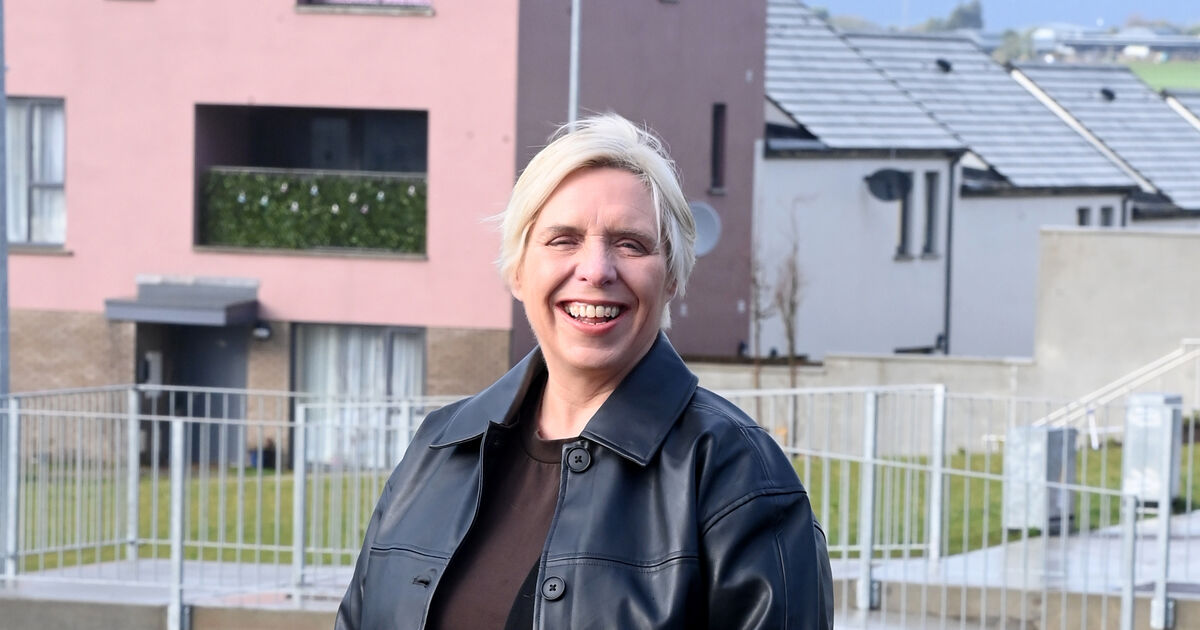
Linda O’Riordan McCarthy was just 48 when she was diagnosed with oesophageal cancer in March 2022.

The mother of two from Mayfield in Cork recalls first experiencing difficulty swallowing in September 2021.

“If I were eating a bread roll or something like that, it would be hurting me. I also had persistent heartburn.”

Between September and December, her condition worsened and she found she was no longer able to eat certain foods.

I was unable to eat bread anymore. I couldn’t eat meat. I couldn’t swallow these foods; I was choking on them and throwing the food back up.

“So, of course, I started losing weight. By Christmas, I was miserable.”

The oesophagus, or food pipe, is a long, muscular tube that connects the throat with the stomach. It sits behind the windpipe (trachea) and in front of the spine.

“Oesophageal cancer is when abnormal cells in the food pipe start to grow and divide in an uncontrolled way,” explains Sarah Egan, a cancer awareness nurse with the Irish Cancer Society.

Symptoms of oesophageal cancer include difficulty swallowing, heartburn, and indigestion that won’t go away, pain in your upper chest, breastbone, back or throat, a change in your voice, hoarseness that isn’t due to a cold, an ongoing cough and/or frequent hiccups, burping, belching, and vomiting or regurgitation of food.

“While all these symptoms can be caused by other common conditions, it’s important to go to the GP and get any unusual changes checked, especially if they are persistent for three weeks or more,” says Egan.

Ireland has one of the highest rates of oesophageal cancer in Europe, with around 520 cases diagnosed each year. The disease is more common among men, and the average age of diagnosis is 71.

Recent research from the Irish charity Oesophageal Cancer Fund revealed that while more than three-quarters of adults experience heartburn, nearly 70% said they would not be confident in recognising the early warning signs of oesophageal cancer.

For O’Riordan McCarthy, GP checks and an ultrasound didn’t reveal any obvious problem, but the call centre worker asked her doctor to refer her to a consultant for further checks.

“I met the consultant on Thursday, March 10, 2022, and he booked me in for an endoscopy the following Tuesday, where he removed some cells for a biopsy.”

Ten days later, the consultant phoned and asked to come to the hospital with her immediate family.

“He said it was very serious. I thought, ‘This is it, I’m gone.’

“I went for a PET scan, and the consultant used it to show us where the cancer was in my oesophagus. He was very open with my family and me, explaining the situation and then referring me to a surgeon with a special interest in oesophagus surgery, Mr Thomas Murphy at the Mercy Hospital.”

O’Riordan McCarthy had a feeding tube inserted to deliver nutrition directly into her stomach — “I couldn’t really swallow anything at that stage” — before starting her chemotherapy and radiotherapy.

“It was a lot. By the first of July, I was unable to swallow at all. I couldn’t even drink water. I was getting dehydrated. But a couple of weeks later, I started drinking water. I got some relief because the tumour had shrunk a bit, and that meant I was able to have my surgery.”

On August 31, 2022, the Cork woman had an oesophagectomy, where her oesophagus was removed.

During the keyhole surgery, she said the surgeon also removed half her stomach, and reconstructed her oesophagus by pulling her stomach up into the chest and reattaching it.

Through her diagnosis and recovery, O’Riordan McCarthy says her family’s support was so important.

“My two kids, who are in their 20s now, and my partner — he’s now my husband as we got married two years ago — were amazing. My mom, my sister, my brother-in-law, and my sister in Australia were all there for me too.”

While describing herself as “a strong person,” she has understandably experienced bleak days.

“I had my own cries. I had my funeral songs picked out; I wasn’t under any illusion that it could have gone the other way. Now I like to have things to look forward to.

“That’s why I’m always booking holidays or weekends away, so I can see those things on my calendar and think ‘I have this coming up’.

“I returned to work in March 2023 and that has given me a routine back as well, which helps.”

She also met people along the way who were on the same journey.

“A young man was diagnosed around the same time as me. We went to chemo together. We went to radiotherapy together. We were in hospital at the same time, we sat in the corridor with our feeding tubes after surgery, and we just laughed together. He always told me to keep positive. He was just 23 when he died. In many ways, he gave me the strength to carry on.”

Following her life-changing surgery, she worked with a dietitian team at the Mercy Hospital. The team advised and supported her in adapting to a new diet.

“I’m never going to be 100%, but what I have now is my ‘new normal’. I struggle to swallow still, and I have to eat smaller portions now.

“I will never eat a piece of steak again or anything like that. Everything has to be mashed up as you would do for a baby.”

O’Riordan McCarthy is now cancer-free.

It’s all about trying to manage the symptoms and keeping myself well. I also have regular screenings to make sure I’m fine.

I’m always going to have fears, but I just keep going, keep positive, and enjoy life.

February is Oesophageal Awareness Month.
Oesophageal Cancer Fund’s Lollipop Day, which raises awareness of oesophageal cancer and its symptoms, will take place on February 27 and 28.