
NASA’s Artemis program is working to achieve something the U.S. hasn’t done in more than 50 years: send humans back to the moon (and establish facilities needed for sustainable living on the lunar surface, which has never been done).
To get there, though, many steps have to be taken, from the big ones, like making sure the Space Launch System (SLS) rocket and Orion crew capsule integrate perfectly, to the small ones, like ensuring each astronaut’s suit fits comfortably.
What is it?
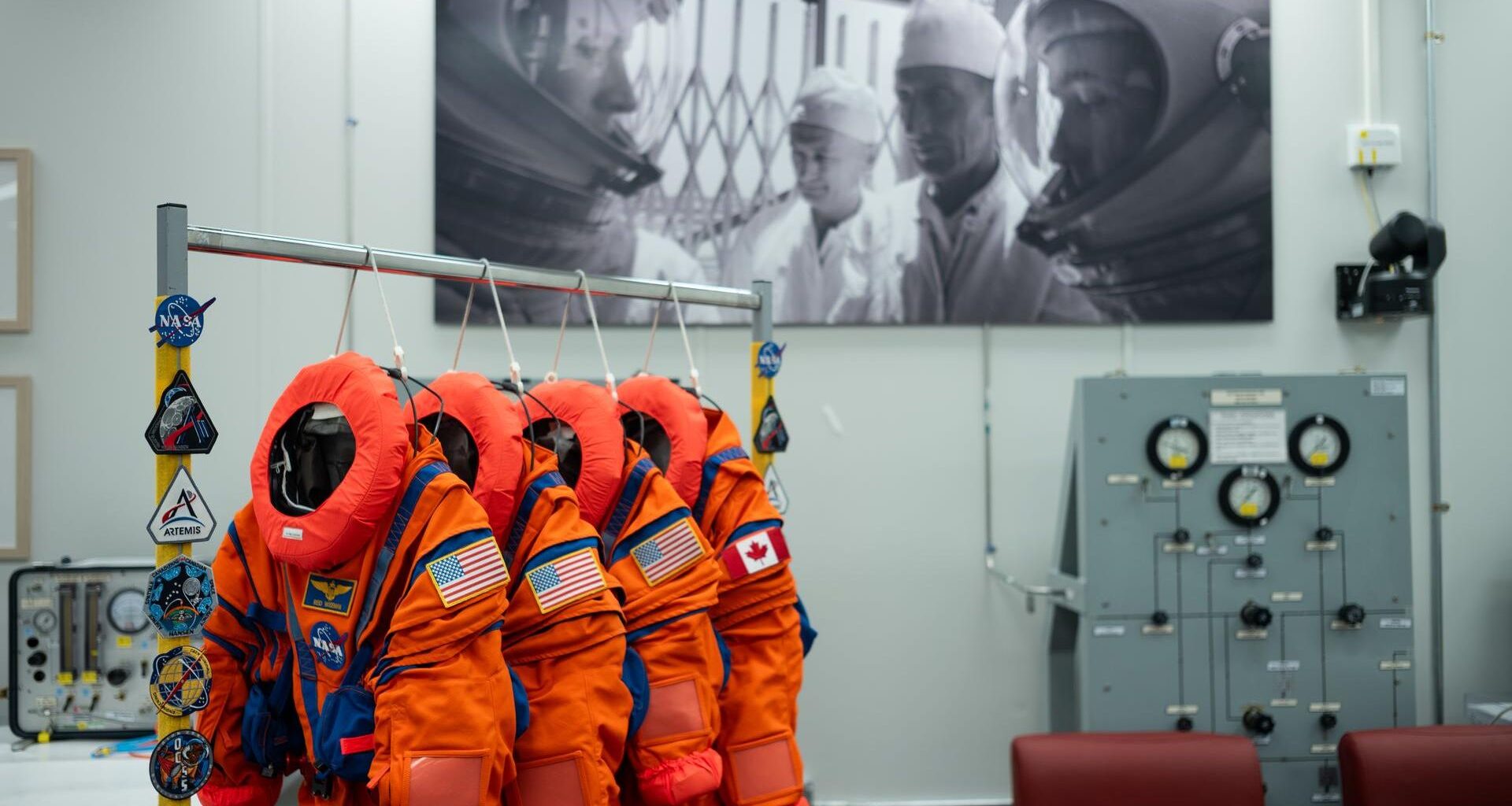
The spacesuits designed for the Artemis 2 mission are purposeful, with the high-visibility orange helping make them stand out.
You may like
Unlike suits intended for walking on the lunar surface, these suits are built for phases when the crew is inside Orion: launch, ascent, in-space contingencies and the demanding return through Earth’s atmosphere. This is because, while Artemis 2 is the first crewed mission to return to the area around the moon, the mission won’t actually land on the lunar surface itself. Instead, the four astronauts will take a 10-day journey around the moon to help calibrate systems for future missions like Artemis 3 and Artemis 4, which will actually land on the moon.
The suits for Artemis 2, therefore, are engineered to protect the astronauts inside the Orion spacecraft, in case cabin pressure is lost or the life-support features integrated into the suit are needed.
Where is it?
The four suits were located in the the suit-up room of the Neil A. Armstrong Operations and Checkout Building at NASA’s Kennedy Space Center in Florida. The photo was taken on Jan. 17, 2026.
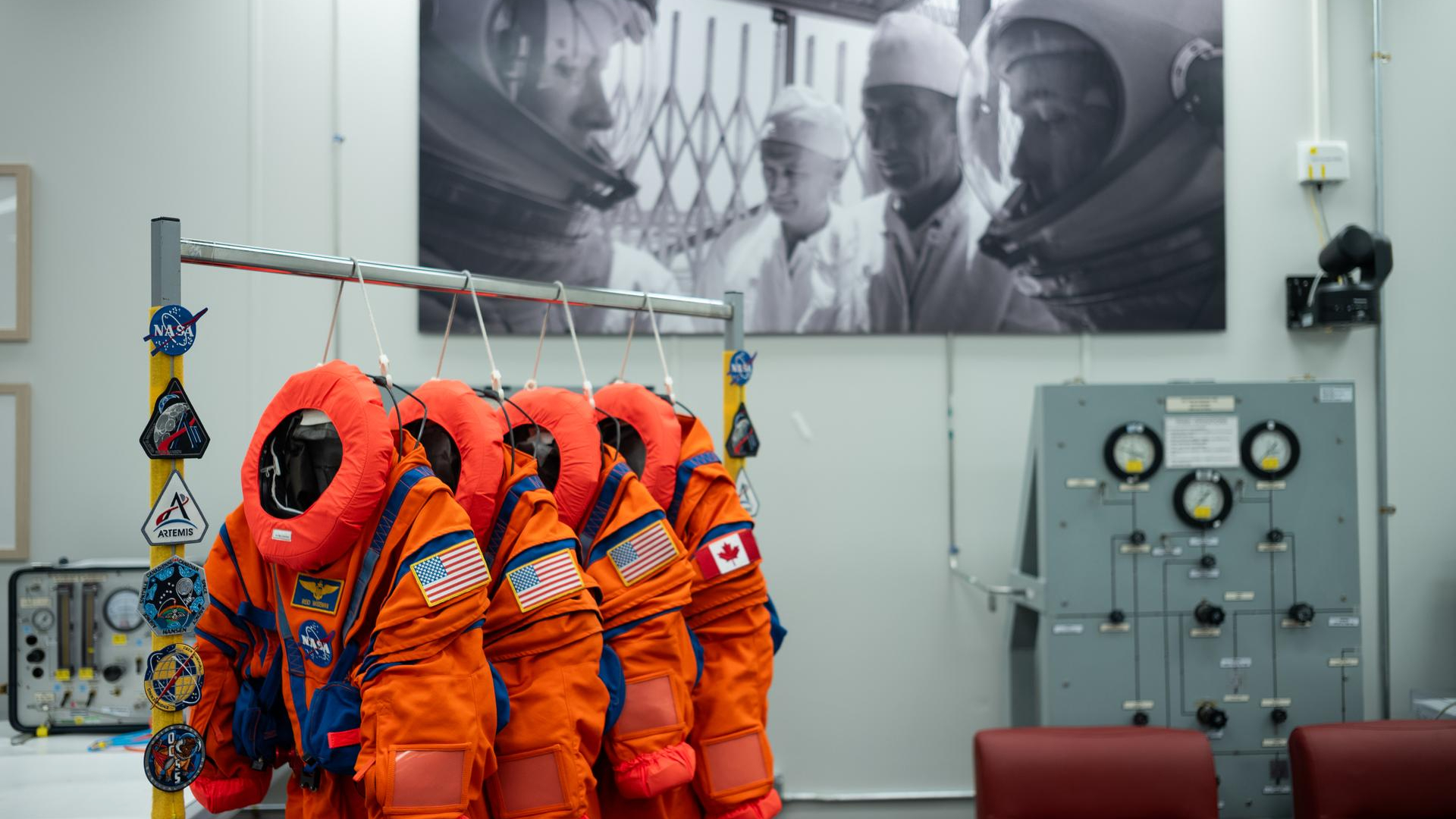
The four astronauts to wear the Artemis 2 suits are Commander Reid Wiseman, Pilot Victor Glover, and Mission Specialist Christina Koch from NASA, and Mission Specialist Jeremy Hansen from the CSA (Canadian Space Agency). (Image credit: NASA/Joel Kowsky)Why is it amazing?
The suiting procedure is a key step toward a successful crewed mission. In the suit-up room, technicians help each astronaut step into the suit in a controlled sequence, checking fit and mobility, routing and securing gloves, helmets and seals, and confirming every connection point is properly locked and leak-tight.
Communications are tested so the crew can talk clearly with each other and mission control, and the suit interfaces with Orion are verified so oxygen, cooling and other safety functions will work as intended.
Similar to the tests and fits on the Artemis 2 rocket system, the suit-up process allows the crew and NASA to find any small issues that could become serious later on and fix them accordingly. With a historic moon mission on the line, every detail is key to focus on and ensure the process goes as smoothly as possible.
Want to learn more?
You can learn more about Artemis 2 and missions to the moon.