
A Single Continuous Rail Defines YEARLY PLAN Showroom by SHISUO
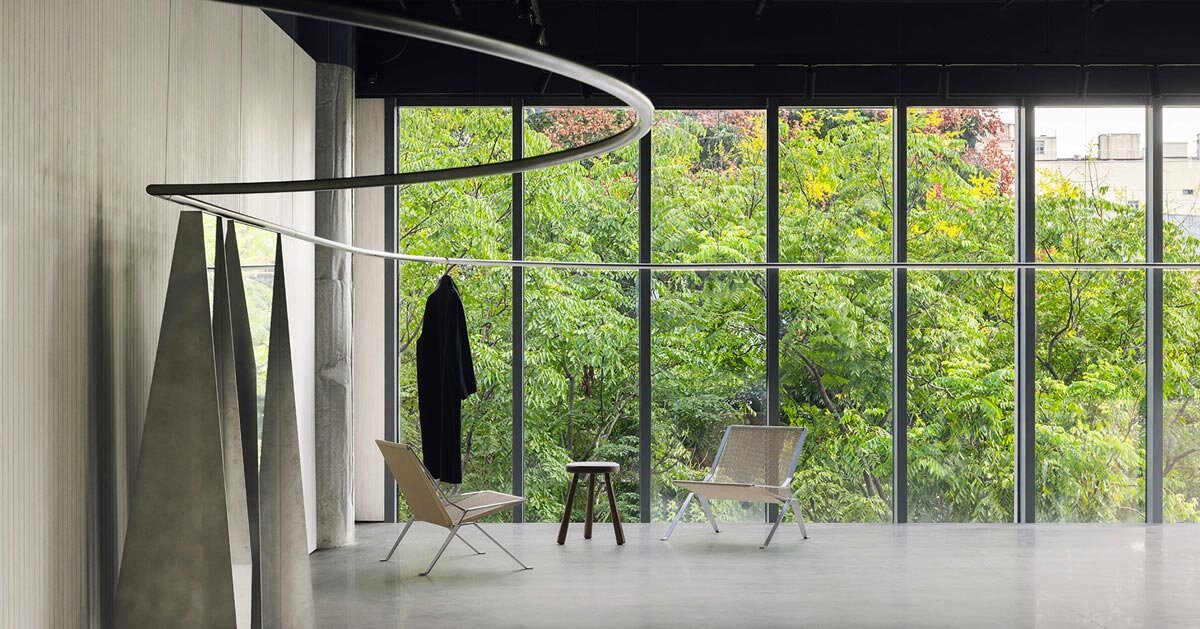
YEARLY PLAN showroom, designed by SHISUO Design Office, is located on Yongyuan Road in Shanghai and occupies an irregular existing interior. The project is structured around a single continuous hanging rail that extends for nearly 100 meters, serving as both the primary display system and the organizing element of the space.
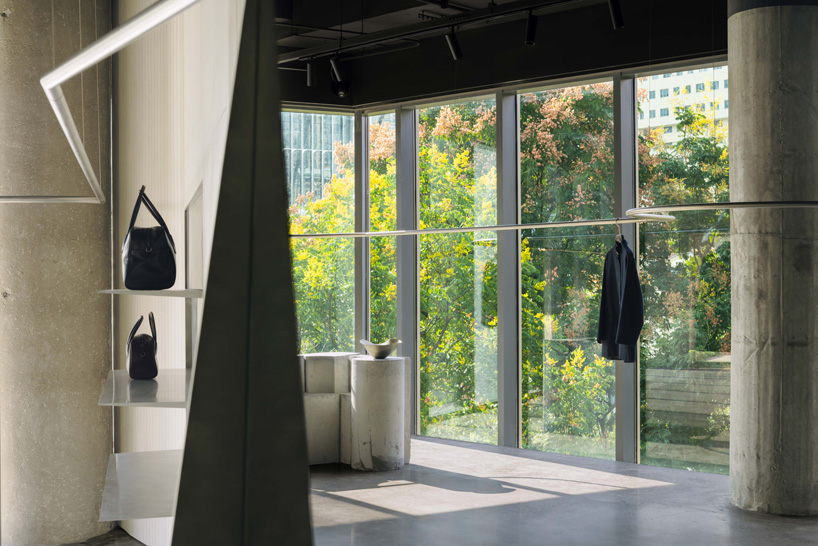
In response to the constraints of the site, the design reconsiders the hanging rail as a spatial device rather than a fixed retail fixture. The rail adapts to existing walls, columns, and building services, bending, rising, and shifting in section as needed to navigate obstacles. This continuous line traces the perimeter and interior conditions of the space, transforming site irregularities into an active spatial sequence. Suspended above the floor, the rail maximizes display capacity while defining circulation and visual continuity throughout the showroom.
The rail functions as a linear framework that establishes relationships between architecture, garments, and movement. Rather than operating as an isolated object, it responds directly to its surroundings, framing the interaction between displayed clothing and the existing building fabric. Through this strategy, the showroom emphasizes spatial continuity and adaptability over conventional zoning or compartmentalization.
all images courtesy of SHISUO Design Office
YEARLY PLAN merges fashion, architecture and material expression
Complementing the suspended rail system, the design team at SHISUO Design Office distributes a series of sculptural concrete display stands throughout the space. These elements are composed of cast-in-place concrete modules assembled into interlocking configurations. The stands reference the work of sculptor Eduardo Chillida through their mass, material presence, and emphasis on gravity and balance. Their rough textures and inherent imperfections are intentionally preserved, allowing them to function as spatial anchors within the showroom.
The contrast between the heavy concrete forms and the lightweight, suspended rail establishes a clear material and structural tension. This relationship is further reinforced by the surrounding surfaces, where hand-dyed white timber slats form a subdued backdrop. These vertical elements recede visually, allowing the displayed garments and primary spatial components to remain prominent while maintaining a neutral and consistent interior field.
As garments are introduced into the space, material contrasts become more pronounced. The softness and movement of textiles are set against the rigidity of concrete and steel, creating a layered reading of weight, texture, and motion. This interplay reinforces the showroom’s emphasis on spatial relationships rather than isolated product presentation.
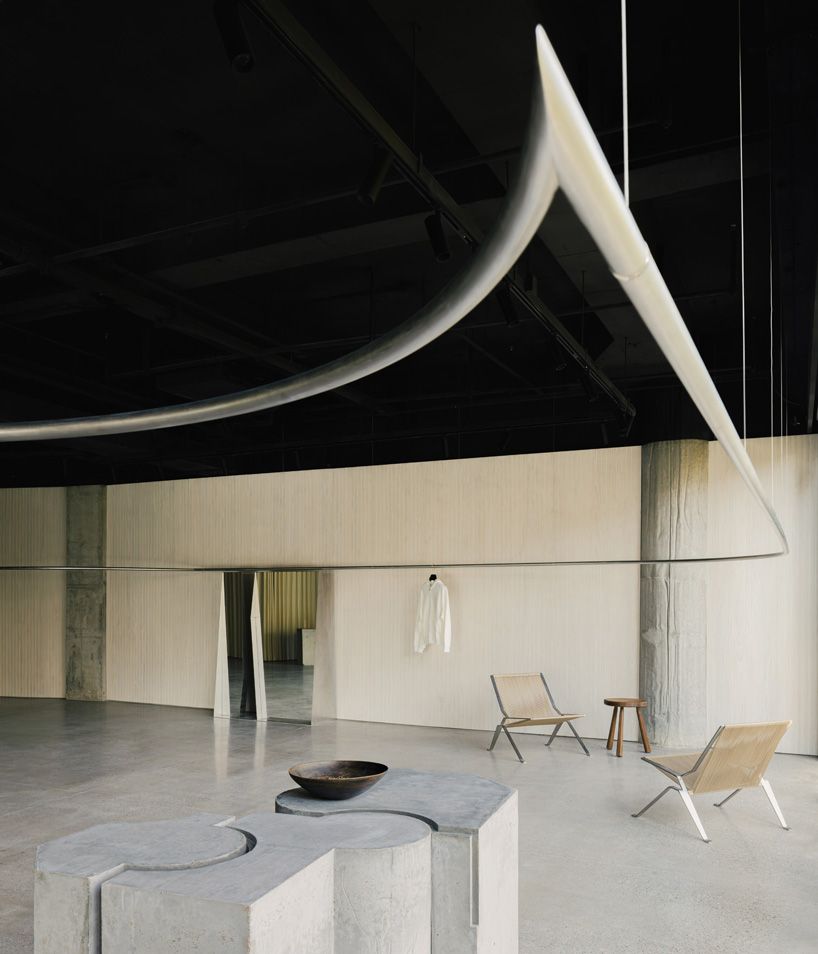
YEARLY PLAN showroom occupies an irregular interior on Yongyuan Road, Shanghai
Custom design elements replace standard retail display systems
Stainless steel full-length mirrors are integrated throughout the interior as reflective elements. Rather than presenting a continuous reflective surface, each mirror is segmented into staggered geometric facets. These fragmented planes distort reflections and suggest movement, introducing temporal variation into the otherwise controlled spatial composition. The mirrors contribute to the perception of motion and bodily presence within the showroom without functioning as purely utilitarian fixtures.
The project avoids standard retail display systems in favor of custom-designed architectural and furniture elements developed specifically for the brand. These components are conceived as durable, long-term installations rather than seasonal commercial fixtures. Through the integration of architecture, display systems, and material articulation, the showroom establishes a spatial identity that aligns fashion presentation with architectural structure and contemporary art practices.
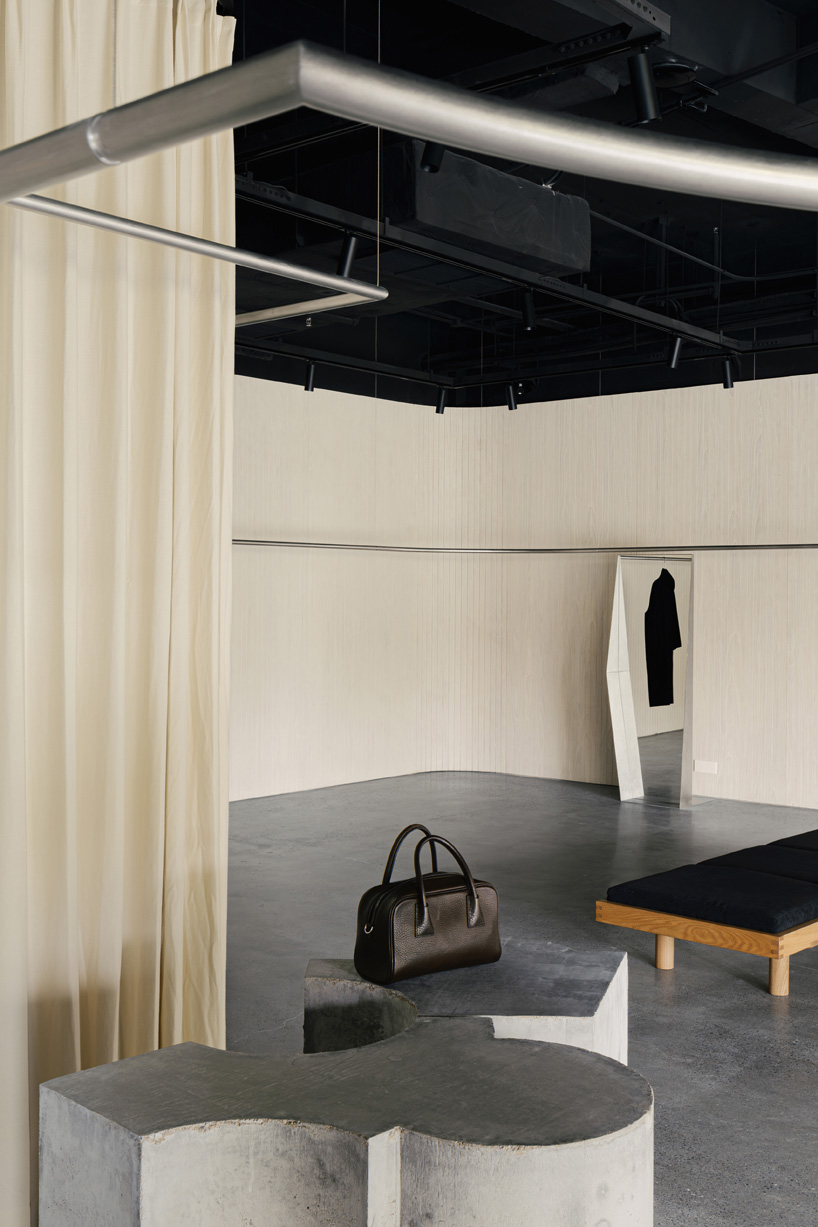
a single continuous hanging rail organizes the entire showroom layout
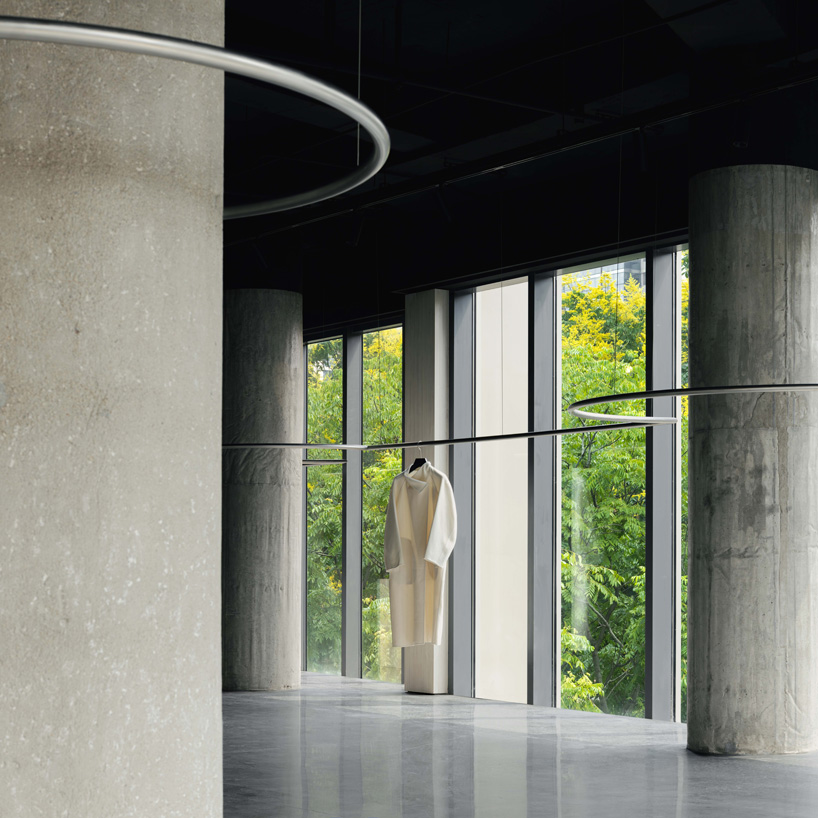
the rail adapts to walls, columns, and existing building services
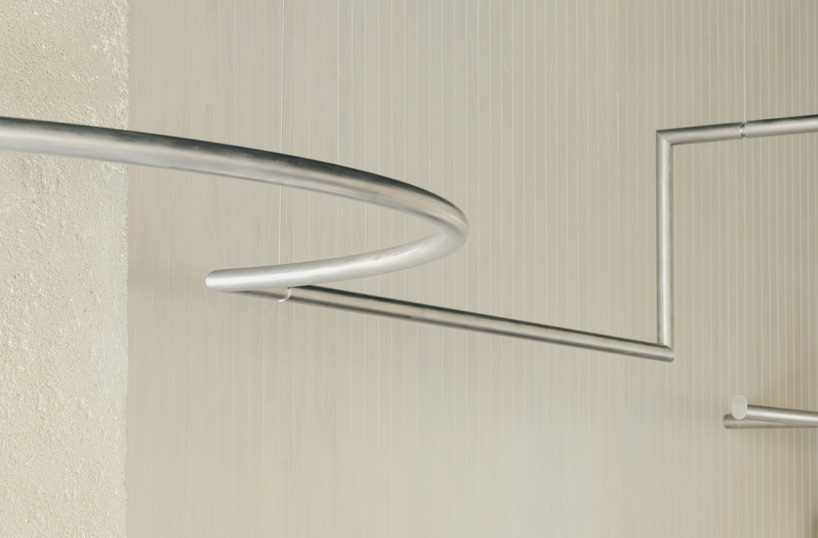
bending and rising, the rail traces the interior conditions of the site
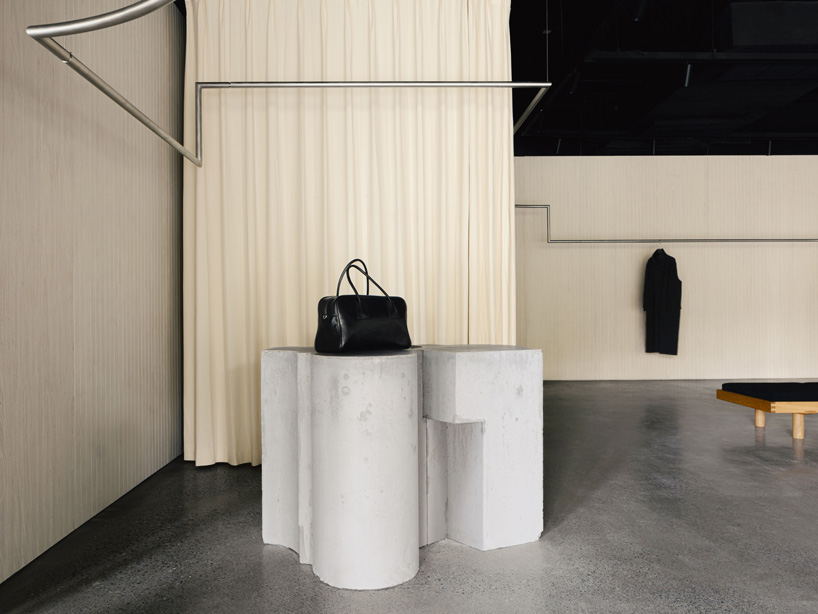
the hanging system functions as both display and spatial framework