
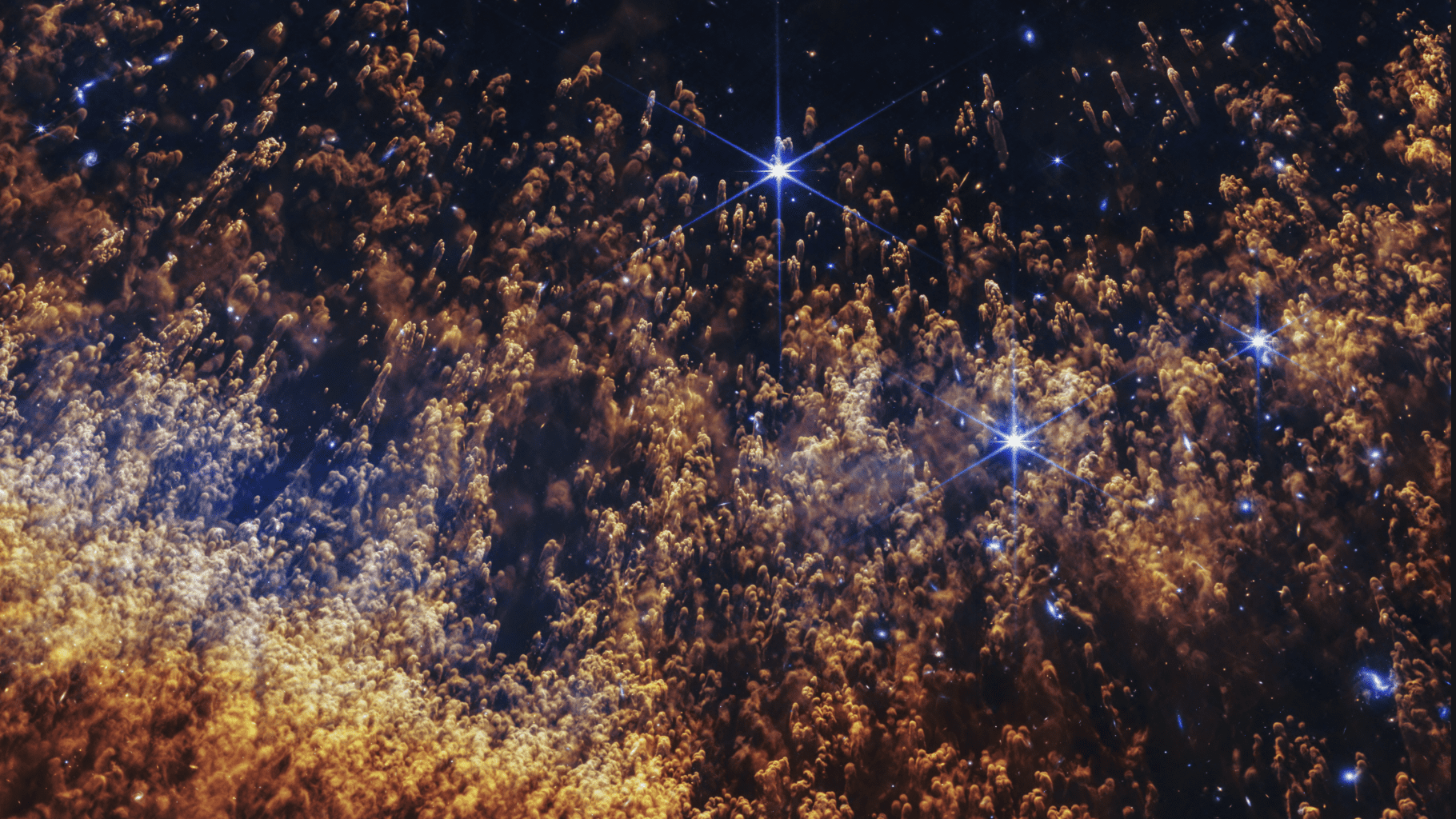
NASA, ESA, and CSA’s James Webb Space Telescope has delivered a breathtakingly detailed view of the Helix Nebula, revealing unprecedented insights into the death throes of a star. Captured on January 20, 2026, the stunning 11124x8064px image showcases comet-like knots and the powerful stellar winds sculpting the nebula’s expanding shell of gas. Webb’s infrared vision highlights the dramatic temperature shifts as material is shed from the central white dwarf. This data allows scientists to study the interaction between the dying star and its environment, offering crucial clues to stellar evolution and the lifecycle of stars.
James Webb Telescope Captures Helix Nebula Details
A detailed section of the Helix Nebula, imaged on January 20, 2026, reveals intricate structures previously obscured to optical telescopes. The 11124x8064px image, processed by Alyssa Pagan (STScI), showcases distinctive “comet-like knots” formed by material ejected from the dying star at the nebula’s center. These knots are sculpted by powerful stellar winds, demonstrating the dynamic interplay between the star and its surroundings as it nears the end of its life. The observation provides a high-resolution view of layers of gas being shed, offering crucial insights into stellar evolution.
The new data also reveals a sharp thermal gradient within the expanding shell of gas. Webb’s infrared capabilities are uniquely suited to detect this transition, highlighting the temperature differences between the hottest and coolest gas components. This allows researchers to map the nebula’s temperature distribution with unprecedented accuracy, furthering our understanding of how nebulae disperse material into interstellar space. The image credit is attributed to NASA, ESA, CSA, STScI, with image processing completed by Alyssa Pagan (STScI).
Dying Star’s Gas Layers and Stellar Winds Revealed
The 11124x8064px image showcases distinct “comet-like knots” within the nebula, formations created as material is ejected from the central white dwarf. These structures aren’t static; they are actively sculpted by “powerful stellar winds,” demonstrating a dynamism previously unseen at this resolution. The observation allows astronomers to examine the thermal behavior of the expelled gases, noting a significant temperature change as the nebula expands outwards. The data highlights a “stark transition between the hottest gas to the coolest gas” within the expanding shell, a crucial detail for understanding stellar evolution.
Alyssa Pagan (STScI) processed the image, revealing subtle variations in temperature and density throughout the nebula’s layers. This high-resolution view provides insight into how dying stars interact with their surroundings, shedding light on the eventual fate of stars like our Sun and the creation of planetary nebulae.
A new image from NASA’s James Webb Space Telescope of a portion of the Helix Nebula highlights comet-like knots, fierce stellar winds, and layers of gas shed off by a dying star interacting with its surrounding environment.
NASA