
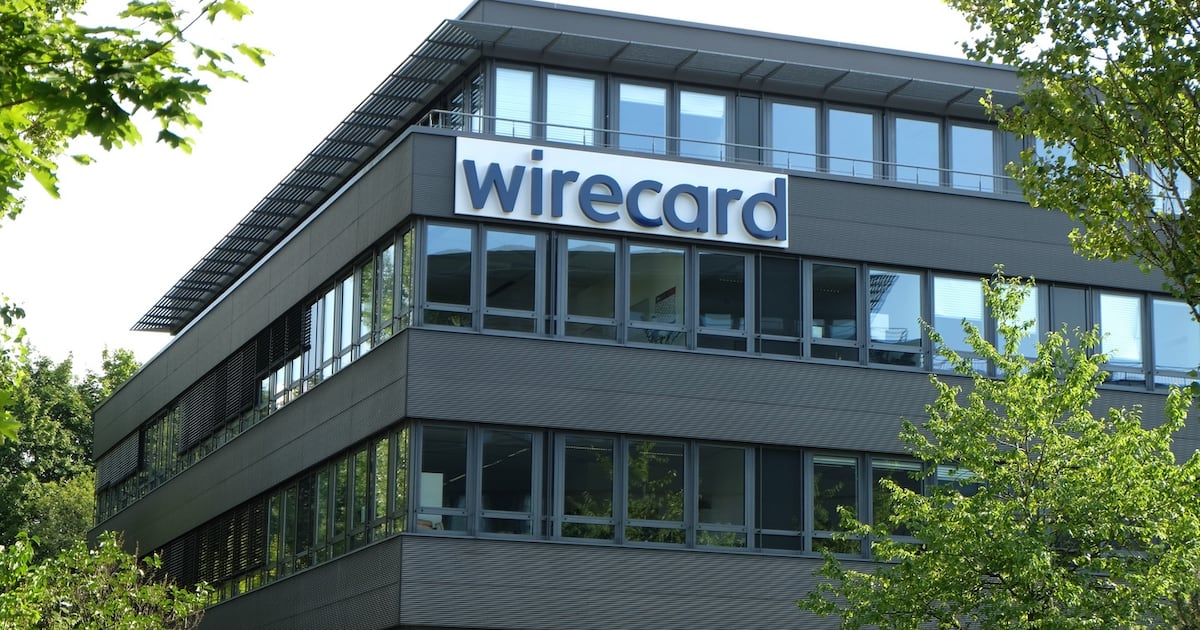
The liquidator of the Irish arm of failed German electronic payments group Wirecard had collected €38.3 million in cash from the wreckage by late last year, according to new filings.
The figure includes a €28.8 million refund from the Revenue Commissioners of corporate tax paid by the company on fictitious profits recorded before the implosion. The recovery in these circumstances from Revenue is highly unusual.
The liquidator, Ken Fennell of Interpath Advisory, started pursuing a possible corporation tax refund shortly after they were appointed to Dublin-based Wirecard UK & Ireland Ltd in October 2020.
Mr Fennell’s latest annual liquidator’s statement, filed with the Companies Registration Office (CRO), said some €9.57 million had been distributed to creditors by the end of October. The Revenue refund was contained in a previous filing but had not previously been reported.
The Irish unit collapsed within months of its parent, Munich-based Wirecard, filing for insolvency to become Germany’s biggest postwar financial scandal, after it revealed €1.9 billion of cash recorded on its balance sheet did not exist.
In its initial years, in 2006-2013, Wirecard UK & Ireland’s business was in merchant acquiring, a process that allows online merchants to sell goods or services to customers using credit cards.
However, in 2012 Wirecard in Germany told the Irish unit it would receive a share of the third-party acquiring revenues generated from the merchant business. That is according to a creditors report written by the liquidators shortly after their appointment, previously seen by The Irish Times.
All the information on the merchants and associated revenues were provided by Wirecard to the Irish unit, which received funds from an acquiring bank and group partner, Dubai-based Al Alam. Wirecard UK & Ireland’s reported revenue ballooned by almost 250 per cent over the following eight years, to €250.7 million, while its stated accumulated profits soared to about €461 million, according to the report. Most of these turned out to be fake.
From 2015 the Irish unit was informed by Wirecard that payments made by Al Alam would be routed through an escrow account administered by a trustee in Singapore, and subsequently in the Philippines.
On June 22nd, 2020, Wirecard announced to the stock market that €1.9 billion purportedly held in these escrow accounts did not exist. The fabrication of these reserves to mask company losses triggered the group’s dramatic collapse.
The implosion of Wirecard – once Germany’s fintech champion – has resulted in a slew of litigation and long-running fraud case in Germany, criminal convictions in Singapore, and an ongoing international manhunt for the group’s former chief operating officer, Jan Marsalek.
Mr Marsalek, an Austrian citizen and former director of Wirecard’s Irish unit, lives in Russia and reportedly has close ties to the country’s Federal Security Service (FSB).
Earlier this month, a Singapore courted handed a 6½ and 10-year prison sentence to two men for falsifying documents to trick auditor EY into thinking Wirecard had hundreds of millions of euro in bank accounts.
Wirecard’s former chief executive, Markus Braun, and two other company executives, have been the subject of a fraud trail for more than three years. There is still no clarity on when the panel of judges will reach a verdict.
In Ireland the High Court ordered last July that former Wirecard UK & Ireland director Markus-Konrad Fuchs be disqualified for nine years on foot of a petition by the liquidator. The court heard at the time that Mr Marsalek remained beyond the reach of the liquidator’s efforts to also have him disqualified.
The insolvency processes for both Wirecard and the Irish unit are in their final phases, with the Irish liquidator estimating in his latest filing that his work would be completed within 12 months.