
 Image: Jay Peters
Google – a company so addicted to AI it’s pushing it into places it’s simply not wanted – has just lifted the lid on Project Genie, a new Generative AI tool which is able to create playable ‘gaming worlds’ thanks to the fact that it has been trained (without permission, on the most part) on the billions of hours of footage that has been uploaded by users to YouTube over the decades.
As was discovered when OpenAI released its Sora video creation tool a while back, it’s laughably easy to get Project Genie to spit out copyright-infringing footage.
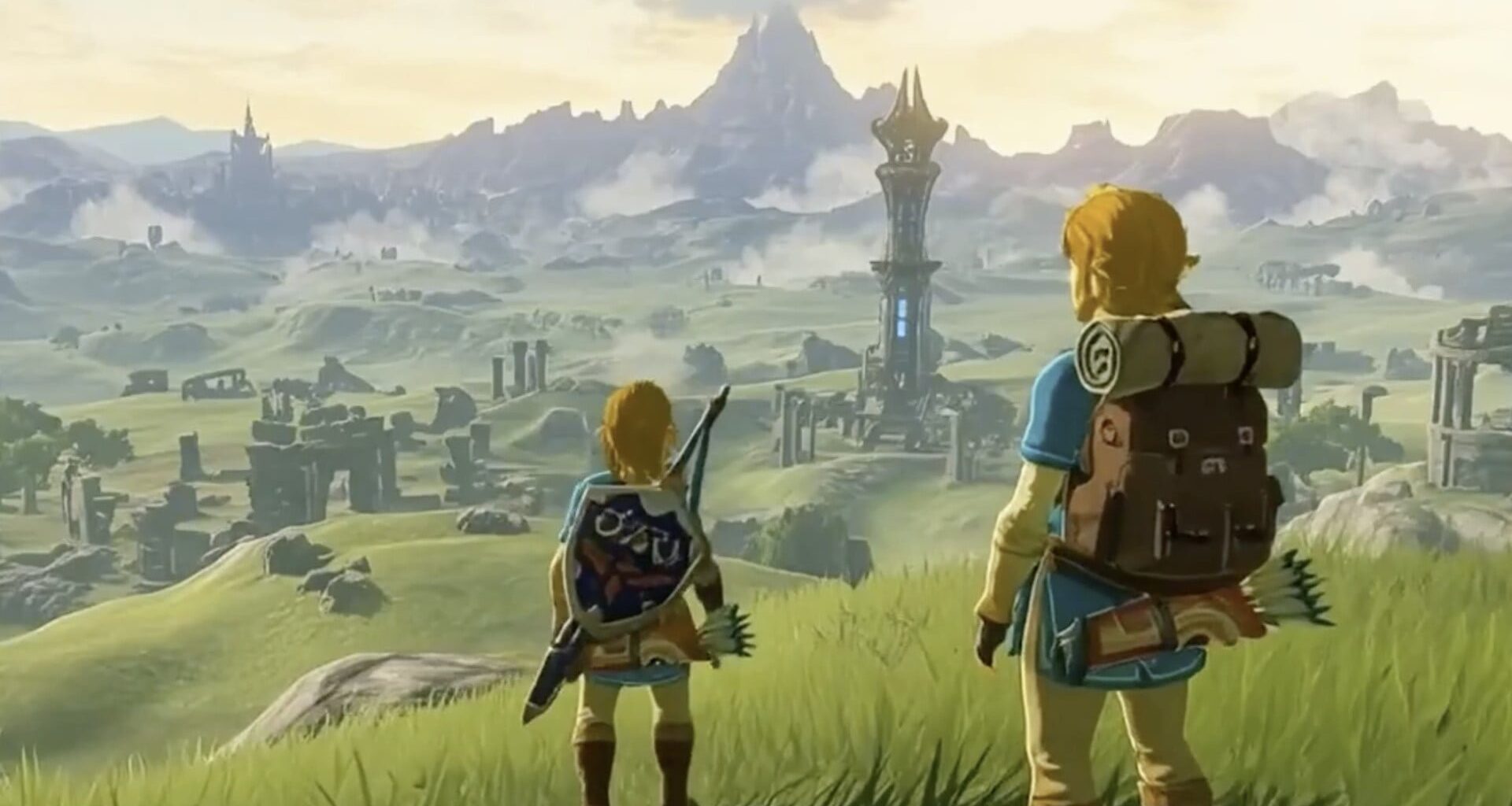
As highlighted by Kotaku, The Verge’s Jay Peters – who has been given early access to the tool – has gleefully posted that he was able to “generate a bunch of Nintendo-inspired games. Including one featuring Link with a paraglider!” The footage, as you can clearly see, is so close to Breath of the Wild it’s almost funny.
Google’s new world AI model tool let me generate a bunch of Nintendo-inspired games. Including one featuring Link with a paraglider! Gift link: www.theverge.com/news/869726/…
— Jay Peters (@jaypeters.net) 2026-01-29T17:38:00.292Z
The reaction online has been predictably negative.
So you used the plagiarism machine to belch out slop that uses clearly stolen assets and obviously copyrighted characters and franchises?
Please, do tell me more about how this is a good thing.
— Samantha Ferreira Is In Her Research Hole Until January (@sam-animeherald.bsky.social) 2026-01-29T18:00:27.159Z
Either engagement farming clickbait or you’re an idiot.
Not interested in giving that article a view.
— Pink Freud (@phroodloops.bsky.social) 2026-01-29T18:13:30.364Z
That image is wild to me – as somepony who put 100s of hours into Breath of the Wild, I could not create an image that looked that obviously copied from the game from memory.
AI defenders will be like “it’s just learning from art, the same as humans” and then I’ll look over at pictures like this..
— foxyoreos (they/them, commissions open) (@foxyoreos.bsky.social) 2026-01-29T20:52:40.747Z
Interestingly, Peters notes that there are guardrails present in Project Genie, and he wasn’t able to rip off any old video game.
“Project Genie wouldn’t generate a world that I prompted with the scenario of Kingdom Hearts,” he explains. “When I removed the specific names of characters and wrote descriptions of them instead, Project Genie generated a thumbnail preview of the world featuring characters that were dead ringers for Sora (the series’ protagonist), Donald, Goofy, Jack Skellington, and Cloud. But when I tried to generate the actual experience, Project Genie blocked me.”
He therefore quizzed Google on why the tool was perfectly happy to plagiarise Nintendo’s IP without permission but not Disney’s, and was told:
“Project Genie is an experimental research prototype designed to follow prompts a user provides. As with all experiments, we are monitoring closely and listening to user feedback.”
Peters adds that he was told that the tool is “trained primarily on publicly available data from the web,” which is almost certainly behind one of the big surprises in his Zelda video, as he explains:
“This probably partially explains why Link deployed his paraglider in my test, which surprised me. At a high level, the Genie model is constantly trying to predict the next frame, and I’m sure there are many videos of people jumping in Breath of the Wild and then gliding forward, which the model probably learned from.”
Peters also notes that “shortly before publishing this article, Project Genie stopped letting me generate worlds based on Super Mario 64 due to “interests of third-party content providers.”
Perhaps Nintendo’s legal team is already in touch, but it’s nonetheless amazing that a company like Google is prepared to risk a battle of that stature when it launches new products like Project Genie.

Damien has been writing professionally about tech and video games since 2007 and oversees all of Hookshot Media’s sites from an editorial perspective. He’s also the editor of Time Extension, the network’s newest site, which – paradoxically – is all about gaming’s past glories.