
DNA, though tightly packed in the nucleus, is constantly threatened by damage from metabolism and external stressors. One particularly severe form of DNA damage is the so-called DNA–protein crosslinks (DPCs)in which harmful knots with proteins can trap DNA and become highly toxic lesions.
These DNA-protein crosslinks block essential cell processes such as replication and transcription. If unrepaired, errors trigger during cell division.
Cells, to function normally, often rely on specialized repair mechanisms that repair DNA-protein crosslinks. One such enzyme is protease SPRTN. SPRTN isolates the protein component from DNA. Despite having a key role in DNA replication, it remains obscure how SPRTN manages other phases of the cell cycle.
Inherited mutations that switch off the SPRTN gene cause Ruijs-Aalfs progeria syndrome (RJALS), a rare disease that leads to early aging and liver cancer at a young age. This suggests that unrepaired DPCs can negatively impact health, but scientists still don’t fully understand how they connect to aging and disease.
Antioxidant enzymes repair DNA damage
A study led by researchers at Goethe University Frankfurt, part of the Rhine-Main University Alliance, shows that inactivating SPRTN not only damages DNA but also triggers chronic inflammation that accelerates aging and leads to developmental abnormalities.
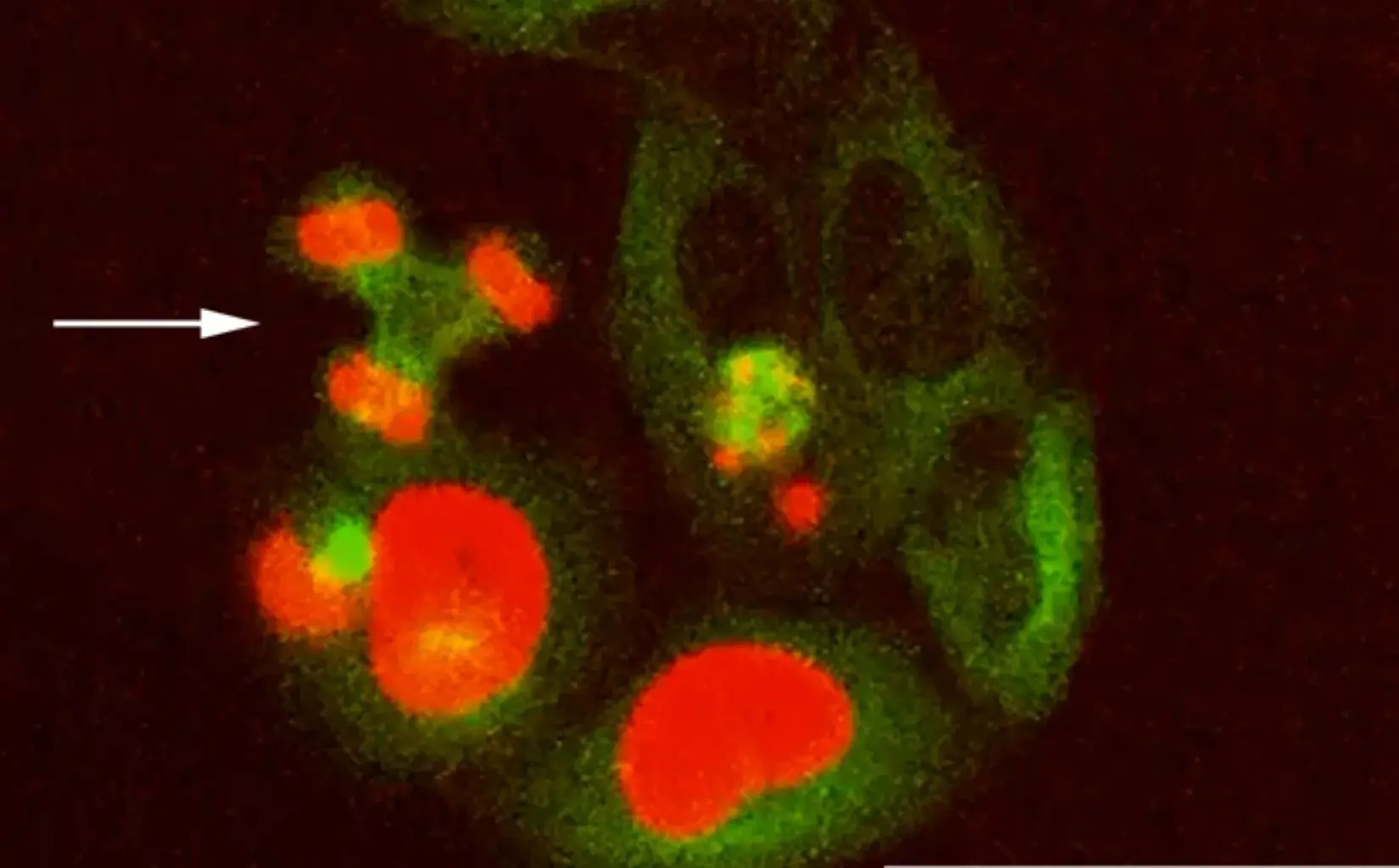
Without the SPRTN enzyme, damaged DNA builds up in the nucleus and, as shown in experiments with cells and mice, some of this DNA also leaks into the cell’s interior (the cytoplasm).
DNA in the cytoplasm is considered a danger signal. Such DNA is often the result of a virus or bacteria. In response, Cytoplasmic DNA triggers safety mechanisms in cells by activating cGAS-STING signaling pathway. The cell sends signals that attract immune cells, which can lead to ongoing inflammation.
Scientists observed that this chronic inflammatory response was strongest in mouse embryos and persisted into adulthood, particularly in the lung and liver. This leads to early demise or premature aging, much like Ruijs-Aalfs syndrome. Inhibiting the immune response improved many of the symptoms.
Human cells can write RNA sequences into DNA
Prof. Ivan Ðikić from the Institute of Biochemistry II at Goethe University said, “In addition to Ruijs-Aalfs syndrome, there are other rare genetic diseases in which DNA-protein crosslinks play an important role. With our work, we have laid an important foundation for future therapeutic approaches to these diseases as well.”
“By studying the underlying mechanisms of these rare diseases, we discovered a new link between DNA damage, inflammatory responses, and an organism’s lifespan. This also contributes to the understanding of the biology of ageing.”
Journal Reference:
Ines Tomaskovic, Cristian Priesto-Garcia et al. DNA-protein crosslinks promote cGAS-STING–driven premature aging and embryonic lethality. Science. DOI: 10.1126/science.adx9445