
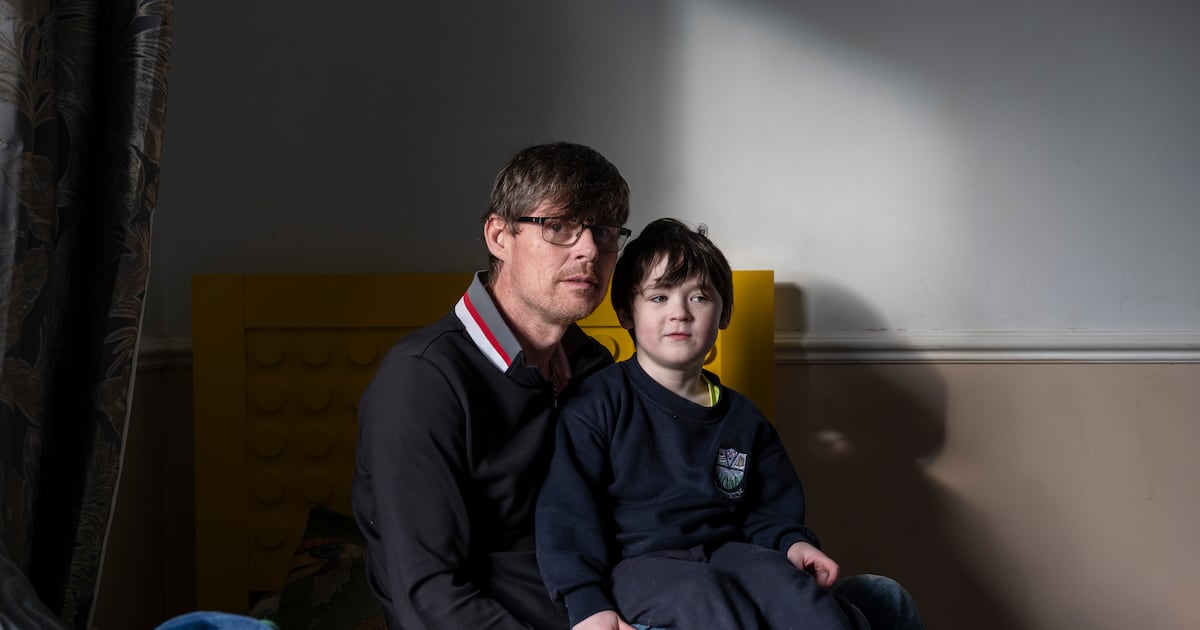
“Children are starting junior infants lacking many of the very basic skills we would have taken for granted 10 years ago, such as how to have a conversation, how to play with toys, how to pretend, how to focus on a task for more than two minutes.”
When teacher Aisling Mullally wrote a letter to The Irish Times earlier this month expressing her concerns for primary schools’ youngest children, it prompted discussions across various platforms about how Ireland’s children are coping with what were once considered basic tasks.
Mullally penned the letter after a discussion among her colleagues. “We all agreed that in the last five to 10 years there’s been a massive deterioration in children’s ability to concentrate and focus at school,” she says now.
“Things that we would always have assumed children learned at home before they ever started school, we’re having to teach them.”
Her comments are echoed in research findings over the past number of years.
A 2025 study of junior infant teachers by Mary Immaculate College in Limerick, covering 107 classes across the State and encompassing more than 2,000 pupils, highlighted similar trends. The findings of the study suggested teachers felt there may be differences in the skills and capabilities of children starting school in September 2024 compared with those who started school before the pandemic. Some 42 per cent of teachers highlighted issues around the ability of more children starting school to manage personal care.
The study suggested children who started school after the pandemic experienced more separation anxiety from their parents, more anxiety in general and less emotional regulation.
More than 80 per cent of teachers said there were more pupils with emotional or behavioural issues, while most agreed that classroom behaviour was worse and that fewer children could sit and pay attention or take turns.
Most teachers in the study also said there is a considerable increase in speech, language and communication difficulties with the children, as well as difficulties with fine motor control, such as using a pencil.
One teacher quoted said the class of junior infants who began school in 2024 had “been the most challenging class I have had in 27 years of teaching”.
While this cohort of children spent their early childhood growing up during the Covid-19 pandemic – against a backdrop of lockdowns and social restrictions – the study says the factors behind the increase in junior infants being less “ready” cannot be pinpointed definitively.
Meanwhile an all-Ireland study of more than 2,000 children aged between 5 and 12 carried out by DCU in 2020 found one in four primary school children cannot run properly and lack basic movement skills.
The research, titled Moving Well-Being Well, showed that one in four children of primary school age cannot run properly, one in two cannot kick a ball properly, and fewer than one in five can throw a ball.
It also found that fundamental movement skills such as running, jumping, catching and kicking plateau and stop progressing when children reach the age of 10.
Children were tested on their run, skip, gallop, slide, hop, horizontal jump as well as catching, throwing, kicking and striking the ball. They were also tested on their balance.
The findings show an absence of proficiency across all these tests throughout primary school, showing 60.6 per cent of mastery in balance while just over half mastered running, skipping and jumping skills and similarly just over half mastered their catching and throwing skills.
Previous research had found that children could master all of these skills by the age of 8.
One of the authors of the DCU report, Stephen Behan, who is assistant professor at the school of health and human performance, says fundamental movement skills in Ireland are “quite low. We know that there is a decline, and that they’re getting worse.”
Children who have better proficiency in fundamental movement skills go on to be more active in their teenage years, he explains. “We want kids to have a broad range of movement skills at a young age.”
Children with a broad range of skills are more likely to be motivated to take parts in activities that require the skills, which in turn means they get better, he says.
When the study was conducted parents were asked what they found to be the biggest barriers to being active with their children. “Time, by a country mile” was the most frequent reply, Behan says. But activity doesn’t need to be all in one block, he says. “Ten minutes playing with your kids is brilliant. It’s activity for everyone. Whether that’s going out kicking a ball around, whether that’s practising cartwheels, or even just playing a bit of chasing.”
 Stephen Behan: ‘I learnt from the older kids. The younger kids learnt from me. Kids are great mimickers’
As grim as the statistics around children’s fundamental movement skills appear, Behan believes knowledge is power. “The way I look at it is, it’s an opportunity. We know interventions to improve fundamental movement skills work.”
Mullally says she believes screens have played an instrumental role in this. She describes children struggling with colouring, holding pencils, and following stories. “Even just having conversations,” she adds. “Listening to what one person is saying and respond[ing], instead of just going off on your own little monologue.”
They’re looking at screens and listening to people who are talking at them rather than having a two-way conversation, and making eye contact, she says.
Educational online content is not sufficient either: “No television programme or YouTube video is as educational as going outside and jumping in a puddle, or climbing a wall.” Parents may believe “that they’re keeping their children safe by keeping them inside, rather than having them outside roaming the streets. But actually roaming the streets is the best thing that they could be doing. That’s where you learn.”
Mullally acknowledges that current infant classes are “Covid babies”. “During Covid a lot of children were left looking at screens because their parents were trying to work at home … the children that we’re talking about are the product of that.” She’s very conscious of the time pressures parents are under. “Maybe 1769854031 it’s just that parents don’t have time to bring their children to the park. There’s so many demands in life, and they’re struggling to work and get a dinner ready and bring children to their football training. And they perhaps just don’t have time to fit in the incidental messing around.”
[ Dyslexia in the classroom: ‘It was like asking a fish to climb a tree’Opens in new window ]
Parents need to look at their own screen use, and shouldn’t give phones to toddlers, she says. “If you’re in the car, or waiting in the doctor’s surgery, or you’re bringing your baby out for a walk … they need to be looking at the world around them, because they’re missing out on so much.”
 Aisling Mullally: ‘Just turn off the screens, and spend more time talking to your children.’ Photograph: Alan Betson
She also feels schools need to take some responsibility. “We’ve become over reliant on technology. Sometimes it’s better to turn off the whiteboard and go back to the old-fashioned way.”
Aoife, who did not want to use her surname, is a parent of two. She agrees that screens have had a significant impact on the skills children have today, but wonders if it would be more appropriate to adjust schooling to reflect the world we live in rather than pretend we don’t live in a “device world”.
“I’ve the laptop on [for work]. I have the phone on while I’m doing the dinner, because I’m getting the Tesco shop the next day. I’m not necessarily doom scrolling all the time. Or I might get into bed to watch telly and that could be the time to catch up with friends during the day and reply.”
Aoife’s nine-year-old has a device. She restricts his access. “You try your best … but I see the four-year-old now, he is trying to get in on the action.”
She thinks the Department of Education needs to accept that the old approach to teaching “doesn’t fly any more … We’re all changing with the world, and the schools are not”.
While she doesn’t agree with parents allowing their children excessive amounts of screen time, she believes removing screens is contrary to where the world is headed; technology will only become a larger part of their lives.
She feels that in highlighting difficulties children are having with certain skills, schools overlook the demands of contemporary parenthood. There’s no allowance for how time-poor parents are, she says; parents are doing their best.
She agrees that teaching life skills is a parent’s responsibility; her four-year-old can dress himself; her nine-year-old helps with dinner. The latter plays outside, but he wears a smart watch: “He does get freedom … but it’s different times.”
We used to have children coming in knowing the fairy tales and nursery rhymes. And it’s just not the case anymore
— Lisa Ní Theaimhneáin
Primary schoolteacher Lisa Ní Theaimhneáin has also noticed a change in infant classes. “I’ve been teaching for 18 years and there’s a big difference between the junior infants you’d see coming in then and now.”
She too sees younger primary schoolchildren struggling to pay attention, irrespective of their ability or needs, and, like Mullally, identifies a link between this and children having “something in front of them all of the time”.
“I would see an awful lot of kids coming in with an American accent, to the point that when I meet the parents I’m expecting one of them to be American.” Only then does she realise that, rather than acquiring their American accent from Mom or Dad, “it’s YouTube”.
She is aware of young children who received phones and digital devices for Christmas, and while they may not have Sim cards, the devices still provide a stream of constant content and distraction for their young owners.
“They can just turn it off and turn it on. It’s bright and it’s colourful. I’m a 40-year-old teacher. I’m not going to be able to be as bright and as colourful and loud as YouTube to keep their attention.”
But it’s not just their ability to concentrate. “I’d say if you put hopscotch in front of my gang, maybe half of them would know what to do with it … You’d see girls, especially, out with skipping ropes 20 years ago. You don’t see that any more.”
Ní Theaimhneáin feels children “give up” very easily now if they can’t grasp a new skill immediately.
“We used to have children coming in knowing the fairy tales and nursery rhymes. And it’s just not the case any more. And I don’t know if they’re just perceived as old-fashioned now, or not as engaging. Because why would they want to listen to Three Little Pigs when they could be on Roblox?”
She has also observed a change in children’s fine-motor skills, including reduced strength in their hands, which is creating issues for handwriting. She tries to build up their strength through playing with márla, something the children can resist because they feel it’s “babyish”. But it’s necessary, she explains.
“So many kids came in this year and they’ve never seen a jigsaw.” She feels it’s vitally important parents sit down and “read a book every night, no matter what. Even if your child is the best reader in the world, they should still be read to. And discuss what’s going on.”
[ How screen time interferes with the parent-child dynamicOpens in new window ]
As a parent herself, Ní Theaimhneáin understands the pressures parents face, but remains very strict when it comes to her own child’s screen time. This, she says, is “100 per cent” influenced by the consequences of what she’s witnessing in the classroom.
“I’m also home from work at three o’clock”, she concedes. “I don’t blame any parent who has to collect their child from 2:30, needs to go back to work at home or whatever, and sticks the device on. You have to be understanding there too.”
Ní Theaimhneáin doesn’t feel that being “Covid babies” is behind the difficulties she’s witnessing. “Most professions were at home during Covid. Those children should have been spoken to so much more. There was so much more [time] to go baking with them, to bring them out to the green. There were so many more opportunities for people. Unless you were a doctor, or a GP, or someone who was flat out during the pandemic I really think that’s an excuse. We all had a little bit more free time during Covid whether we liked it or not.”
It’s not just professionals who are noticing the differences in infant skills. Some parents have also observed a difference in their child’s capabilities and how they interact with the world.
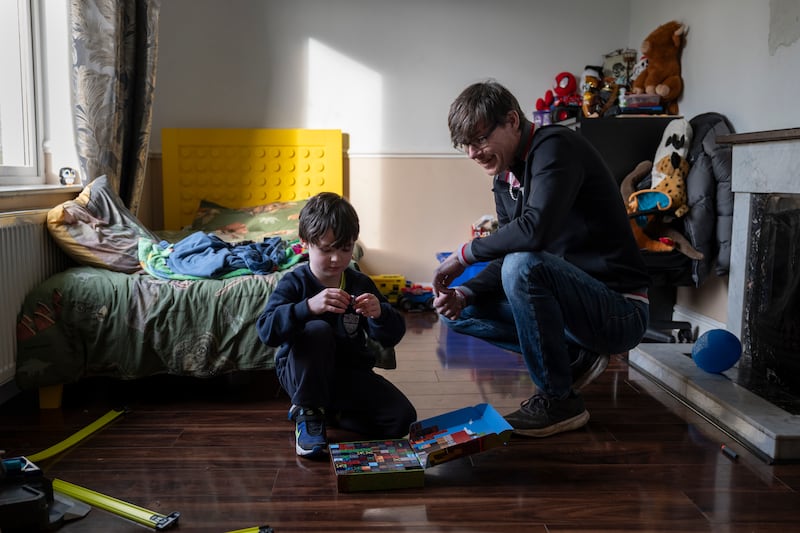 Alan LaCasse and his son Joshua. Photograph: Paulo Nunes dos Santos
Father of five Alan LaCasse disputes that screens are primarily responsible for the challenges today’s infants classes are alleged to be experiencing. As the father of a five-year-old “Covid baby”, he feels pandemic restrictions played a far bigger role in the problems children are experiencing.
“My Covid baby had no interactions with anyone except family for the first year. All his siblings, at that same age, had been to cousins’ parties, Communions and Confirmations and had lived at the park.
“In a house full of older children who had their own friends and ability to communicate with them via games consoles and social media, his main interaction and playtime was with me, which, while great fun, hasn’t given him the ability to learn how to interact with children his own age.”
[ Covid stories: My son has severe autism. I’m starting to feel quite desperate’Opens in new window ]
He accepts that increased screen time may be playing a role in children reportedly struggling to play and interact but he feels that children’s interactions being limited to family only, during what he describes as crucially formative years, was more significant. It was with “immediate family, who by definition will let the baby away with more, and encourage older siblings to hand over toys and games”.
Josh has little to no interest in toys and rarely interacts with other children at the park. He is autistic, and LaCasse believes that missing out on early opportunities for external interactions was critical.
“During those years, all my other children, including his sister, who is also autistic, lived at the park or out on the green, the younger kids toddling along behind their elder brothers. They learned about taking turns, winning and losing, communication skills etc. He got none of that. He’s a curious boy, and I get the sense when he sees other children he is afraid to interact.” His daughter, in contrast, would “go play with anyone as long as I was right there beside her”.
Removing screens won’t solve Joshua’s difficulties, LaCasse says. “Having access to screens has helped with his problem solving, learning he can’t win at everything. Screens, if managed correctly, are a valuable tool. If it’s just being used as a babysitter, then it can be an issue.”
In the opinion of adolescent psychotherapist Dr Colman Noctor, the issue is not so much what children are doing on screens, “but what they are not doing while they are on screens”, something he describes in the case of younger children as “opportunity cost”.
“In the 90s, 14-year-olds were babysitters; now 14-year-olds need babysitters,” he says, referring to research “that showed preschoolers could count to 100 but couldn’t open their lunch box”.
“We are seeing the first generation of adults who didn’t grow up on the road, street or the green and the social atrophy of this change is being observed in their maturity trajectory.”