
For many diners, the Michelin Guide still conjures a very specific image: hushed diningrooms, tasting menus that run longer than some marriages and plates arranged with tweezers. It feels distant, elitist and, frankly, irrelevant if what you actually want is a good dinner without the theatre.
Which is why most people don’t start with Michelin at all. They start with Tripadvisor.
Type “best restaurants Dublin” into Tripadvisor and you get a neat, confident-looking list, shaped by thousands of opinions and star ratings. At the time of writing, its top five Dublin restaurants are Ryleigh’s Rooftop Steakhouse at The Mayson Hotel, Fire Steakhouse in the Mansion House, FX Buckley Steakhouse in Temple Bar, La Caverna in Temple Bar, and The Mongolian Barbeque in Temple Bar. Perfectly decent places, some more enjoyable than others, many of them busy.
Tripadvisor tends to favour familiar formats that work at scale. Steak performs well and buffets satisfy in volume if not always in finesse. Influencer endorsements add further noise, frequently tied to complimentary meals or paid posts.
Michelin works differently. Its inspectors are anonymous. They pay their own bills. Restaurants cannot apply to be included. Decisions are based on repeated visits and collective judgment. It is slower, more conservative and far less democratic, which is precisely why chefs take it so seriously.
What often gets lost is that Michelin is not just an glitzy annual awards ceremony (next month to be held in Dublin for the first time). It is a guide. Most restaurants in it do not have stars at all. They are simply recommended places inspectors think are worth eating in. The guide also includes Bib Gourmands, highlighting restaurants offering good food at moderate prices.
But what about the stars, the part of the guide everyone talks about, and the bit few people can really explain?
One star, Michelin says, is “a very good restaurant in its category”; two stars are for “excellent cooking, worth a detour”; and three stars, the top accolade, are reserved for “exceptional cuisine, worth a special journey”. Cryptic.
The word “category” matters. It might be a fine-dining room, a bistro, a pub or a noodle shop. At one-star level, inspectors are looking for reliable, well-judged cooking, done properly every time. Good ingredients, sound technique, clear flavours. One star is not about luxury or ambition; it is about consistency.
“When we got our acknowledgment, it was more of a shock”, says Damien Grey, chef-patron of Liath in Blackrock, Dublin, who was awarded his first Michelin star in 2016. “We were in a rundown market. It actually felt really honest, because Michelin’s ethos is that it’s all about the food. We were knocking out some pretty good-tasting grub at the time, so it just felt right. There’s a bit of clarity there, I suppose, with a one-star restaurant.”
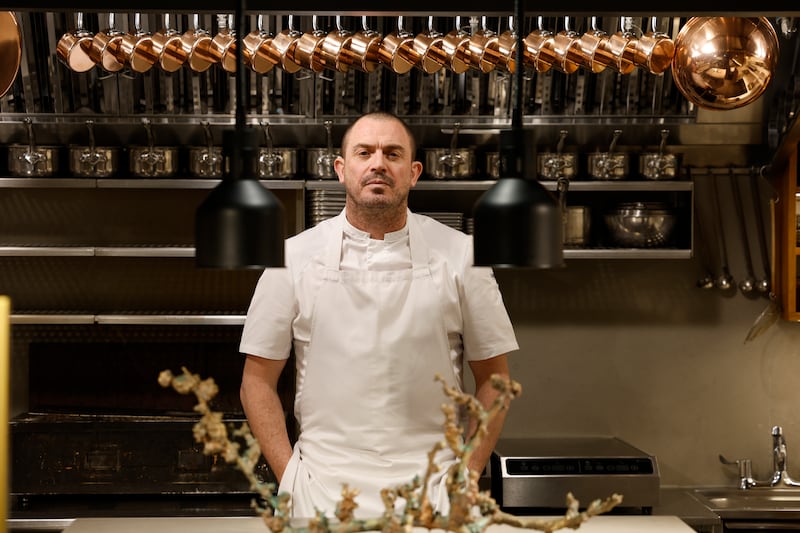 Damien Grey of Liath says going to two stars was was ‘a real sense of achievement’. Photograph: Nick Bradshaw
Michelin inspectors judge restaurants using five criteria: the quality of ingredients, mastery of technique, harmony of flavours, the personality of the chef in the cuisine, and consistency across multiple visits. They say they do not judge decor, service style, wine lists or atmosphere. Stars are awarded for the food alone.
“Two stars are different,” says Grey, who won his second star for the restaurant in 2022. “Two is about consistency under pressure. It’s about delivering your identity every day, regardless of any sort of circumstances. And it was nice because we had just come out of lockdown and Covid, and we’d done a lot of work. We’d been really focusing on the product, how we want to deliver it, and how we want our guests to feel; and the emotions that we want them to experience. It was becoming more than just a dinner or a night out. And I suppose, as you go through the restaurant’s lifespan, you want that maturity to kick in, and there’s a little bit more confidence in your cooking and the product that you’re delivering. So going to two was a real sense of achievement. But it’s definitely a massive difference.”
Chapter One, co-owned by chef-patron Mickael Viljanen and Ross Lewis, won its second star the same year. In 2023 it was the turn of Ahmet Dede of Dede, in Baltimore, west Cork (co-owned with Maria Archer), to secure a second Michelin star.
“The one star is good food, delicious food. It’s always about the food; not about the chairs, tables, glassware, or wine list”, says Ahmet Dede. “After that, it gets tricky. You can always cook delicious food with nice seasoning and good produce; it’s not that difficult. But the difficulty is finding your identity, finding your personality, who you are. And basically, when people come and eat your food, they know whose food this is – your seasoning, your technique, your heritage, your past and your history comes to play, your personality shines through your food. That’s when it becomes a distinct cuisine that is native and original, just to you. And that’s what I think Michelin is looking for in two and three stars.”
Ireland has 18 one-star and five two-star restaurants, but no three-star establishments. Hosting the ceremony for the first time – at the Convention Centre Dublin on February 9th – has fuelled speculation that this could change, though with Michelin, nothing is ever guaranteed.
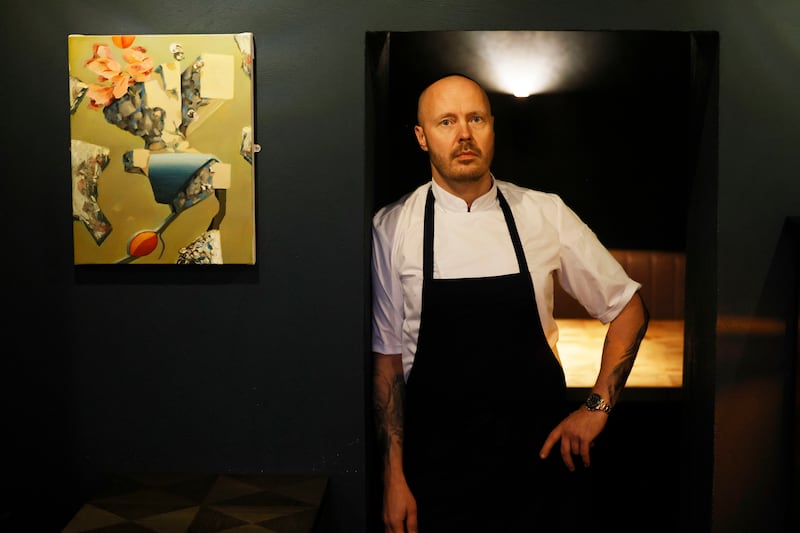 Mickael Viljanen, chef-patron of Chapter One. Photograph: Alan Betson
Following the announcement of Chapter One’s second star in 2023, I spoke to Gwendal Poullennec, the international director of the Michelin Guide, about the probability of the restaurant rising to three stars. He said inspectors have visited regularly; when everything is in place for Chapter One, it will join the family of three-star restaurants.
“To become a three-star restaurant is to basically say that this is one of the best restaurants in the world. It’s a restaurant that is going to provide an incredible experience. Not only just the sophistication and originality and personality of the cuisine, but there’s also everything else that goes with it,” he said. “So when we make these decisions – and the inspectors absolutely love seeing a new restaurant join the family of three-star restaurants – we have to be very, very sure of our decision.”
As of now, there are 157 restaurants worldwide with three stars in the Michelin Guide, which now covers more than 45 countries and regions.
Five contenders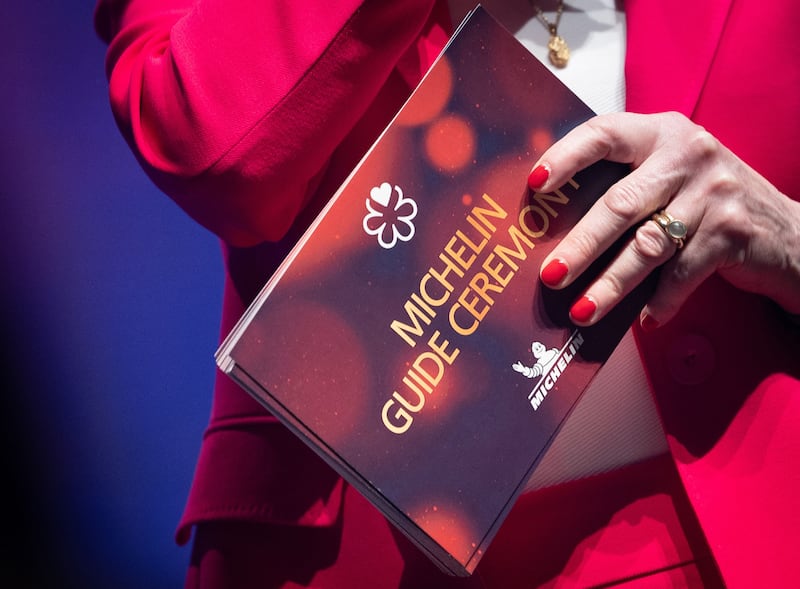 The presentation ceremony for the Michelin guide. Photograph: Benoit Doppagne/AFP
In Ireland, the five restaurants at two-star level that could be considered three-star contenders are: Restaurant Patrick Guilbaud in Dublin, Chapter One in Dublin, Liath, Dede and Terre, at Castlemartyr Resort in Cork.
Chapter One, Liath and Dede are the restaurants most talked about. Dede, unlike his fellow chefs, is not afraid to say it out loud: he wants three stars for his eponymous restaurant.
“There’s a goal at the end of the road that I want to achieve: three stars. There’s no question about that. But if it happens, you know, I will be the happiest man in the world that day and celebrate and enjoy it, and then next day, keep going. I hope it will happen, and for Mickael [Viljanen] and the other chefs. I want more than anyone to see it happen. And if it doesn’t happen to me, hopefully it will happen on the day in Ireland. Hopefully we’ll see a three-star. And if it’s my time, it’s my time, and if it’s somebody else’s time, it’s their time. But mine actually will come. If it’s not this year, in the future. I know I will get three stars with my team.”
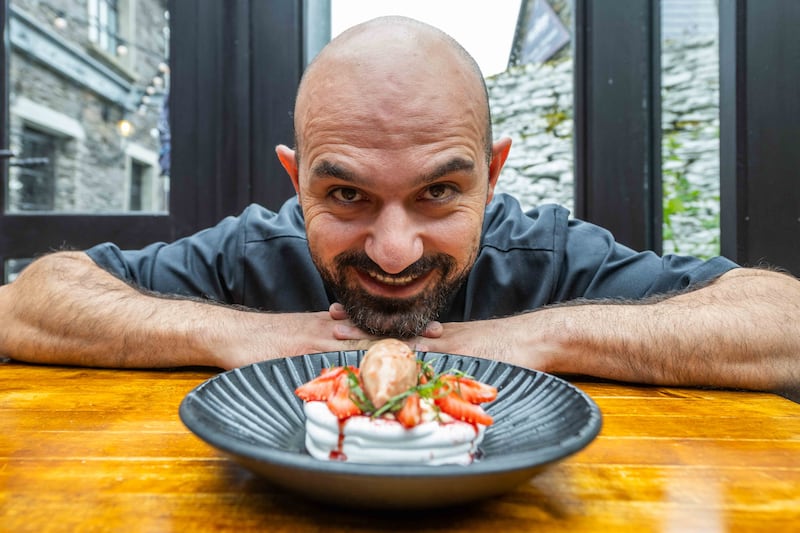 Ahmed Dede is clear in his desire for three stars for his eponymous restaurant in Baltimore, west Cork. Photograph: Andy Gibson
 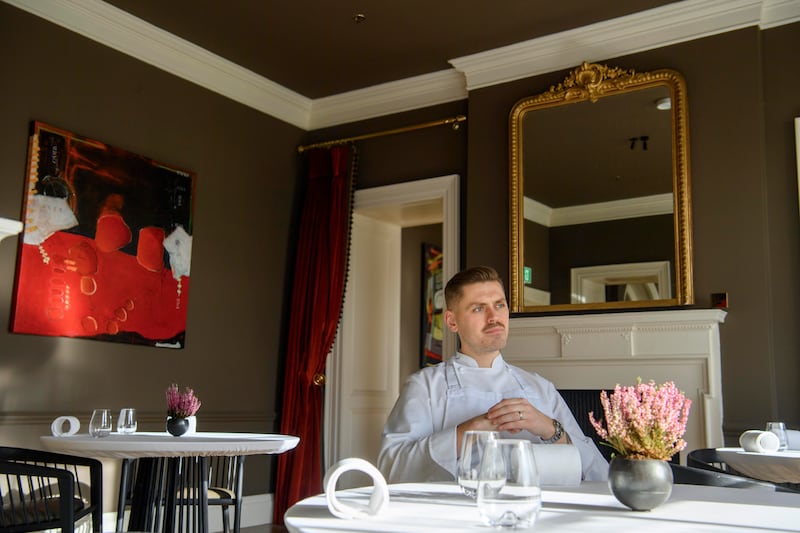 Lewis Barker, executive chef at Terre at Castlemartyr in Cork. Photograph: Daragh Mc Sweeney/Provision
 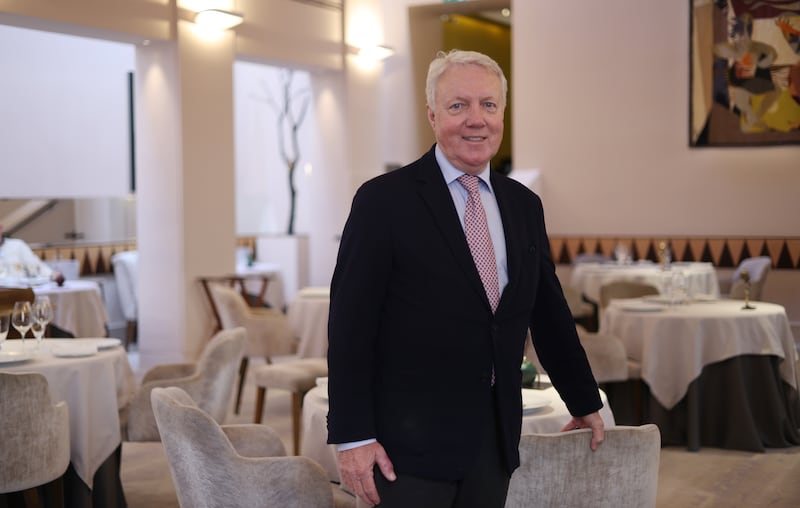 Patrick Guilbaud at Restaurant Patrick Guilbaud in The Merrion, Dublin. Photograph: Bryan O’Brien
Grey is more hesitant about vocalising a wish for three stars. “I believe, once the restaurant moves into three stars, it becomes a different space. It’s less about impressing. I suppose it’s more about the impact. It’s more about how a restaurant leaves a lasting impression on you, maybe in a way that you weren’t really expecting”, he says. “I suppose three stars is more the sort of wholesome integrity. Three-star cooking is built on thousands of small, correct, precise decisions. And, you know, the guests will never see that. We call these the one-percenters.”
Grey is measured about the prospect of three stars. “Look, you can’t expect it,” he says. “That’s the first rule. That’s one thing I’ve learned in life is that you don’t look for the awards. Every chef says, ‘Oh, I don’t do it for the guide or any of that sort of stuff’. And you know, I firmly can put my hand on my heart and say, I don’t do it for the guide. I do it for the guest.”
Grey says Michelin should never be the goal. Maturity comes from patience, consistency and growing with your team and your guests, not from chasing outcomes. Michelin may be a benchmark, but it should stay a reference point, not the focus. What matters is the restaurant and the experience it gives people. If the work is good and guests keep coming back, recognition will follow, he believes.
Stars do not measure popularity – most restaurants that are full every night have none, and never will. Michelin is not asking whether people had a pleasant evening and gave a good review on a ratings site, but whether the cooking stands up to repeated, professional scrutiny.
[ Three Irish restaurants added to Michelin GuideOpens in new window ]
The stars, though, are only the sharpest edge of the guide. Most of Michelin comprises unstarred listings and Bib Gourmands: restaurants inspectors simply think are worth eating in. These are the places many people are seeking when they consult the guide.
There will be the usual mix of elation and deflation when the announcements are made on the banks of the Liffey on February 9th. But beyond the theatre, Michelin remains what it has always been: a curated guide to eating, built on independent inspection rather than crowd consensus. It may not tell you where the portions are biggest or which rooms are the most fun, but it will tell you where the food is worth your time.
That is why chefs still care, and why diners, even the sceptical ones, keep looking.