
IAS stands for an ‘invasive alien species’ meaning animals and plants that are introduced accidentally or deliberately into a natural environment where they are not normally found, with serious negative consequences for their new environment.
The Brown Rat is a common example of an IAS. It was originally native to northern China and neighbouring parts of Asia but was spread globally by shipping during the Middle Ages and beyond and is now firmly established on every continent except Antarctica. Ongoing efforts to eradicate it are meeting with mixed results.
IASs can have significant adverse impacts on economies. The economic impact of IASs in the European Union is estimated at around twelve billion euro per year. Needless to say, that money could be put to good use in other areas crying out for funding. IASs can also impact negatively on human health, and they are ranked as one of the five major causes of biodiversity loss.
For all of those reasons IASs are bad news. The EU Biodiversity Strategy for 2030 contains a commitment to manage established invasive alien species and the European Commission maintains a hit list of undesirables that need, at worst, to be controlled or, at best, eradicated. At present, the list contains 114 species: 65 animals and 49 plants.
The reason IASs are in the news at present is because Ireland is now obliged to eradicate, or to put a management plan in place, for species newly added to the EU’s updated IAS hit list. The recent update included eight species, four animals and four plants, which are present or have occurred in Ireland.
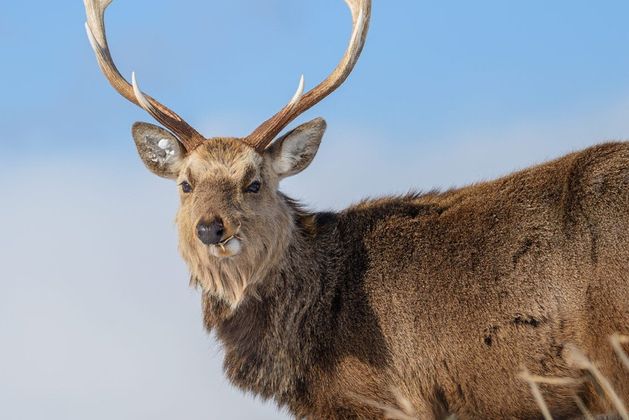
Of the four animals, the American Mink was introduced here for fur farming in the 1950s and 1960s and is now widespread. Sika Deer are also well established, even naturalised, as they were introduced from Japan in the 1860s to the Powerscourt Estate in Co Wicklow. The other two animals are the Yabby, a freshwater crayfish from Australia, and the Obama Flatworm, a South American worm that arrived here via the plant trade and is now eating our native earthworms.
The four plants are the New Zealand Pigmyweed, an aquatic species introduced via garden ponds, Japanese Knotweed that arrived in Ireland from Japan in the 19th century as an ornamental garden plant, its hybrid, Bohemian Knotweed, and Giant Hogweed.