

Microsoft (NasdaqGS:MSFT) signed a multi year, US$750 million Azure AI cloud deal with Perplexity, adding a new large scale customer to its AI infrastructure business. The company introduced its Maia 200 AI chip, described as its most advanced in house AI inference processor to date for Azure data centers. Both moves come as investors question how Microsoft will balance heavy AI capital spending with near term financial returns and cloud capacity constraints.
For you as an investor, this update sits at the intersection of Microsoft’s core Azure cloud business and its push into custom AI silicon. Azure is being positioned as a multi model platform that can run workloads from different AI vendors, and the Perplexity contract adds another example of that approach in action. At the same time, Maia 200 places Microsoft more directly in the chip design arena, alongside established suppliers of AI GPUs.
These developments give you more concrete data points on how Microsoft (NasdaqGS:MSFT) is building out its AI roadmap with both long term contracts and internal hardware. As scrutiny of AI related capital expenditure grows, the scale of the Perplexity deal and the move toward in house chips may shape how investors think about Microsoft’s future growth profile, risk mix, and competitive position in large scale AI infrastructure.
Stay updated on the most important news stories for Microsoft by adding it to your watchlist or portfolio. Alternatively, explore our Community to discover new perspectives on Microsoft.
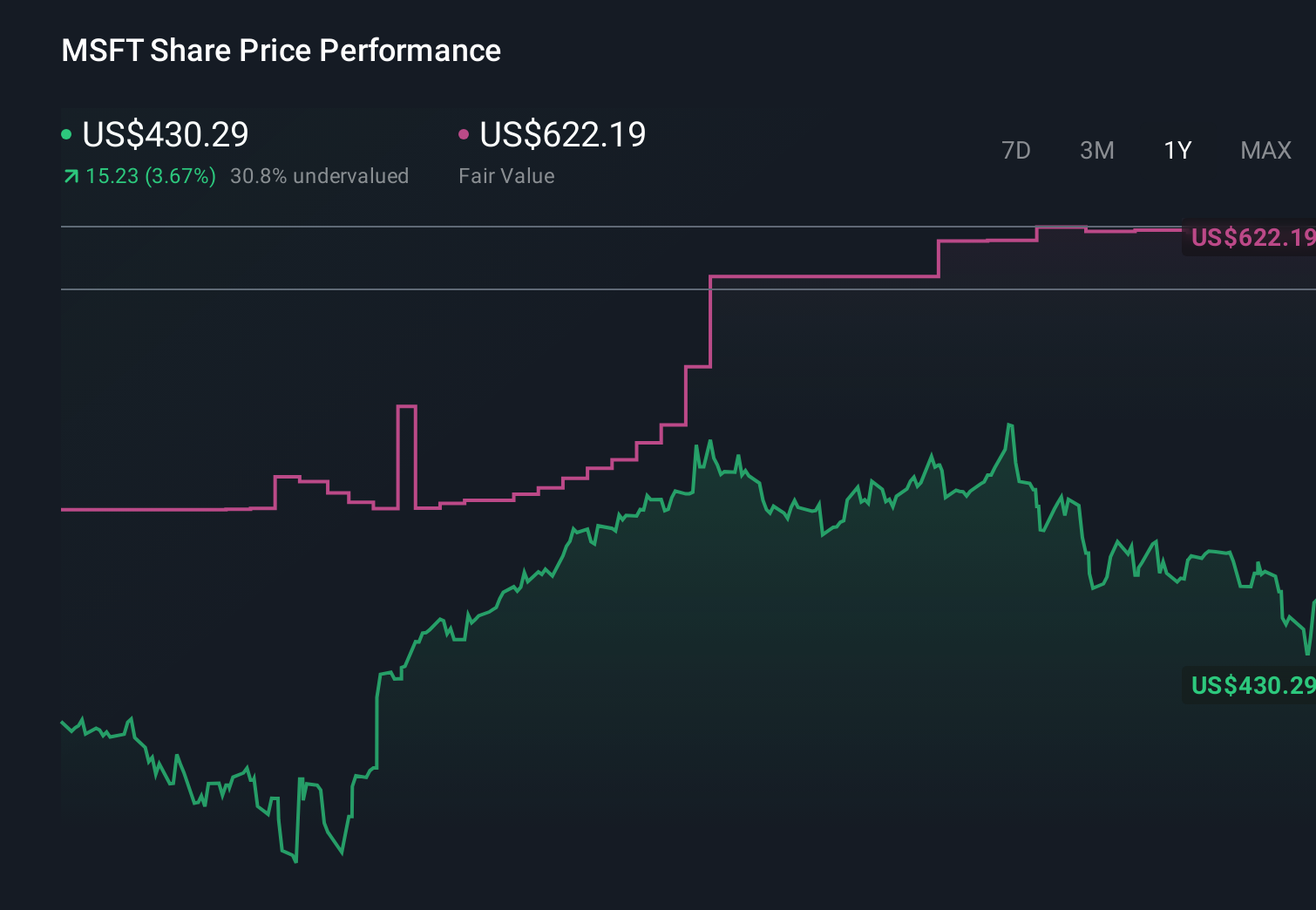 NasdaqGS:MSFT 1-Year Stock Price Chart
Why Microsoft could be great value
How this AI deal and custom chip move feed into the Microsoft thesis
The Perplexity agreement gives Microsoft another AI focused workload on Azure, but the fine print matters for investors because actual near term spend depends on model availability, billing regions and whether capacity is live now or largely reserved for later. Maia 200 fits into the same story, as a custom inference chip that could help stretch scarce GPU capacity and support Microsoft’s own Copilot services as well as partner models from OpenAI, Anthropic and xAI.
How it fits the broader Microsoft narrative
These moves sit neatly inside the existing narrative of Microsoft as an AI centric cloud platform, where Azure, Office 365, GitHub and security products are increasingly tied to AI powered features. The Perplexity deal illustrates the multi model, multi cloud reality described in those narratives. Maia 200 aligns with the view that Microsoft will run more of its AI stack on in house silicon alongside Nvidia, Amazon and Google as key competitors in high end AI infrastructure.
Risks and rewards investors are weighing 🎁 Perplexity’s three year, US$750 million commitment adds another contracted AI workload that supports Microsoft’s large remaining performance obligations tied to cloud and AI. 🎁 Maia 200 offers a path to diversify away from third party GPUs, which could help Microsoft manage capacity constraints and support long term AI product rollouts. ⚠️ The Perplexity deal is multi cloud and AWS remains Perplexity’s main provider. Azure revenue from this contract is likely to be shared and dependent on usage terms and timing. ⚠️ Heavy AI related capital spending, including chips like Maia and expanded data centers, has already drawn concern from investors about near term margins and the pace of cash returns. What to watch next
From here, it is worth watching how quickly Perplexity’s actual Azure consumption ramps, what Microsoft discloses about Maia 200 deployment beyond its own AI teams, and whether future quarters show AI driven cloud revenue keeping pace with higher capital expenditure. If you want to see how this all fits into different long term views on the stock, check out the community narratives for Microsoft on this dedicated page.
This article by Simply Wall St is general in nature. We provide commentary based on historical data
and analyst forecasts only using an unbiased methodology and our articles are not intended to be financial advice. It does not constitute a recommendation to buy or sell any stock, and does not take account of your objectives, or your
financial situation. We aim to bring you long-term focused analysis driven by fundamental data.
Note that our analysis may not factor in the latest price-sensitive company announcements or qualitative material.
Simply Wall St has no position in any stocks mentioned.
New: Manage All Your Stock Portfolios in One Place
We’ve created the ultimate portfolio companion for stock investors, and it’s free.
• Connect an unlimited number of Portfolios and see your total in one currency
• Be alerted to new Warning Signs or Risks via email or mobile
• Track the Fair Value of your stocks
Have feedback on this article? Concerned about the content? Get in touch with us directly. Alternatively, email editorial-team@simplywallst.com