
The Covid-19 pandemic may have upended many lives, but it occasionally changed things for the better.
Emma O’Dowd and her family were living in Naas, Co Kildare, when news reports began mentioning coronavirus. They had bought a house in Kinsale two years earlier, with a plan to renovate it for use as a holiday home. She had managed the project and restored the century-old house to its former glory by March 2020. The family of six arrived down for St Patrick’s Day and found themselves locked down when the Government introduced travel restrictions.
“So we spent the whole summer here, six of us in this small holiday home,” she recalls. Her daughter was due to return to school in Naas in September when a thought struck them. “The day before she was due to go back, we said ‘why are we going back?’ And we never went back.”
It was a big decision to leave their home in Naas and everything they knew. “But also, Naas had gotten so big and so busy. And we just felt we had a lovely lifestyle here, being by the water, and there’s a lovely community feeling here. During the lockdown you could go for your walk and you got to know people, seeing them on the road and chatting from a distance.”
After living in the holiday home, they realised they would need a bigger house so they found a site nearby with an old cottage. They had originally hoped to keep the old cottage but quickly realised it wasn’t viable so the project turned into a new build. “So I went from renovating a 1910 house to building an ultra-modern house,” she says.
Working with local builders, Knockleigh Construction, Emma project-managed the build and redesigned the internal layout to better suit the needs of their children, aged from 12 to 21.
“It is nice to have an open space, but you also need to have spaces where they can go with their friends and do their thing,” she says. The mother of four had previously worked in banking, but always had a passion for house design. “I don’t have a certain style, but I do know what fits a home.”
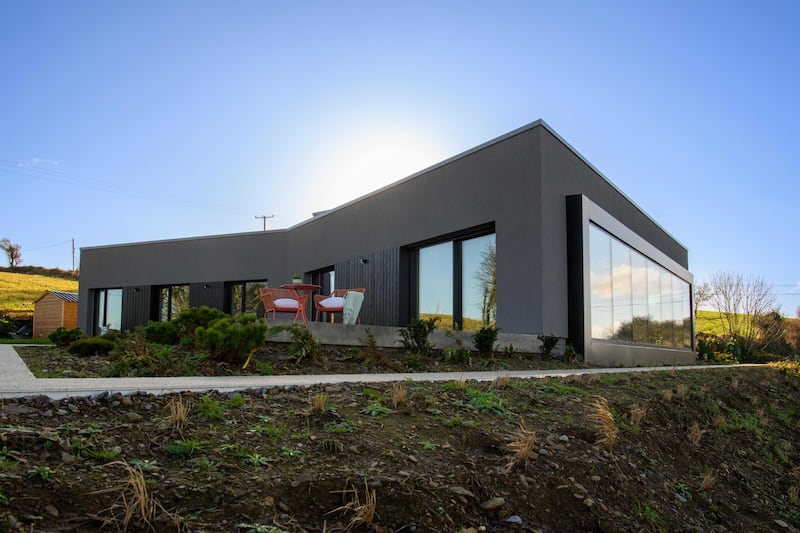
When it came to drawing up the plans with local architect, Ronan Conneely of Conneely Wessels Architects, she had one request that architects don’t hear too often. She asked him to design a house that no one would notice.
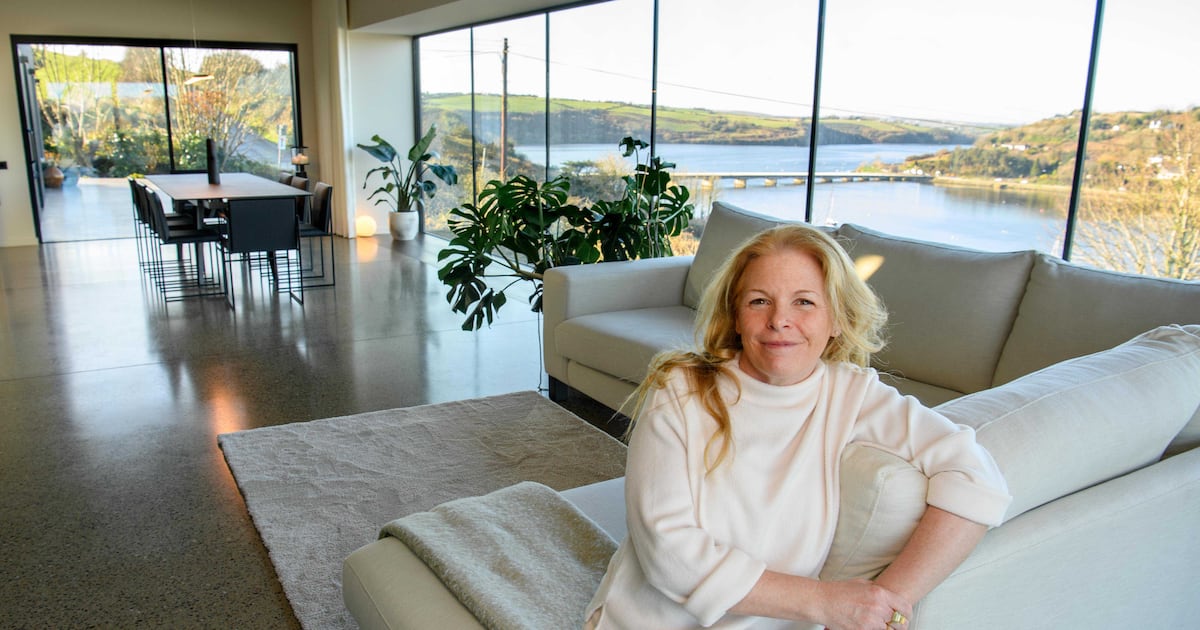
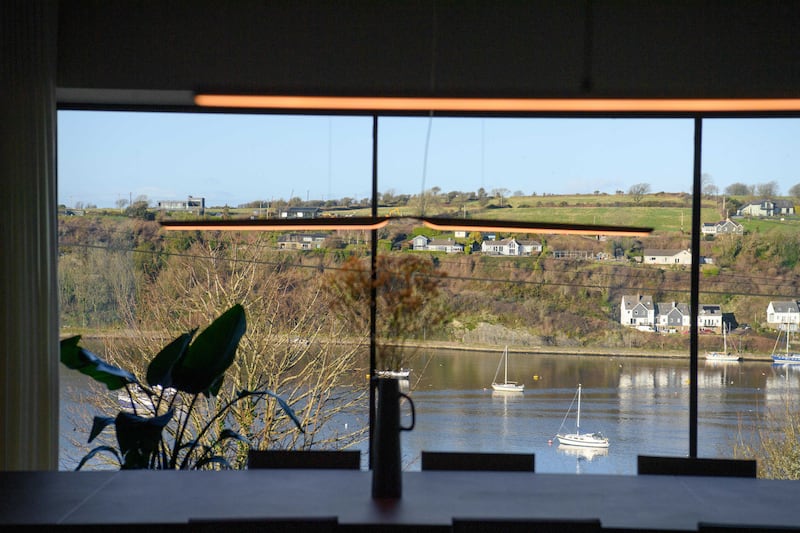
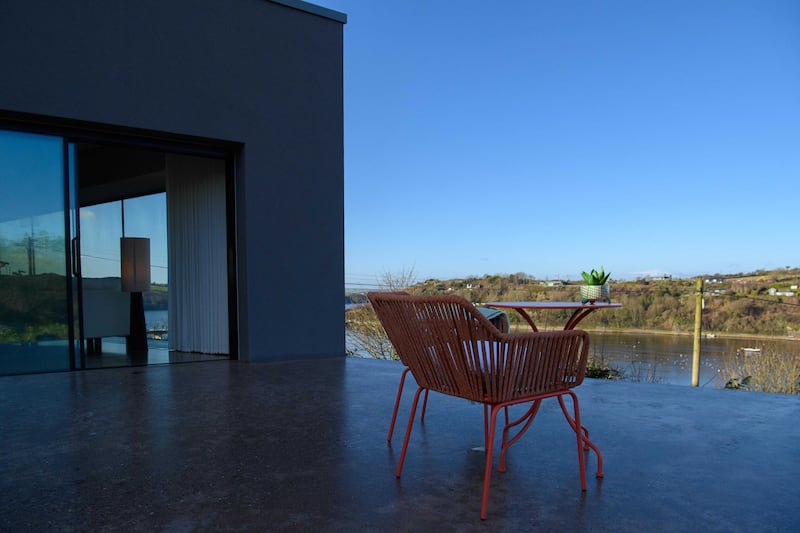
“I wanted the house to be invisible,” she says. The site is perched on a height, with enviable views of Kinsale Harbour and the Bandon river. All but one room has a view of the water, and she didn’t want the house to take attention away from that scenery.
“I wanted a house that kind of hid in the countryside, that wasn’t a showy-off kind of a house.” The house is clad in black larch, surrounded by greenery. “When you look up at it, you’d think that it’s a very small, unassuming house. It’s only when you walk in [that] it actually opens out.”
 Emma O’Dowd’s Kinsale home. Photograph: Daragh Mc Sweeney/Provision
  Emma O’Dowd’s Kinsale home. Photograph: Daragh Mc Sweeney/Provision
  Emma O’Dowd’s Kinsale home. Photograph: Daragh Mc Sweeney/Provision
 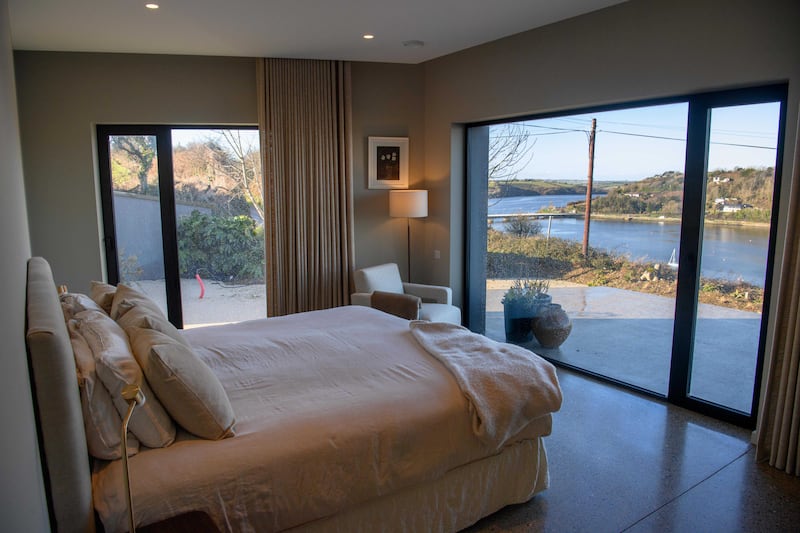 Emma O’Dowd’s Kinsale home. Photograph: Daragh Mc Sweeney/Provision
 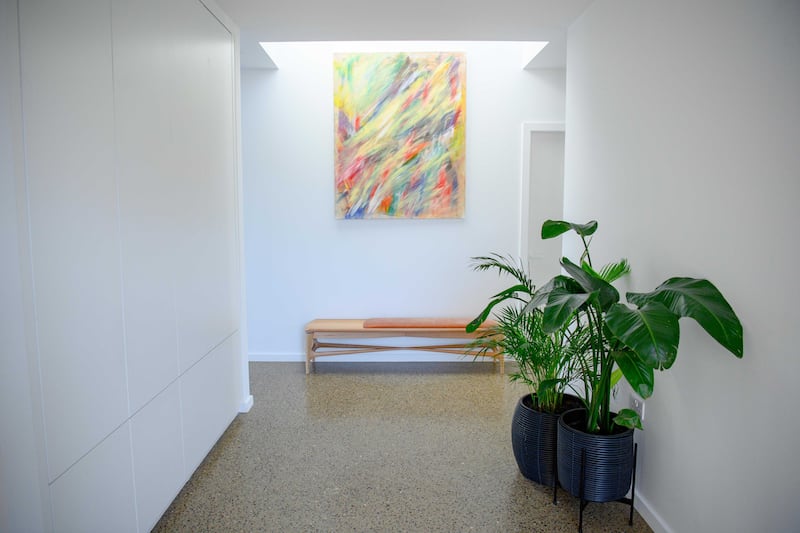 Emma O’Dowd’s Kinsale home. Photograph: Daragh Mc Sweeney/Provision
 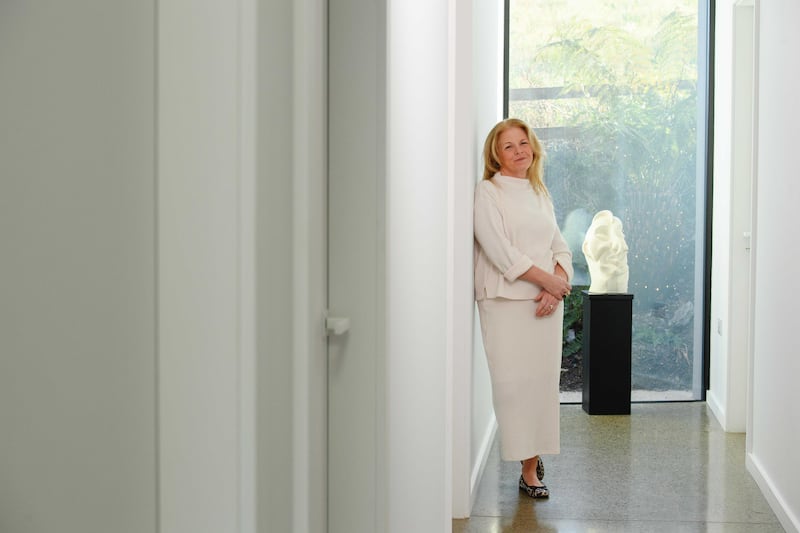 Emma O’Dowd in her Kinsale home, Co Cork. Photograph: Daragh Mc Sweeney/Provision
Her plans were guided by the need to future-proof the house. “I wanted it all on one level. I see with my parents that it’s important to have spaces that are accessible to all. People get older and family come and visit and stay and they can’t get upstairs. You have to think about these things.”
She also insisted on five bedrooms so that her children and their children would always have a place to return to. “Kinsale probably isn’t a place where they’ll work or grow old in, but I’d like them to be able to come back and visit. It’s not a place to come to on a day trip, so at least they’ll be able to stay overnight and be comfortable.”
They will certainly be comfortable when it comes to the underfloor heating. Availing of cheaper electricity rates at night, they use the heat pump between 11pm and 8am. The house holds the heat during the day because of the poured concrete floors, external insulation and triple-glazed windows.
The mechanical air ventilation system ensures an even temperature and constant fresh air. “It means you don’t have to open the windows to let your heat out during the day. The house just breathes.” She says the energy bills are on a par with the cost of running their previous, much smaller, house in Kinsale. That had a Ber of D1 while this house achieved an A1 rating.
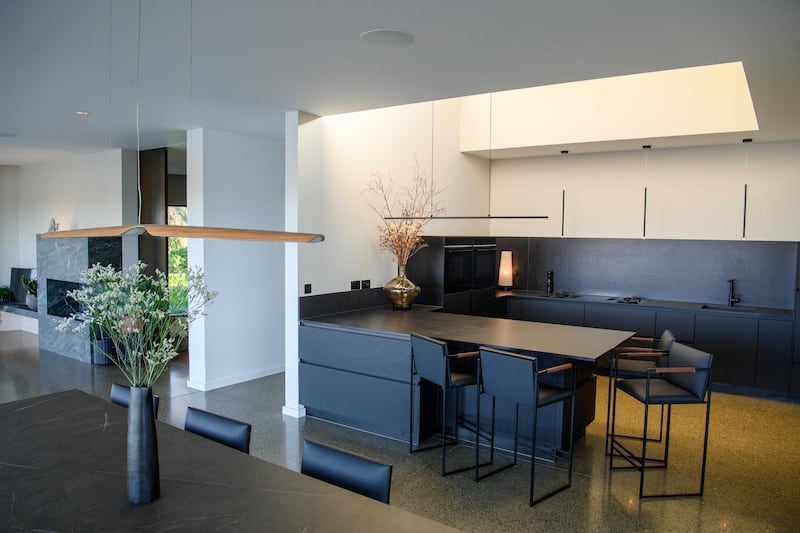 Emma O’Dowd’s Kinsale home. Photograph: Daragh Mc Sweeney/Provision
  Emma O’Dowd’s Kinsale home. Photograph: Daragh Mc Sweeney/Provision
When it came to choosing furniture and soft furnishings, she wanted to create a calming atmosphere. “I did the poured concrete floors in a sandstone colour, not grey. I wanted to feel that you’re literally coming off the beach and walking into the house.” Lots of plants add to the feeling of calm and the colour palette is muted, with creams and walnuts. In the hallway, the light oak bench with Sorensen leather came from local company Modet. The light linen curtains from Lucan Fabrics are ideal when the sun is too strong during the day, and the hidden blackout curtains come out at night.
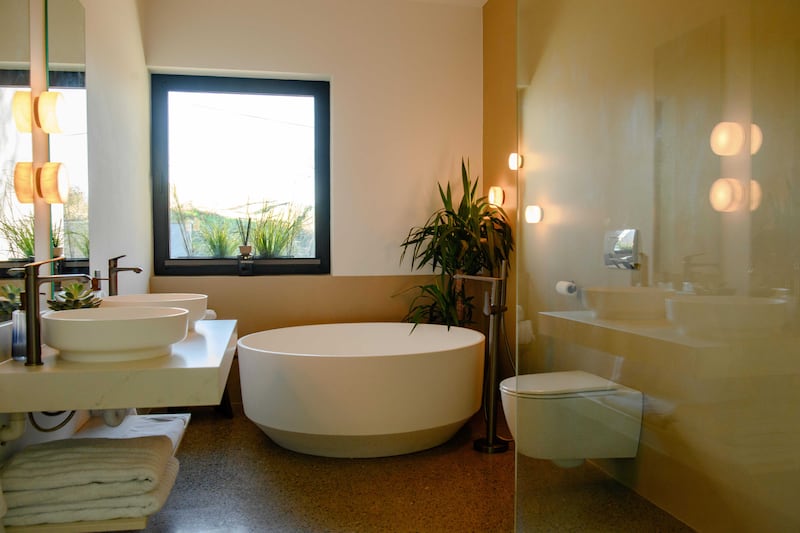
The bathrooms are in a camel colour and contain one of her favourite features in the house – microcement floors and walls. She discovered this material when she went looking for an alternative to tiles, as she didn’t want to spend her time scrubbing grout.
Microcement, a mixture of cement, resin and minerals, is applied in a thin coating to create a waterproof finish. She was attracted by its low-maintenance qualities and the fact that it came in a variety of colours and finishes. Spanish company Cementec supplied and installed this microcement, and the homeowners were so impressed with it that her husband has now become a distributor for Cementec in Ireland.
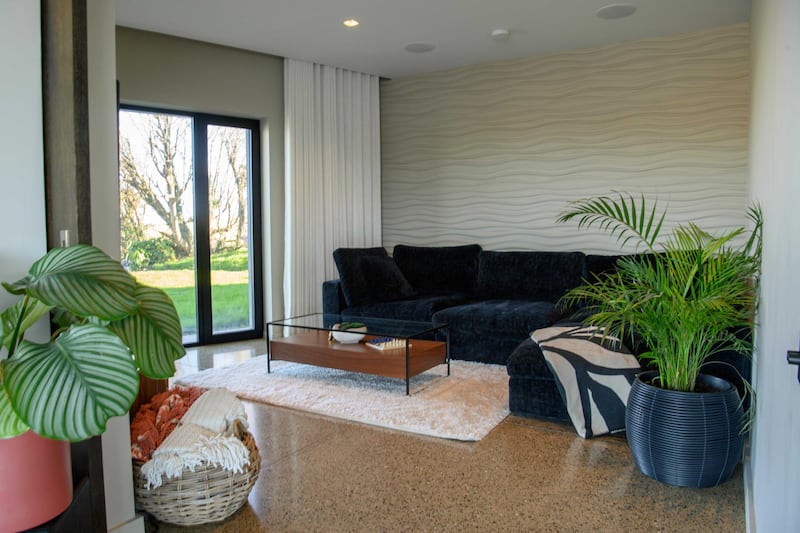
While the bathroom is tile-free, tiles do appear in an unexpected place – the snug. Here, she created a feature wall with large tiles which she sanded into a wavy pattern, echoing the sea outside.
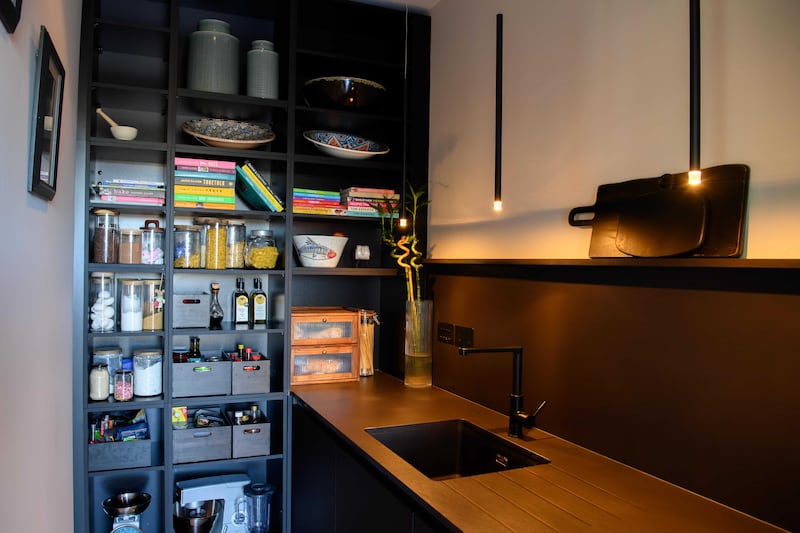
Not only did she want the house to be invisible from outside, but she also wanted the kitchen to disappear into the background, so the countertops and walls are black. While many new kitchen cupboards are now built to ceiling height to maximise storage space, she took the opposite approach with her Kube kitchen. “I’m only 5ft 2in at the most and I didn’t want to go above that height with my presses. I just didn’t feel there was any need, because I’ll never be able to reach them and I’m the one that’s using them. And also, I think the more storage you have, the more you fill up the stuff you don’t need.”
In another practical move, she installed her dishwasher at hip height and highly recommends it. “No more bending down to load and unload the dishwasher,” she says.
 Emma O’Dowd’s Kinsale home. Photograph: Daragh Mc Sweeney/Provision
  Emma O’Dowd’s Kinsale home. Photograph: Daragh Mc Sweeney/Provision
Looking towards the bedroom block, your eye will not be drawn to door handles or hinges, because she chose white door handles and hinges to blend into the background. “So when you do look down the hall, it just brings your eye up to the views of the countryside.”
For anyone taking on a new build, she advises getting a good architect and ensuring that the internal measurements work for your needs. “Looking at something on a drawing is very different to seeing it in real life,” she says.
She enjoyed working on the interior architecture and design of this house so much that she recently set up Design Theory (designtheory.ie, or @designtheory.ie on Instagram) to offer her service to others. “I just love spaces and I love making them work for people,” she says.
Biggest win
The views are even better than they expected. “When you walk in and you look out through the window now, it’s like, yeah, wow!”
Biggest mistake
“I probably would have done a level change in my sittingroom if I’d had my choice, just to add depth to the room,” she says.