
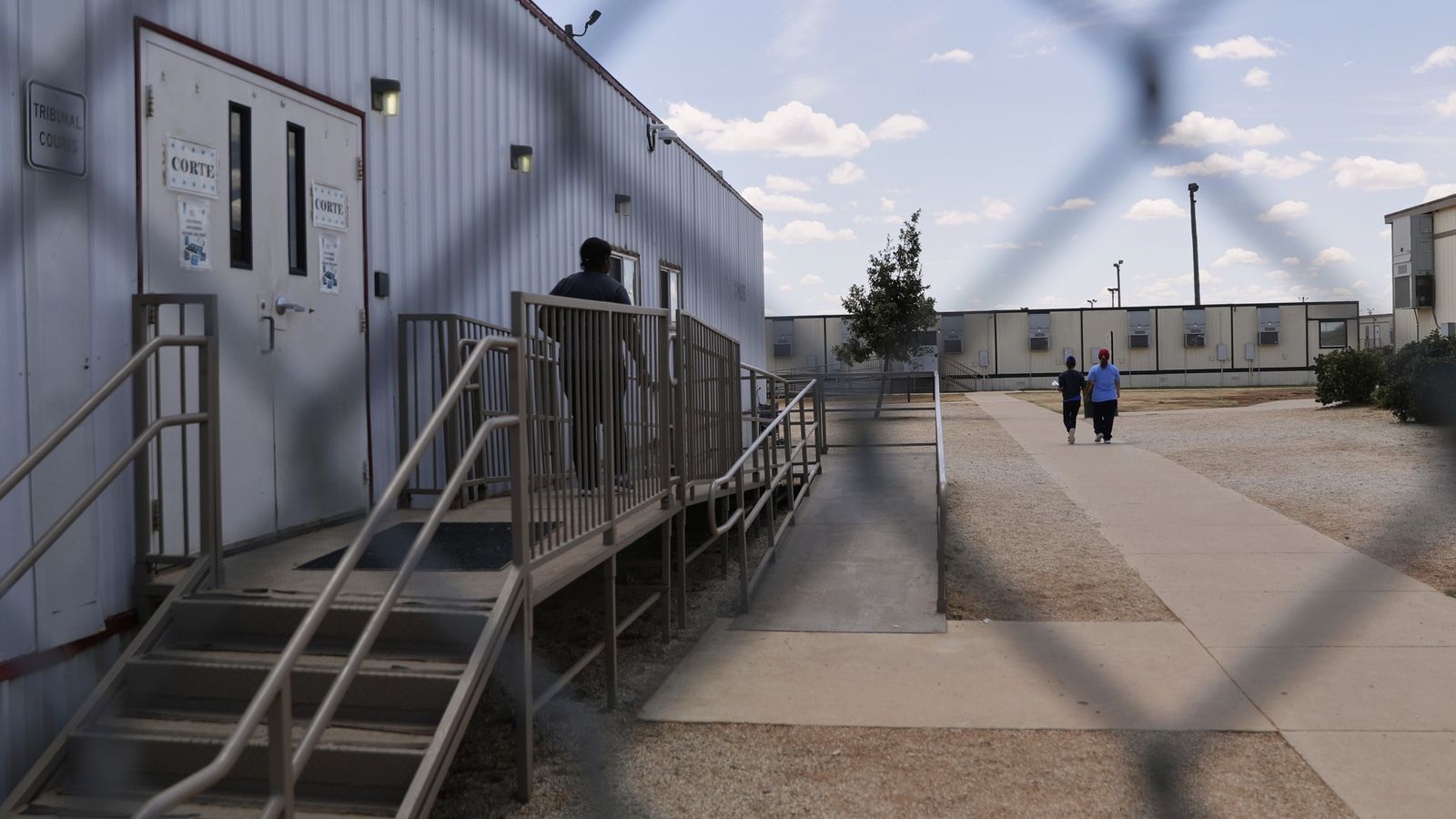
A measles outbreak has been reported at the South Texas Family Residential Center in Dilley, Texas, one of the largest family immigration detention facilities in the United States, according to a sworn declaration by Ben Thomas, the chief of staff to Congressman Joaquin Castro and public statements by immigration attorney Eric Lee. Immigration and Customs Enforcement (ICE) informed Rep. Castro’s office on January 31 that an outbreak is underway at the facility, which has since been placed under lockdown.
The Dilley facility has the capacity to hold up to 2,400 people and routinely confines hundreds of families and children at any given time. Last week, Lee documented a significant protest inside the facility, with detained parents and children chanting for release. Many of those held at Dilley are asylum-seeking families, including young children, confined in close quarters with limited access to medical care.
The introduction of measles—among the most contagious pathogens known to man—into such an environment represents an acute public health danger. It also serves as the most concentrated and brutal expression of a broader national breakdown in public health protections that now threatens the United States with the loss of its measles elimination status for the first time in a quarter-century.
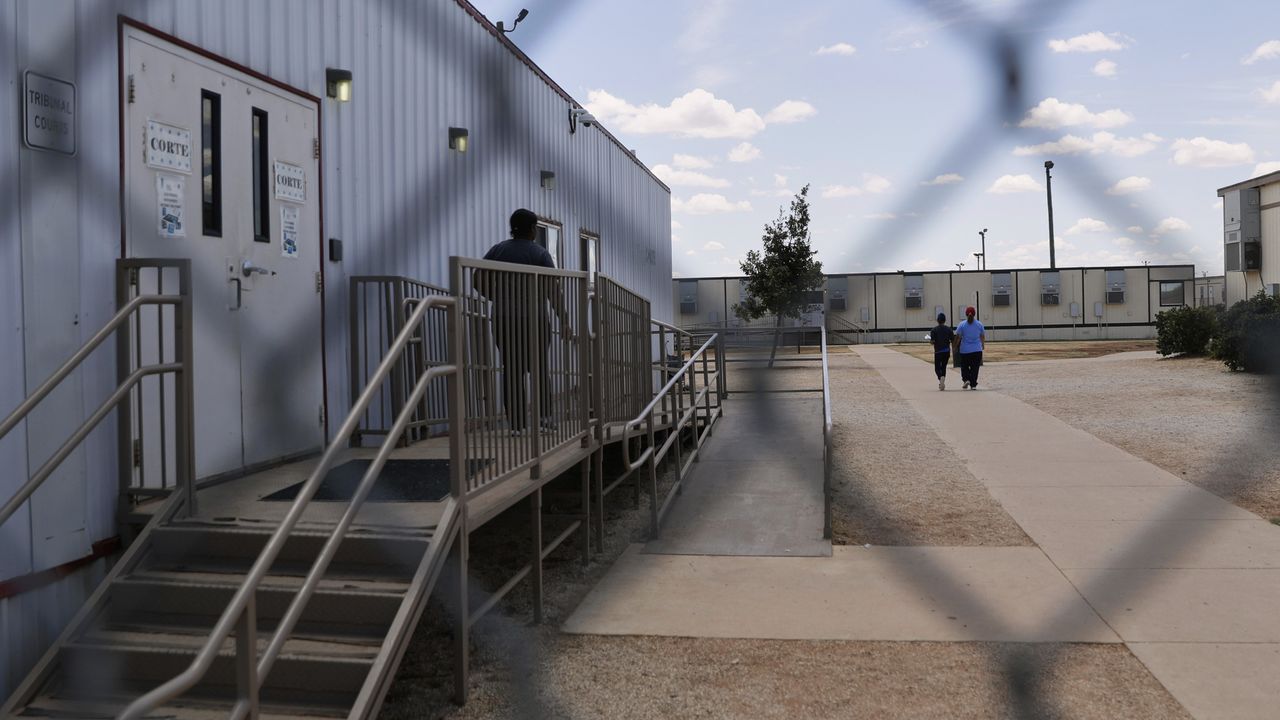 Immigrants at the ICE South Texas detention center in Dilley, Texas. [AP Photo/Eric Gay]
The outbreak at Dilley is unfolding amid a nationwide resurgence of measles that has reached a critical inflection point. In South Carolina, a massive outbreak has now surpassed the 2025 Texas epidemic to become the largest single outbreak since measles was declared eliminated in the United States in 2000. As of late January 2026, South Carolina has confirmed 847 cases, overwhelmingly concentrated in Spartanburg County. At the national level, persistent transmission clusters—most notably in Utah—drove the total number of confirmed measles cases in 2025 to 2,267, the highest annual count since 1992.
This resurgence reflects a profound collapse of herd immunity that is both geographically concentrated and statistically stark. National kindergarten measles-mumps-rubella (MMR) vaccination coverage has fallen to 92.5 percent, well below the 95 percent threshold required to prevent sustained transmission, with thirty-nine states now failing to meet this standard. South Carolina has emerged as the epicenter of this breakdown, where school vaccination rates in Spartanburg County hover near 90 percent, creating conditions for uncontrolled spread.
During a January 28, 2026 media briefing, South Carolina State Epidemiologist Dr. Linda Bell described the speed of the outbreak as unprecedented, noting that the state reached case totals in just 16 weeks that took Texas seven months to accumulate the previous year. Bell warned that it was “disconcerting to consider what our final trajectory will look like,” emphasizing that 95 percent of cases involve unvaccinated individuals and that transmission is spreading rapidly through households, schools and churches.

Loading Tweet …
At the same time, Utah has confirmed 176 cases, primarily concentrated in the state’s southwest health district, demonstrating that geographically concentrated pockets of vaccine refusal are producing sustained community transmission capable of overwhelming local public health systems. This erosion of immunity is most pronounced in the Intermountain West and the South. Utah now reports an MMR vaccination rate of just 88.6 percent, driven by a sharp increase in nonmedical exemptions, which exceed 10 percent among in-person kindergarteners and more than 50 percent among online students.
This vulnerability extends beyond measles. Public health data show that nearly 20 percent of kindergarteners in southwest Utah lack protection against polio, while national pediatric uptake of the 2025–2026 COVID-19 vaccine remains at a dismal 7.6 percent.
This public health regression is the direct result of the systematic dismantling of public health infrastructure that accelerated with the onset of the COVID-19 pandemic, now in its seventh year. The sustained erosion of vaccination programs and surveillance capacity has created conditions in which 94 percent of recent measles cases have occurred among unvaccinated individuals.
Mehring Books
The Wuhan Lab Lie and the Fight for Scientific Truth
This pamphlet provides an overview of the principled stand taken by the WSWS against the far-right Wuhan Lab Lie. It is essential reading for all those seeking to defend science and public health.
Dr. Demetre C. Daskalakis, an infectious disease physician and former public health official, has characterized the current measles resurgence not as an isolated epidemiological failure but as a critical “vital sign” indicating that the U.S. public health system is “about to code.” Daskalakis departed the Centers for Disease Control and Prevention (CDC) amid a sweeping purge of public health leadership, exemplified by Health and Human Services (HHS) Secretary Robert F. Kennedy Jr.’s firing of CDC Director Susan Monarez after she reportedly refused to preapprove recommendations issued by the newly constituted, anti-vaccine Advisory Committee on Immunization Practices (ACIP).
Daskalakis has noted that vaccines, once regarded as routine life-saving interventions, have been transformed into objects of political controversy. This shift has occurred alongside the devastation of public health agencies that have been “decimated” and whose communications have been “compromised by ideology.” The resulting collapse in institutional capacity, he argues, is so advanced that the technical question of measles elimination status is secondary to a more fundamental reality: the infrastructure required to protect the population has already failed.
Emphasizing the political implications of this breakdown, Daskalakis stated,
Public health as an institution and the peoples’ health as a mission are in trouble. No matter what the outcome of the process to review our measles elimination status, the message is clear: We already know that our public health institutions are sick and need to be re-imagined, whether we keep or lose our elimination status.
While infectious disease experts warn that these developments signify a public health system in induced collapse, the current administration has instead worked to normalize the disaster. CDC Principal Deputy Director Ralph Abraham recently dismissed the impending loss of measles elimination status as merely the “cost of doing business.” Such official indifference constitutes a historic betrayal of the working class, subordinating the right to life and population health to the so-called “freedom” of anti-science ideology and political expediency. This outlook has been fully embodied in Kennedy’s antivaccine positions and hostility to scientific authorities, which now dominate among the leadership of the nation’s public health apparatus.
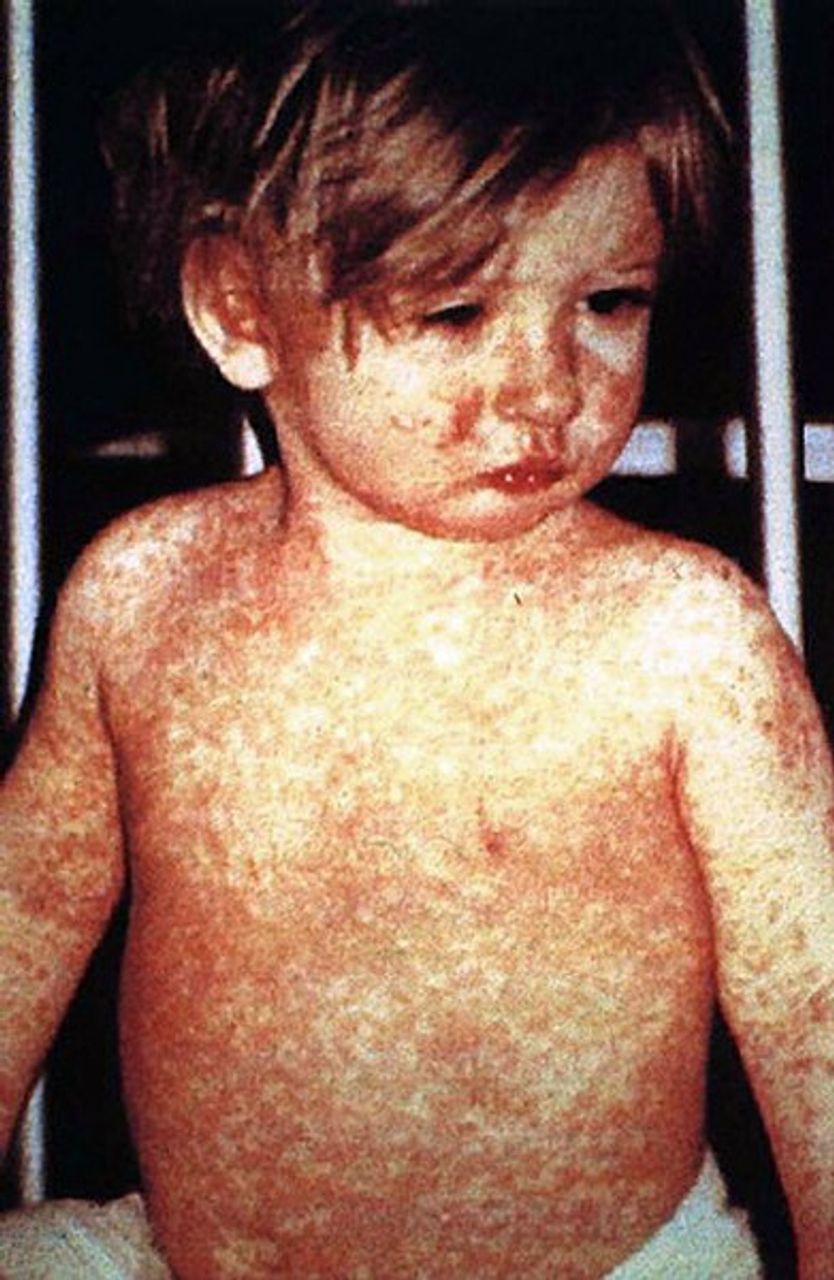 Child suffering from measles, pre-1963. [Photo: US Government]
As a result, the United States now faces the imminent prospect of formally losing its measles elimination status, a designation it had maintained for more than a quarter-century. The Pan American Health Organization (PAHO) is scheduled to review the country’s standing in April 2026. In a January 16, 2026, statement, PAHO explained:
The meeting follows measles outbreaks reported in the United States beginning on January 20, 2025, and in Mexico beginning on February 1, 2025. … The meeting date has been set to give national health authorities and national sustainability committees sufficient time to prepare comprehensive reports, including descriptions and analyses with detailed epidemiological and laboratory evidence, for review by the Commission.
Measles elimination is defined by the World Health Organization (WHO) and PAHO as the interruption of continuous endemic measles virus transmission for at least 12 months within a defined geographic area. This designation does not require the absence of cases. Rather, it requires that any infections detected within a country result from sporadic importations or short-lived transmission chains linked to importations, not from the sustained circulation of indigenous virus strains.
The authority to grant or revoke elimination status rests with PAHO’s Regional Monitoring and Re-Verification Commission (MRE-RVC), an independent technical body that reports directly to the PAHO director. The commission evaluates comprehensive national submissions that must include detailed epidemiological analyses, surveillance performance indicators and, critically, molecular evidence.
To determine whether the United States has lost its elimination status, the commission relies heavily on viral genotyping to trace transmission chains. If molecular analysis demonstrates that the same measles virus lineage has circulated continuously for 12 months or longer, this constitutes confirmation of reestablished endemic transmission. At present, the D8 genotype accounts for approximately 91 percent of sequenced measles samples in the United States.
The loss of measles elimination status would represent a fundamental degradation of population immunity and public health capacity. Internationally, it would signal that the United States can no longer effectively control measles transmission, potentially triggering enhanced screening or vaccination requirements for U.S. travelers abroad. Domestically, it would require a shift from outbreak containment to costly, permanent endemic disease control programs, diverting already depleted resources from other critical public health priorities.
While federal leadership—specifically CDC Principal Deputy Director Ralph Abraham—has dismissed this prospect as merely the “cost of doing business,” public health experts regard it as a catastrophic regression that lays bare the collapse of the nation’s protective infrastructure.
Regardless of the outcome of PAHO’s formal review, Daskalakis has argued that the United States has already lost the practical capacity to protect its population because of the systematic dismantling of public health agencies. He stated, “We do not have the capability to actually control measles, whether or not this is demonstrated through continuous measles transmission for 12 months. I’m going to say that elimination is already lost.”
The outbreak at Dilley exposes this reality in its most concentrated form. Throughout the COVID-19 pandemic, immigration detention centers and prisons have functioned as engines of mass infection, with SARS-CoV-2 spreading rapidly through overcrowded, poorly ventilated facilities where confinement makes effective disease control virtually impossible. Such conditions have long been characteristic of prisons, where the spread of disease is tolerated—and often welcomed—by capitalist oppressors as an instrument of control and attrition.
Today, hundreds of children and their families are once again confined at Dilley as a highly contagious virus moves through the facility—this time measles, which is even more transmissible than SARS-CoV-2. The same structural conditions that historically allowed disease to ravage prisons, detention centers and colonized populations remain intact, now repurposed under the banner of “immigration enforcement” and public indifference.
The systematic dismantling of public health infrastructure constitutes a direct assault on the democratic rights of the working class and a fundamental threat to the most basic right of all—the right to life. The major victories against infectious disease achieved over the course of the twentieth century, through the application of science, sanitation and universal vaccination, demonstrated that human progress could overcome ancient scourges. These advances were not benevolent gifts from above, but social gains won through collective struggle.
Today, these hard-fought protections are being dismantled by a social order in advanced decay that subordinates human survival to the accumulation of profit. Having normalized mass death during the COVID-19 pandemic in defense of corporate interests, the ruling class now treats disease prevention and the maintenance of public health infrastructure as unacceptable impediments to economic expediency.
In this context, the resurgence of measles—a disease declared eliminated in the US a quarter-century ago—represents more than a failing vital sign of the public health system. It stands as a damning indictment of the capitalist system itself.
The deliberate erosion of scientific authority and the promotion of so-called “health freedom” function as ideological covers for policies that accept the maiming and killing of children as the “cost of doing business.” The return of these preventable plagues confirms that the defense of public health is no longer merely a medical question, but a fundamental issue bound up with the class struggle. Securing a future free from the threat of preventable disease requires the independent political mobilization of the working class to reorganize society based on human need rather than private profit.