
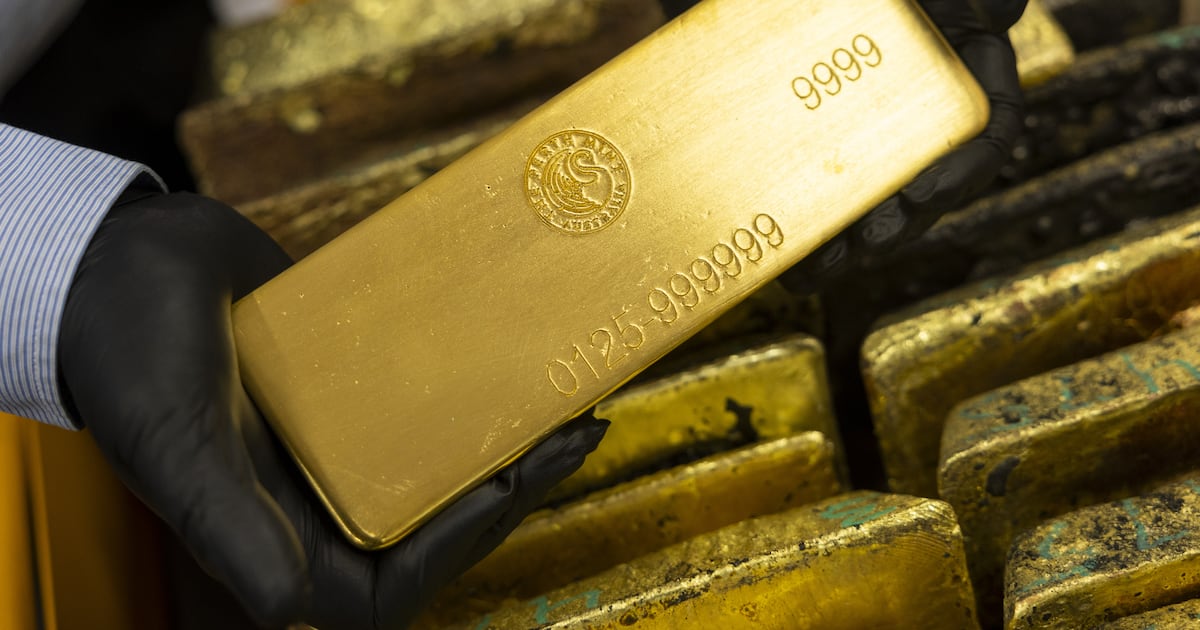
A rout in gold and silver intensified on Monday after top commodity exchange CME Group raised margin requirements following a collapse in metals prices last week that was triggered by Kevin Warsh’s nomination as the next Fed chair.
Spot gold fell 6.1 per cent to $4,565.79 per ounce after shedding more than 9 per cent on Friday in its sharpest one-day drop since 1983.
The metal has lost more than $1,000 since hitting a record high at $5,594.82 on Thursday, erasing most of this year’s gains.
US gold futures for April delivery were down 3.3 per cent to $4,586.20 per ounce.
Spot silver tumbled 12 per cent to $74.48 an ounce after plunging 27 per cent on Friday in its worst day on record. It has shed about 40 per cent since notching an all-time peak of $121.64 last week.
“The Warsh nomination, whilst likely being the initial trigger, did not justify the size of the downward move in precious metals, with forced liquidations and margin increases having a cascading effect,” said KCM Chief Trade analyst Tim Waterer.
“Warsh’s policy approach has been generally supportive of the dollar and by inference, negative for gold, due to his focus on inflation and dim views on quantitative easing and excessive Fed balance sheets.”
Investors still expect at least two rate cuts in 2026. Non-yielding bullion tends to perform better in low-interest-rate environments.
CME Group announced hikes in margins on its precious metal futures on Saturday and said the changes were set to take effect after market close on Monday.
An increase in margin requirements is generally negative for the affected contracts, as the higher capital outlay can dampen speculative participation, reduce liquidity, and pressure traders to unwind positions.
A stunning coda to a record-breaking price rally, the crash is wiping out leveraged investors who, in turn, are selling other assets to cover margin calls on silver and gold.
Stock markets around Asia slid, while US equity futures also dropped.
Spot gold may retrace further into a range of $4,361-$4,476 per ounce after it failed to stabilise around a key support of $4,662, Reuters technical analyst Wang Tao said.
“This obviously is a very aggressive move today after a (similar one) on Friday because Asia and European markets are just now reacting to what happened on Friday in US hours,” said Ilya Spivak, head of global macro at Tastylive.
“The larger narrative continues to be gold supportive, but clearly we hit some sort of a speculative speed bump here and there’s a sort of rearranging of portfolios, especially shorter-term portfolios that are impacted by these margins.”
Analysts at JP Morgan said despite the recent volatility, they expected the rally to remain intact in the longer term.
“We remain firmly bullishly convicted in gold over the medium-term on the back of a clean, structural, continued diversification trend that has further to run amid a still well-entrenched regime of real asset outperformance versus paper assets,” they said in a note.
Spot platinum lost 9.4 per cent to $1,958.93 per ounce after hitting a record $2,918.80 on January 26th, while palladium shed 5.1 per cent to $1,611.86. – Reuters