
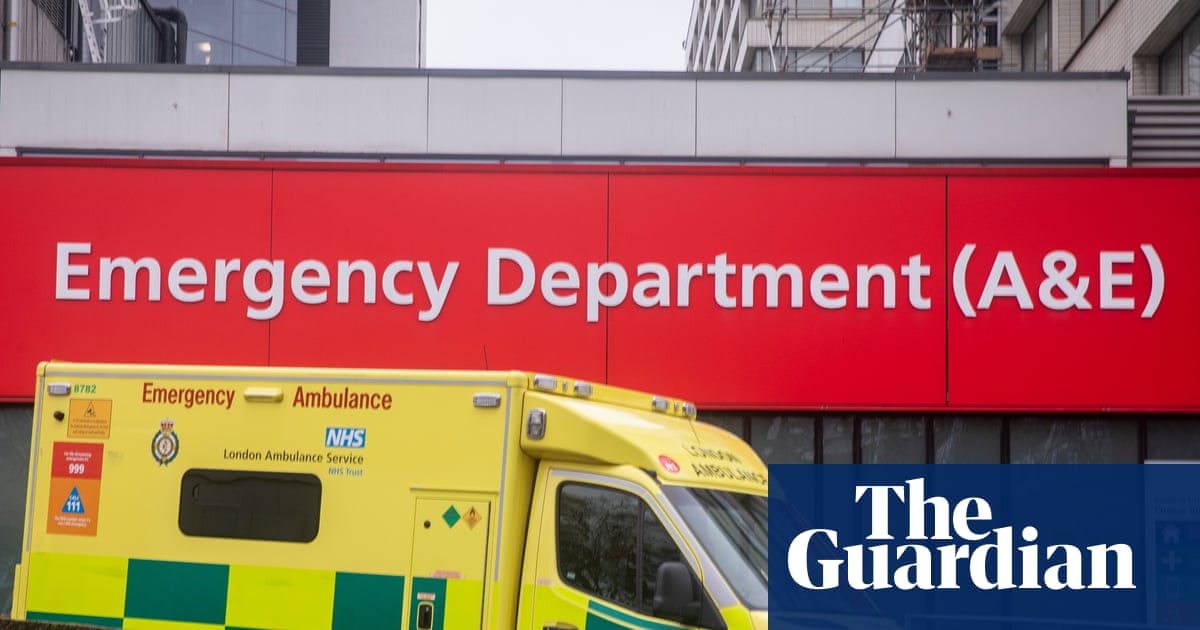
The number of people requiring emergency care for pneumonia has risen by a quarter over two years to reach more than half a million cases, new figures show, amid warnings that preventable cases are adding pressure on overstretched A&E departments.
Analysis of the most recent NHS England data from between April 2024 and March 2025 found that there were 579,475 cases of pneumonia requiring emergency hospitalisation, and this was likely to have risen further since, according to the charity Asthma + Lung UK. There were 461,995 cases between April 2022 and March 2023.
Pneumonia is the single biggest cause of emergency admissions and is responsible for more than double the number of cases of the next biggest. It can also be deadly: between April 2022 to March 2025 more than 97,000 people died of pneumonia after ending up in hospital.
Dr Andy Whittamore, the clinical lead at Asthma + Lung UK, said: “These alarming figures are the result of respiratory care being neglected and deprioritised for too long.
“Following recommended basic care guidelines for respiratory conditions can save and transform lives. I’ve seen first-hand with my patients the dramatic effect good basic care has on reducing hospital admissions.
“However, too often we’re not getting the basics right and the result is increasing A&E and hospital pressures, rising healthcare costs and people with lung conditions left to deteriorate without support.”
Pneumonia is a type of chest infection that affects tiny air sacs, called alveoli, in the lungs, making it difficult to breathe. It can be caused by a bacterial infection or virus, such as flu, RSV or Covid-19. People with lung conditions are much more susceptible to catching pneumonia as their lungs’ natural defences are already weakened, especially if their symptoms are not well managed at home.
Asthma + Lung UK’s analysis also showed that people experiencing greater deprivation were 36% more likely to be admitted to hospital with pneumonia, often due to living in damp, mouldy and poorly ventilated housing or areas of high air pollution.
Prof Nick Hopkinson, the medical director at Asthma + Lung UK and a specialist respiratory consultant, said pneumonia rates had been high since the Conservative and Lib Dem coalition government introduced austerity policies in 2010, barring a dip during the Covid crisis due to social distancing measures. “Lung disease is very tied up with inequality,” he said.
Respiratory conditions had never received the same attention as other diseases such as cancer and heart disease, even though they were the third biggest killer globally, he said. As a result of the lack of a top-down strategy, lung conditions were often not prioritised in overstretched primary care settings, with preventive work, such as education and awareness-raising, perceived as less urgent than other demands, he added.
Asthma + Lung UK is calling for a national strategy for respiratory illness to implement better basic care provision for people with lung conditions in community settings, such as GP practices.
Basic care includes regular treatment reviews, action plans created with clinicians to know what to do when your condition gets worse, and vaccinations, including the RSV, flu and pneumococcal vaccine.
A recent survey by the charity found that just three in 10 (32%) of respondents with asthma received all the fundamental elements of basic care to help them manage their condition, and just one in 10 (8.8%) people with COPD (chronic obstructive pulmonary disease).
Studies show that people with COPD are four times more likely, and those with asthma three times more likely, to catch pneumonia than the general population. Even when successfully treated, pneumonia can often worsen people’s existing lung conditions.
Sabrina Kaur has had severe asthma, bronchiectasis and COPD since she was a child, but when she contracted pneumonia it was “crippling”. In combination with damage caused by Covid, she said all her conditions had been harder to manage ever since, and she had been to A&E three times this year, often coughing up blood due to inflammation in her airways.
Kaur is a nurse, so she knows how her conditions should be managed, but she said she had to do all the research herself, and advocate hard to receive treatment updates on time and the necessary vaccinations. At 35, she is unusually young to have COPD, and she has found clinicians adopt a “one size fits all” approach which does not work for her.
“You have to be very proactive and it shouldn’t have to be like that,” Kaur said. “I’d luckily had my pneumonia jab before I was hospitalised and am certain things might have been even worse without it. I imagine there’s many people who need the pneumonia jab, who are missing out because they don’t even know about it.”
Dr Jonathan Fuld, the national clinical director for respiratory disease at NHS England, said: “The NHS is working to improve how we proactively support people with respiratory disease during winter, with a greater emphasis on remote monitoring and strengthened community support to help people manage their conditions and reduce pressure on hospitals.
“We are also investing to support health systems in delivering innovative projects that transform asthma and COPD care in the community, alongside rolling out new medicines for patients.”