
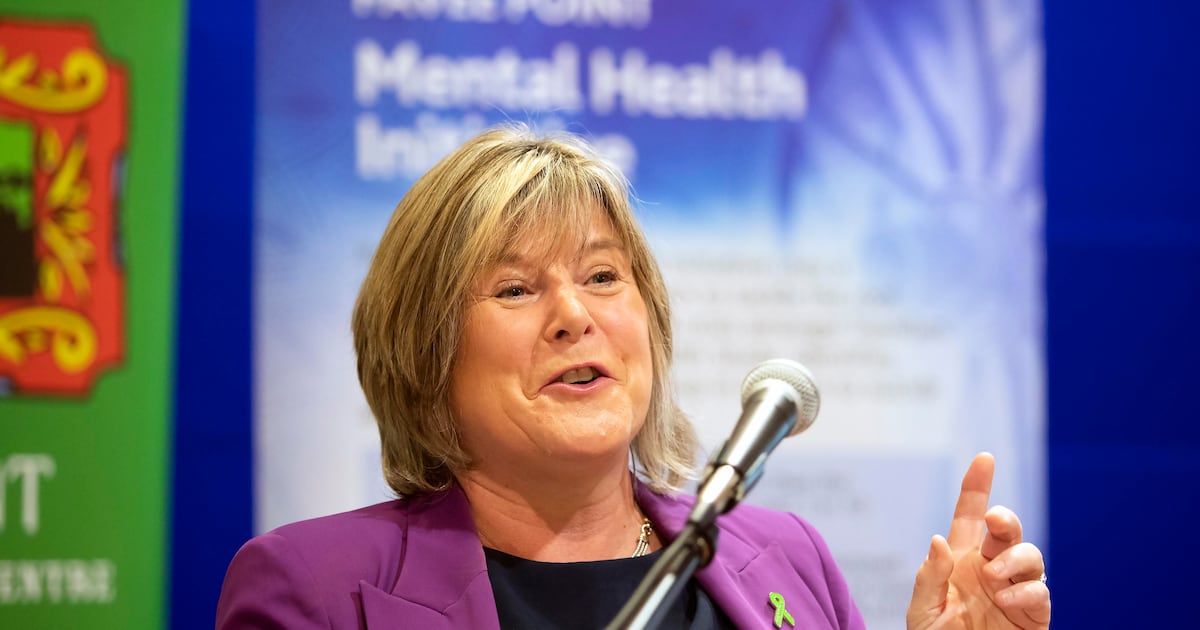
A new model of care is needed to reduce waiting lists for children with attention deficit hyperactivity disorder (ADHD) and other neurodivergent conditions who are often “pushed to the back of the queue”, the Government Minister with responsibility for mental health has said.
Minister of State Mary Butler described 2026 as a “pivotal” year for mental health, largely due to the forthcoming enactment of the Mental Health Bill.
Set to be the first big reform of the legislation in more than 20 years, it seeks to move to a more human-rights-based approach.
One area of focus in the Bill is Child and Adolescent Mental Health Services (Camhs), which has faced significant controversy in recent years due to long waiting lists and governance issues.
Under the new Bill, Camhs will be regulated by the Mental Health Commission for the first time, but Butler said she remains “concerned” about waiting lists in the sector.
The teams received an additional €30 million over the last two years, but the “waiting list was still only going in one direction”, she said.
Some 98 per cent of children who are suicidal or self-harming are seen within 72 hours, but many children with ADHD and autism end up being “long waiters”, she said. Up to 70 per cent of presentations to some Camhs teams are neurodivergent, she added.
Consequently, she has requested all teams ensure that by March no child is waiting more than 12 months to be seen by Camhs.
“What I don’t want to see is a child with ADHD or a child with autism … pushed to the back of the queue,” she said. “We’re working closely with the HSE at the moment to come up with a new model of care to try and reduce the list.”
[ ‘Worrying’ rise in repeated self-harming among teenagers, study findsOpens in new window ]
The forthcoming legislation, which the Minister hopes will be fully commenced by late next year, also looks at an overhauled approach to consent for teenagers and those who are involuntarily detained, as well as stronger safeguards for people accessing inpatient treatment.
Clinicians were concerned that changes to involuntary detention could deny some patients life-saving treatment, while advocacy groups were in favour of a shorter detention period.
The Bill initially proposed that an individual who is involuntarily admitted to an acute psychiatric unit could be detained for up to 21 days. However, amendments brought to Cabinet in June meant that after 21 days, if two consultant psychiatrists agree, that period can be extended to 42 days and, in some cases, beyond that.
Butler said the number of patients who are involuntarily detained is a “very, very small cohort of people”.
“It’s about making sure their human rights are upheld, but trying to strike the balance that you have advocacy on one side, you have the patient in the middle, and then you have the clinicians,” she said.
“And when you have somebody who’s involuntarily detained, they are ill, they’re very, very ill. If they’re detained without capacity, they’re not capable of making a decision for themselves. And that’s why I feel really strongly about these safeguards to support those people.”
Bodies including the Irish Human Rights and Equality Commission have also raised concerns about the lack of an independent complaints process. “There’s certainly merit in looking at that,” Butler said.
The mental health sector has undergone radical changes in recent decades. Its budget has ballooned from €995 million in 2020 to €1.6 billion. The State has moved from institutionalised settings to more community-based care.
Despite areas of improvement, there are also those that continue to experience challenges, particularly in terms of people with “acute mental health” crises presenting to emergency departments (EDs) and being unable to access suitable or timely care.
About 50,000 people per year seek mental health support for the first time through EDs, some of whom do not receive timely treatment and leave. Butler said she is “quite concerned” about this and is funding 40 whole-time equivalent advanced nurse practitioners or clinical nurse specialists to work in EDs to support those with mental health crises.
“Often in the evening times, non-consultant hospital doctors are doing their rotation in the emergency department and they may not be specialising in mental health,” she said.
“I just felt that if they had the support of a qualified mental health, clinical nurse specialist, or an advanced nurse practitioner to support them … we could prevent people feeling they have no choice but to leave.”