
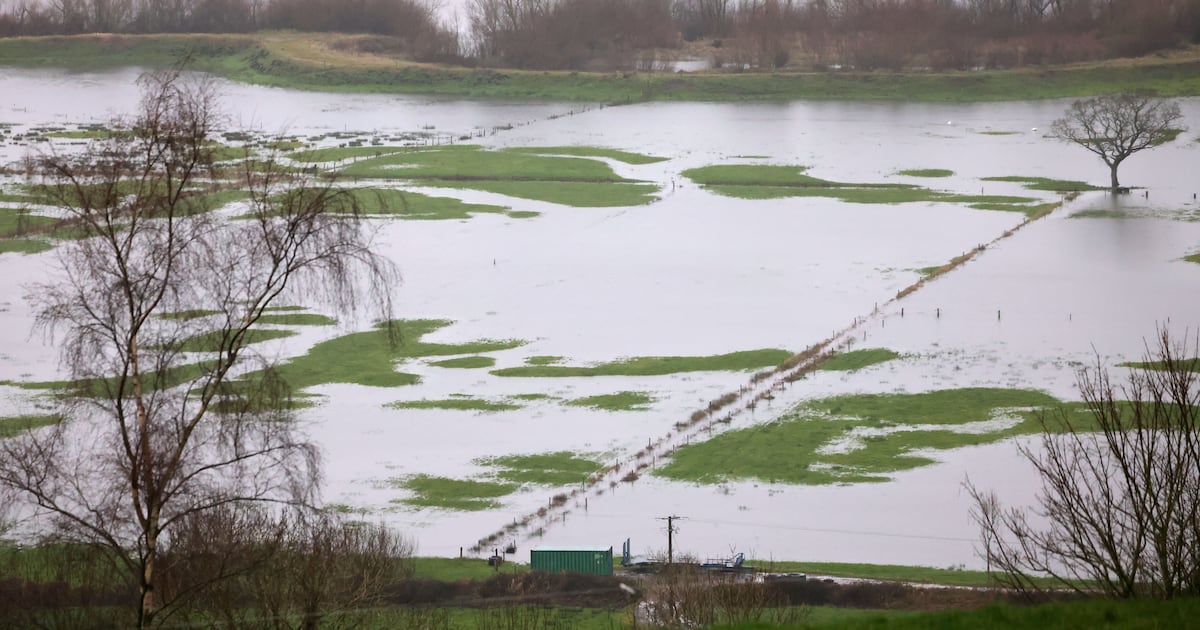
The recent flooding events across the country have put the spotlight yet again on Ireland’s out of date approach to flood management and urban drainage. We are also suffering from out of date politics, with more clamours for hard engineering solutions that are unlikely to stand the test of time, as climate-induced extreme weather starts to really bite. Elected representatives tend to like hard infrastructure that comes with lots of earth moving, concrete and ribbons to cut. But we all need to let go of the old idea that pushing nature out of the way with hard engineering is the solution to flooding.
Across Europe and the UK by contrast, devastating flood events forced a dramatic policy shift. Dutch law now requires municipalities to have a legal “duty of care” for rainwater. They must ensure that rainwater is handled on-site (through Sustainable Urban Drainage Systems or SUDS) before it ever touches the public sewer system. Dutch policy has shifted from “fighting” the water with higher dykes to “giving” it more space by lowering dykes, widening river corridors and deliberately flooding reclaimed land to act as water storage. The Dutch also boast the rather cheesy-sounding Tegelwippen tile-flipping (pavement removal) competition that has removed over 20m tiles (or paving stones) since 2020, creating more green space in built-up areas to act as a sponge for rainfall.
By contrast, the national flooding discourse in Ireland seems to be stuck in the 1960s. Devastating though Storm Chandra has been, it should not have come as a surprise. Our best scientists and researchers have been warning for years that we can expect more deluges that exceed the coping capacity of our drainage systems and flood protections. We should be preparing for these events by making more room for water with green spaces such as parks that can act as sponges, and sustainable urban drainage schemes that reduce runoff and allow floodwaters to slow, instead of raising our fists at the sky when disaster strikes.
Swathes of the country are at risk from flooding, especially coastal areas vulnerable to sea level rise and storm surges along with heavy rainfall. Most of our population resides in coastal areas or in towns and cities that were established beside rivers, and this exposes a significant percentage of buildings to flood risk. For Limerick city alone, Ireland’s climate change assessment report published by the EPA in 2023 estimates the cost of extreme floods under a high-end scenario to over €1 billion for a single event. In 2025, Gamma Risk reported that 4.5 per cent of all Irish properties (or 104,518 properties) are at risk of coastal flooding alone, and they noted that 4,774 brand new homes were built in at-risk areas. How was this allowed to happen?
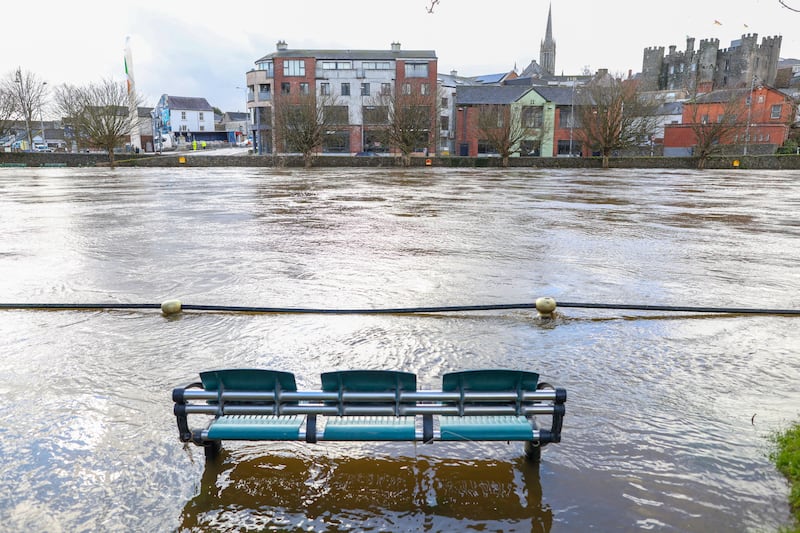 Water from the River Slaney surrounds a bench on the bank of the river after it burst its banks during Storm Chandra, in Enniscorthy on January 28, 2026. Photograph: Paul Faith/AFP via Getty Images
The cost of ignoring flood risk is astronomical. Homeowners without insurance find themselves financially devastated by flooding. Those with insurance may not get it renewed after a flooding event. And the inability to secure insurance may block some people from completing house purchases or sales. Overall, the costs to the State and society are huge and rising. But we already knew this, and still Storm Chandra struck, with scant evidence of adaptation planning in most local authorities.
To date however, there are hardly any examples of adaptation or Nature-based Solutions (NBS) in Ireland.
In the Netherlands and Germany it is the first step in the intervention hierarchy to manage flood risk. So far, measures by local authorities in response to the National Strategy for managing urban rainwater adopted in 2024 seem very modest and fall into the category of “pilot projects” whereas across Europe, the NBS and green infrastructure approaches have been utilised for years.
Flooding often happens because intense rainfall lands on hard surfaces like paved roads and gardens, and has nowhere to go except into the waste water system which then becomes quickly overloaded. Simply replacing existing pipework with larger pipes is neither practical nor sustainable in the long term, and Ireland’s national strategy recognises this.
By contrast, interventions such as dredging, sea walls and river realignment are expensive, damaging to ecosystems and wildlife, and tend to wear out or depreciate over time. Green infrastructure solutions such as constructed wetlands, afforestation and riparian buffers, peatland restoration and the construction of “leaky dams” to hold flood waters and slow its movement or divert it away from at-risk areas are not only better for the environment, they cost a great deal less. And they tend to appreciate, rather than depreciate in value over time.
However, until this guidance becomes mandatory for local authorities, the OPW and Uisce Eireann, and resources are made available to implement and enforce it, we will not see the benefits of this more enlightened policy in time to prevent the next disaster.
[ Storm Chandra floods made three times more likely by climate changeOpens in new window ]