
In 1984, a group of musicians and artists associated with the Slovenian post-punk group Laibach formed NSK (Neue Slowenische Kunst), a collective dedicated to dismantling totalitarian kitsch by over-identifying with it. NSK fused fascist and Yugoslav state socialist media, symbols, uniforms and slogans to reveal the emptiness and banality at their core. The work refused irony, letting the aesthetic speak until it collapsed under its own weight. Which happened, of course, a few years later, for reasons that had little to do with avant-garde art collectives, although NSK remains an important part of the story of Slovenian independence.
I found myself thinking of NSK while enduring the documentary Melania in an almost deserted Dublin cinema at the weekend. Melania Knavs was a teenage schoolgirl in the Slovenian town of Sevnica when NSK was at its height. There is no indication that she has ever been aware of its existence. But the resonances are striking.
Totalitarian kitsch, as NSK understood it, is not merely bad taste. It’s a system in which form substitutes for meaning and pageantry replaces ethics. Power becomes decorative and belief is unnecessary. What matters is the look of inevitability. You could hardly find a better synopsis of this documentary, which was released without press previews last Friday on thousands of screens across the US and the world, including two cinemas in Ireland.
The financial arrangements behind the production are, even by the standards of the Trump era, brazen. Amazon paid $40 million (€33.8 million) for the rights – the highest price ever paid for a documentary.
Of that, Melania Trump personally received $28 million – a sum comparable to the highest salaries ever commanded by A-list movie stars for a single film. For a documentary subject to pocket 70 per cent of the budget is, to put it mildly, without precedent.
Amazon is also spending $35 million on marketing, nearly all of it in the American market, with ads appearing during NFL playoff broadcasts and the trailer projected on to the Las Vegas Sphere.
“This has to be the most expensive documentary ever made that didn’t involve music licensing,” observed Ted Hope, who formerly ran Amazon’s film division. “How can it not be equated with currying favour?”
To recoup its investment would require box office receipts of more than $100 million, which is not going to happen, although opening weekend sales of $8 million in the North American market exceeded analysts’ expectations, with stronger numbers in deep red states.
[ Trump’s cabinet attends premiere of Amazon‑backed documentary MelaniaOpens in new window ]
The first lady is an unpaid, unelected position, and its holder is not subject to federal ethics laws or conflicts of interest regulations. As always with the Trumps, the grift is right there on the surface, undisguised and almost cheerful in its audacity, protected by the fact that nobody previously thought to write rules against it. The only novelty is the willingness of tech billionaires, studio executives and a disgraced director seeking redemption to play along.
The director is Brett Ratner, who made his name with the Rush Hour franchise and has not made a film since 2014. In November 2017, six women came forward to accuse him of sexual assault and harassment. Ratner has denied all allegations and was never criminally charged.
When Melania decided she wanted a documentary made about herself, he was, according to reports, the only director considered.
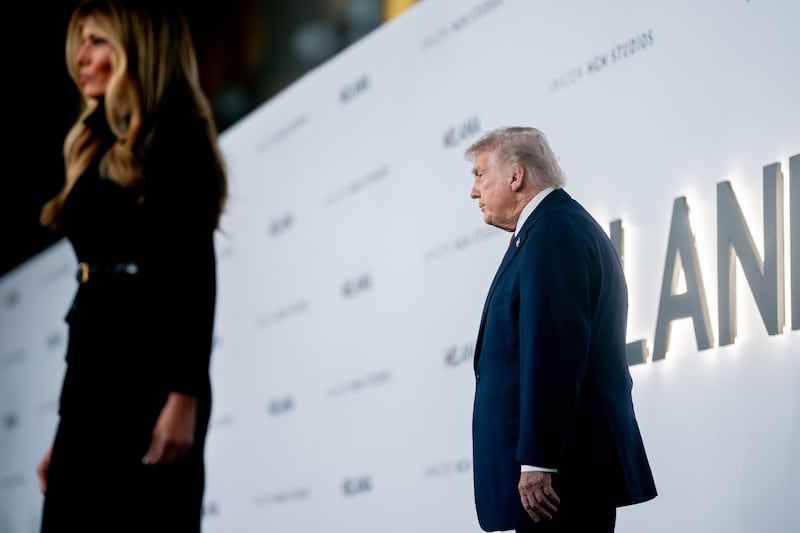 US president Donald Trump and first lady Melania Trump arrive for the world premiere of the documentary. Photographer: Stefani Reynolds/Bloomberg
Unsurprisingly, Melania has been critically excoriated. I won’t trouble you with the quotes. Suffice to say the words vacuous, banal, boring and fascistic crop up a lot. For me, the film was both stultifyingly boring and mildly nauseating. Imagine a mash-up of Carmela Soprano and Eva Braun on the set of Zoolander.
Despite its subject trousering most of the cash, there was obviously enough left for Ratner to deliver a glossy sheen reminiscent of Succession – all limos and private jets and a soundtrack packed with drive-time classics.
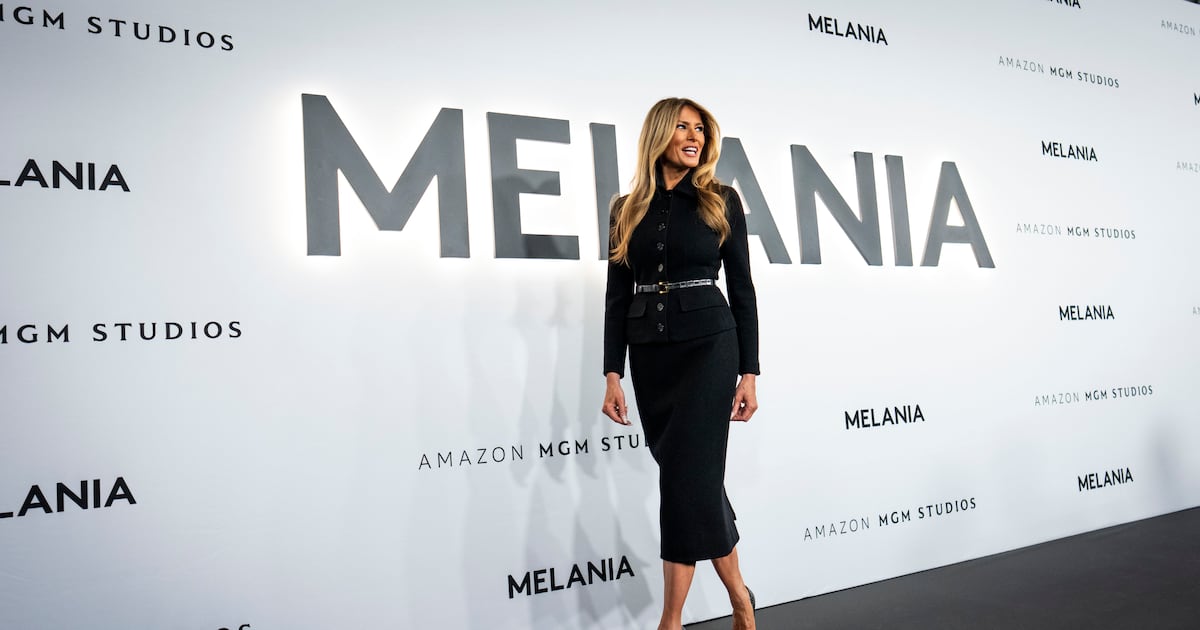
Charting the 20 days leading up to last year’s presidential inauguration, the film follows its protagonist from New York to Palm Beach to Washington. The central narrative concerns the construction of the dress she will wear on the big day. There is no tension. Melania rarely smiles. She occasionally speaks. She says nothing.
The film positions Melania as a figure of ornamental power. Her public role is defined not by personality (none is apparent) but by a constructed image of poise, distance and visual discipline. She never explains herself; the personality vacuum is the point.
In this sense, she resembles a figure from a totalitarian tableau: impeccably styled, emotionally opaque, ceremonially present. Like the monumental figures of socialist realism or fascist iconography, she signifies order, composure and superiority without ever clarifying what these qualities serve. Her persona is post-ideological kitsch – power reduced to surface.
NSK exposed totalitarian kitsch by showing that it does not require conviction; it requires only repetition and aesthetic coherence. Melania’s public image demonstrates the same principle in real time. She became a global symbol of sorts through curated detachment: the immaculate coat, the fixed smile, the refusal of interiority. NSK staged this condition to critique it. Melania inhabits it as a function of modern celebrity-political culture.
There is an additional Slovenian resonance. NSK emerged from a small post-Yugoslav state acutely aware of how imported ideologies and borrowed aesthetics could dominate local life. Melania is almost an NSK figure without the manifesto – a living demonstration of what happens when 20th century totalitarian aesthetics reappear as 21st century globalised luxury branding.