
If you want to make everyone happy then don’t be a leader. Sell ice cream instead. They’re the words of Steve Jobs. Nowadays it might apply less than he thought. Someone will say they are allergic, others won’t like the texture, someone will point out that it was better five years ago.
International rugby is not much different in the sense that a head coach trying to satisfy every constituency – supporters, media, former players and administrators – is chasing something of an impossibility.
What matters more now than ever is that a head coach understands his “North Star”, that he possesses a clear sense of where he is taking the team, what he believes in and what he is prepared to ignore. The noise is constant, the judgment unforgiving and the environment uncompromising. Without that clarity, you do not last long, often burned by relentless negativity.
Scott Robertson might empathise. He was the anointed one for years, the man everyone waited for to take over as head coach of the All Blacks. Once in the job, the scrutiny sharpened. He was meant to return New Zealand to their position as the world’s best. When that did not materialise and results deteriorated, the pressure mounted.
But a more uncomfortable question is worth asking: is New Zealand rugby as strong as it once was? Look at the players. How many All Blacks today walk into a World XV compared to 10 or 15 years ago? How many genuinely dominant, era-defining figures are coming through?
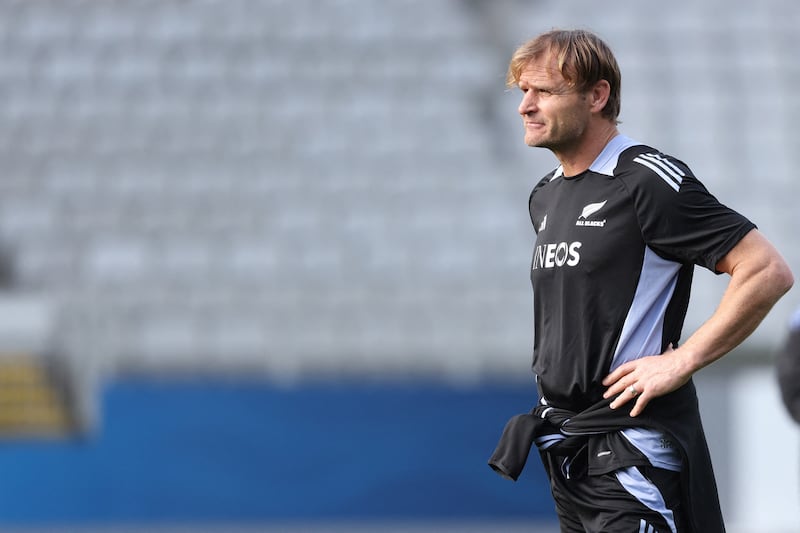 Scott Robertson stepped down as New Zealand head coach last month. Photograph: Michael Bradley/Getty
The answer is not zero, but they are not there in sufficient numbers like the old days. And that matters, because there are limits to what even the best coach can do. Sacking a head coach feels decisive, but it can also be cosmetic. You cut off the head and convince yourself the problem is solved, yet the issues run far deeper.
New Zealand, like every international team, is constrained by player production pathways, demographics and competition structures. Robertson could only coach the group he had. If he was close to the ceiling of that group, then blaming him misses the point.
The same logic applies closer to home. Swing the lens back to Ireland and ask similar questions. Is this the best group of Irish players we have had? The answer depends on what you value. Is it the most progressive? Probably not.
[ France v Ireland: What time is kick-off, what’s the team news and what TV channel is it on? ]
It is an older group. Injuries are mounting. There have not been waves of new players emerging in certain key positions and many are coming off long seasons with a Lions tour still in the legs. The quality of the coaching staff remains high. Yet there are reasons to be cautious, reasons to be sceptical, but caution is not despair, and that distinction feels lost now.
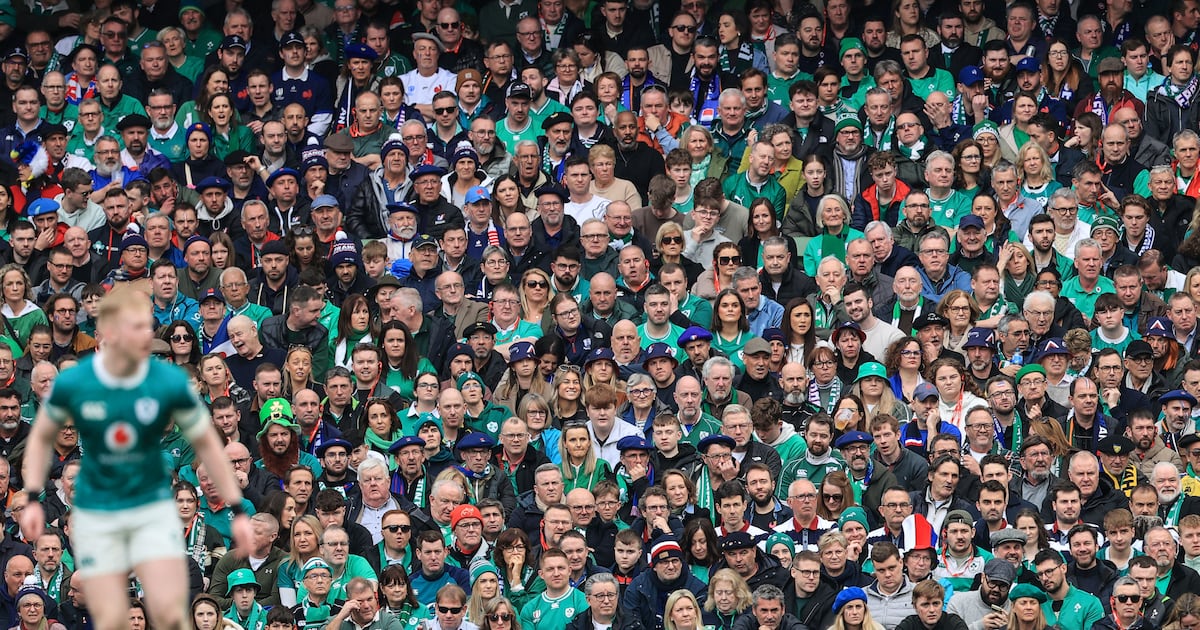
I have been struck by how quickly the narrative around Irish rugby has turned apocalyptic. No longer the favourites for a Six Nations title and suddenly it is a crisis. Head to Paris without the bookmakers’ backing and it is framed as a near write-off before a ball is kicked. That is the part I struggle with, both as a former player and as someone who has lived inside those environments.
Success changes expectations and how you are perceived. When Bobby Skinstad jokingly referred to the Irish as “arseholes”, it raised a smile rather than outrage. Every successful team goes through that phase. England did. New Zealand lived there for decades. Australia had their turn. South Africa are enjoying theirs now.
When Ireland were winning, they disrupted hierarchies. Disruption is rarely welcomed. Maybe supporters of the established rugby hierarchy in global terms look down on Ireland as nouveau riche, not from old money. That is fine. But this reaction is a byproduct of success, not failure. It should not send us into retreat.
What disappoints me more is the sense of doom creeping into the supporter base. There is an odd resignation in some of the commentary as though competitiveness itself has become optional. We have reached a point where not winning the Six Nations is framed as decline, rather than the reality of competing in an increasingly narrow international landscape.
I would love Ireland to have the resources of England or France, the playing numbers, financial muscle and the ability to reset squads wholesale. But we do not. We operate within constraints and always have. The days of filling gaps with overseas qualified players are largely gone. You coach and play with what you produce.
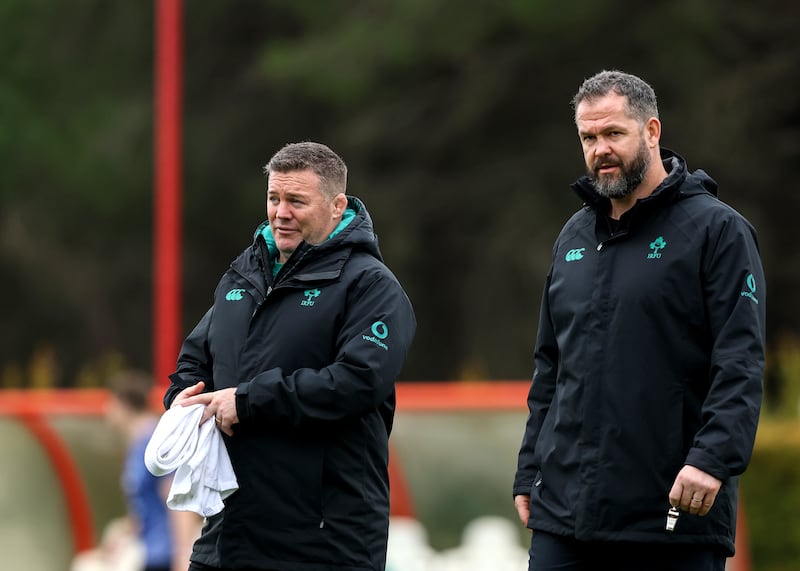 Ireland scrum coach John Fogarty with head coach Andy Farrell at squad training in Portugal on Thursday. Photograph: Ben Brady/INPHO
That might sound obvious, but it is often ignored in analysis. There is an obligation that comes with support. It does not mean blind optimism or avoiding criticism, but it does mean allowing the contest to exist before delivering judgment. Too often now the glass is perceived as half empty – and everything flows from that starting point.
Ireland are not the same team they were 12 months ago, let alone three years ago. We have enough quality players to suggest we have not become a bad team overnight. Winning the Six Nations this year may be unlikely realistically, but being genuinely competitive is absolutely within reach. And that matters.
The game in Paris is one paper in an exam and will be followed by four more. The tournament won’t be decided on Thursday night. What is of greater concern and interest is whether this group can still impose itself when the odds tilt against them. That is what supporters should be watching for, not confirmation of fears, but evidence of fight, cohesion and belief.
The game itself has shifted. Endless multiphase possession and high pass counts are no longer the sole markers of control. Modern rugby rewards risk takers: players who see space early, who break rhythm, who act instinctively under pressure.
That puts a premium on difference makers such as Jacob Stockdale, Stuart McCloskey, Jamison Gibson-Park, Jamie Osborne, Sam Prendergast, Cian Prendergast, Tadhg Beirne and Dan Sheehan. The stage does not get any bigger. Their club form has been undeniable. Ireland will need to draw down heavily on bravery and creativity in Paris.