
Community health centers that primarily serve low-income patients fear Gov. Bob Ferguson’s proposed supplemental budget will hamper their ability to participate in a discounted drug program, collectively costing them millions.
Federally qualified health centers (FQHCs), often coined safety net providers, receive incentives to see patients on Medicaid, or Apple Health in Washington.
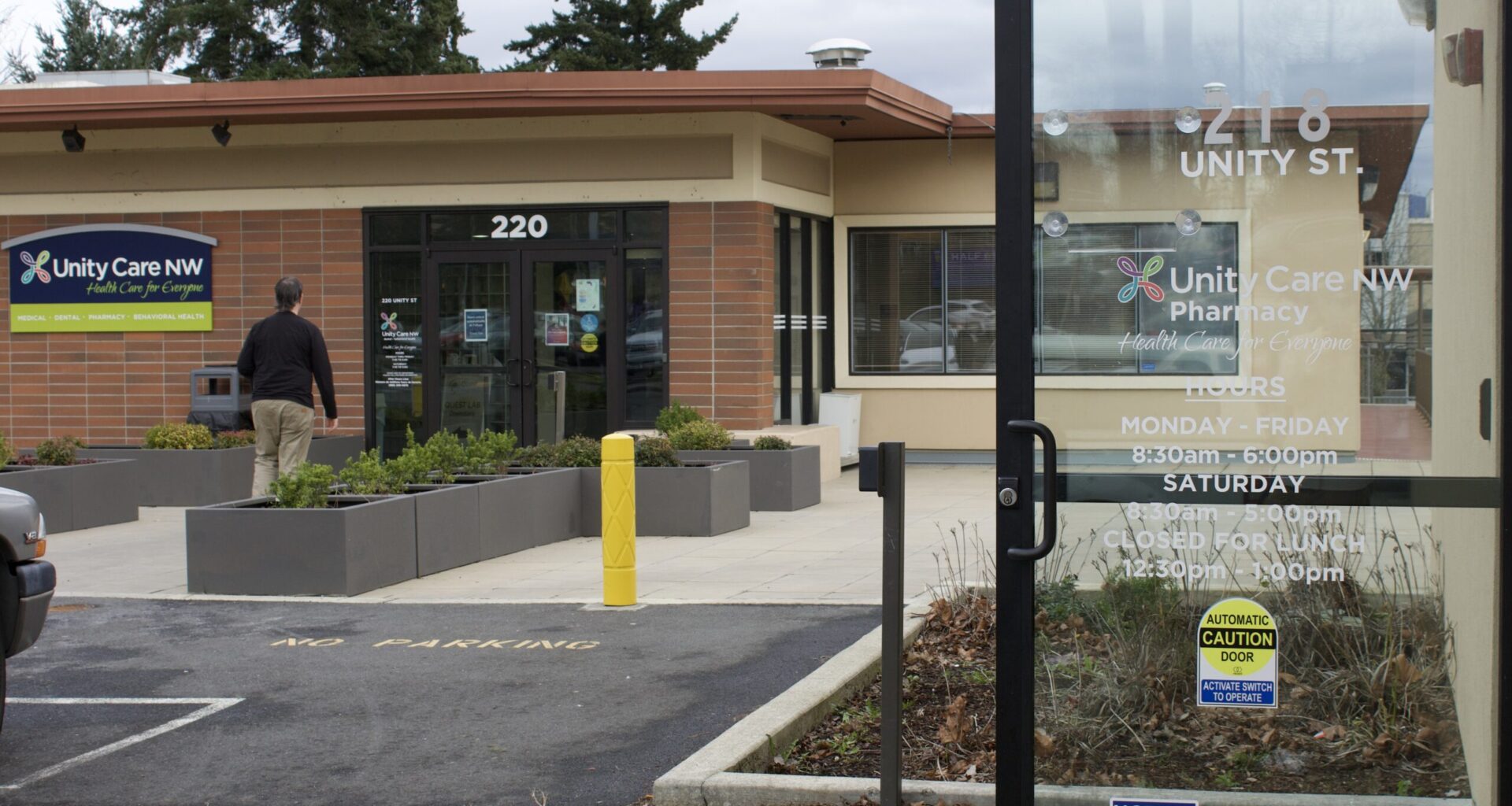
These health centers, such as Unity Care NW and Sea Mar Community Health Centers, which jointly serve tens of thousands of patients annually in Whatcom County, participate in the Medicaid 340B Drug Pricing Program. The federal program allows them to purchase drugs at a discounted rate from manufacturers. Drug makers wanting to participate in Medicaid are required to utilize the 340B program.
The federal law requires community health centers to invest their savings from participating in the 340B program back into providing care. By switching to a fee-for-service reimbursement program, the governor’s budget would change how providers bill for drugs that are normally discounted.
While the impact on patients remains unclear, community health centers say this change would result in them receiving significantly lower reimbursements for the prescription drugs they provide to Medicaid participants.
“It’s a bit shortsighted,” said Michael Leong, Sea Mar Community Health Center’s senior vice president for corporate and legal affairs. “We’re very disappointed the governor adopted this approach. Financially, it does not make good sense at all.”
Ferguson is attempting to salvage an estimated $2.3 billion shortfall with the supplemental budget. However, providers say the state will only see a fraction of any savings made.
“Under the Medicaid system, whatever savings the state achieves, 75 percent of it goes back to the federal government, so it leaves Washington; it doesn’t help our economy, and it certainly doesn’t help providing care in this state,” Leong said.
If the budget is adopted as is, Sea Mar will be forced to stretch its dollars, Leong said. Avoiding service cuts and layoffs would become top priorities, too.
“We’re going to try as best as we can to avoid any cuts,” Leong said. “It is something that we might eventually have to come to.”
Patients who rely on Medicaid for discounted medications would immediately feel the impact of the changes to the pharmacy program, Lisa Nelson, chief pharmacy officer of Unity Care NW, said in written comments to Cascadia Daily News.
Nelson, who’s been advocating in Olympia for the state to keep Washington’s Medicaid pharmacy benefit program in managed care, said Unity Care NW is facing a $2.4 million annual reduction in reimbursements if the state change is implemented. The revenue from the discounted medication program allows Unity Care NW to provide care to uninsured and underinsured patients, Nelson said.
“We will need to make difficult decisions to minimize the impact of these cuts to our patients and our services,” if the budget is unchanged, said Nelson, who is also the co-chair of the National Association of Community Health Centers’ 340B workgroup.
Unity Care NW serves nearly 25,000 patients a year, 60% of whom use Medicaid, and runs two pharmacies in Whatcom County. Unity Care NW has posted a callout asking community members to email their state lawmakers about the 340B program.
Community health centers’ uncertainty surrounding the 340B program comes as they prepare for additional impacts in 2027 from federal cuts to health care. Safety net providers are expecting to see more uninsured and underinsured patients.
“Under the current federal administration, I don’t see things getting better, which is why more than ever we need our state government,” Leong said.
A spokesperson for the governor told The Seattle Times that people who want more funding for programs they support can propose what other parts of the budget can be cut to provide the funding they’re seeking.
“We’re really not in a position to tell the governor or legislator where else they should cut from,” Leong said. “What we ask for is that the Legislature and the governor consider revenue-generating to make up for the shortfall.”
Sea Mar provides medical, dental, behavioral health, pharmacy and school-based services throughout Whatcom and Skagit counties on a sliding scale regardless of patients’ ability to pay.
Washington’s state hospital association, of which PeaceHealth St. Joseph is a member, also expressed its frustration with the governor’s budget, saying it “fails to recognize the perilous financial position for hospitals created by state-imposed payment cuts and tax increases and the federal,” tax and spending law signed by Trump in 2025.
Legislative committees in both the state House and Senate are currently considering companion bills concerning patient access to discounted medications through the 340B program. Unity Care NW is advocating in Olympia for the passage of both bills.
The Community Access National Network, a nonprofit that testified in opposition to the legislation, is running digital advertisements in Washington saying that the state legislation would increase costs for patients and government programs.
Although safety net providers find themselves in a precarious situation under the Trump administration, threats to the discounted drug program aren’t new.
“The 340B program has come under attack because pharmaceutical companies don’t like it,” Leong said. “They don’t like giving up their additional profits.”
Owen Racer is a Report for America corps member who covers health care and public health in Whatcom and Skagit counties. Reach him at owenracer@cascadiadaily.com; 360-922-3090 ext. 101. Learn more and donate at cascadiadaily.com/rfa.