
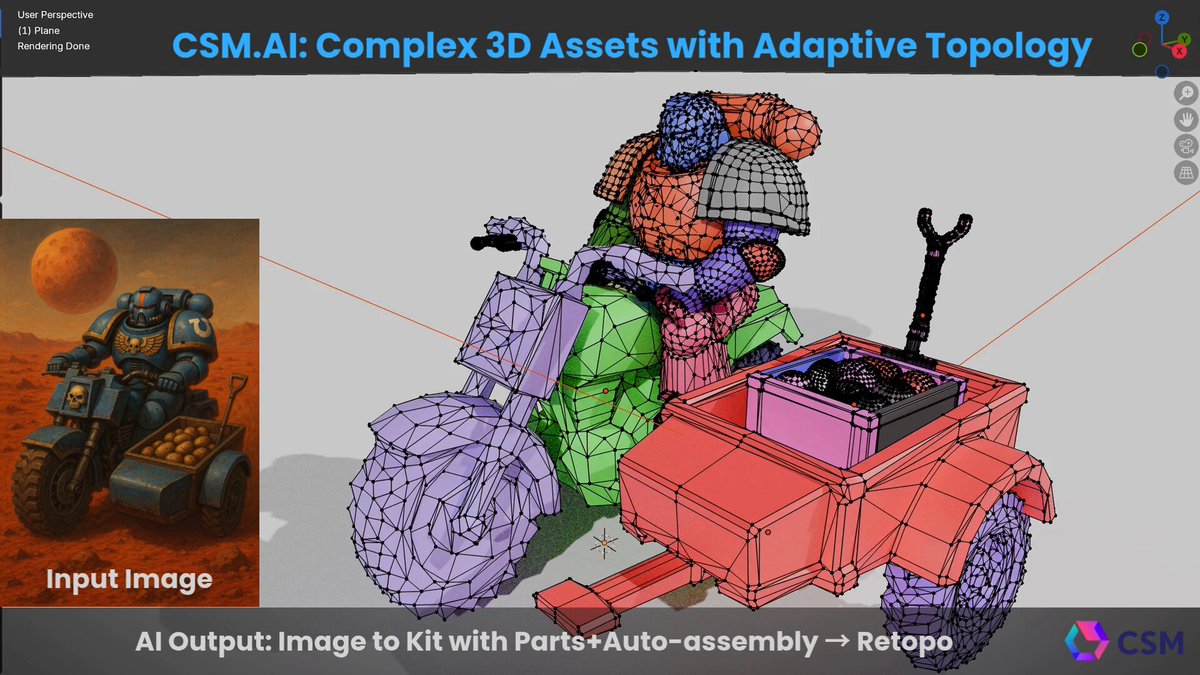
Alphabet, the parent company of Google, has acquired Common Sense Machines, Inc., a Cambridge, Massachusetts–based startup developing generative artificial intelligence models that produce three-dimensional assets from two-dimensional images. According to S&P, the acquisition closed on January 24, 2026. Financial terms were not disclosed. The transaction adds a small research-focused AI company to Google’s broader portfolio of artificial intelligence assets.
Common Sense Machines employed roughly a dozen people at the time of the acquisition, according to its public LinkedIn profile. PitchBook data shows the company was last valued at approximately $15 million after raising $10 million from investors, including Andreessen Horowitz. Founded in 2020, the startup focused on training models designed to infer 3D structure from 2D visual inputs, a technical area that remains distinct from text-based or purely image-based generative systems.
 Google and Common Sense Machines logos. Image via Google/Common Sense Machines.
Leadership at the Cambridge startup includes co-CEO Tejas Kulkarni, who previously worked as a research scientist at Google DeepMind before cofounding the company. His prior role connects the acquired team to DeepMind’s research culture, though neither Alphabet nor Google has disclosed how the personnel will be integrated following the transaction. No statements accompanying the deal outlined changes to organizational structure or product direction.
Google has continued to invest in image generation and multimodal artificial intelligence systems, an area that combines visual, spatial, and contextual inputs. DeepMind leadership has previously highlighted the role of “world models,” a term used to describe AI systems intended to simulate aspects of physical environments rather than operate solely on symbolic or linguistic representations. Systems that translate two-dimensional imagery into structured three-dimensional outputs are often discussed within that research direction, particularly in contexts where spatial consistency and physical reasoning are required.
Public information related to the acquisition has remained limited. Beyond the closing date, company size, funding history, and technical focus of Common Sense Machines, no additional operational details have been disclosed.
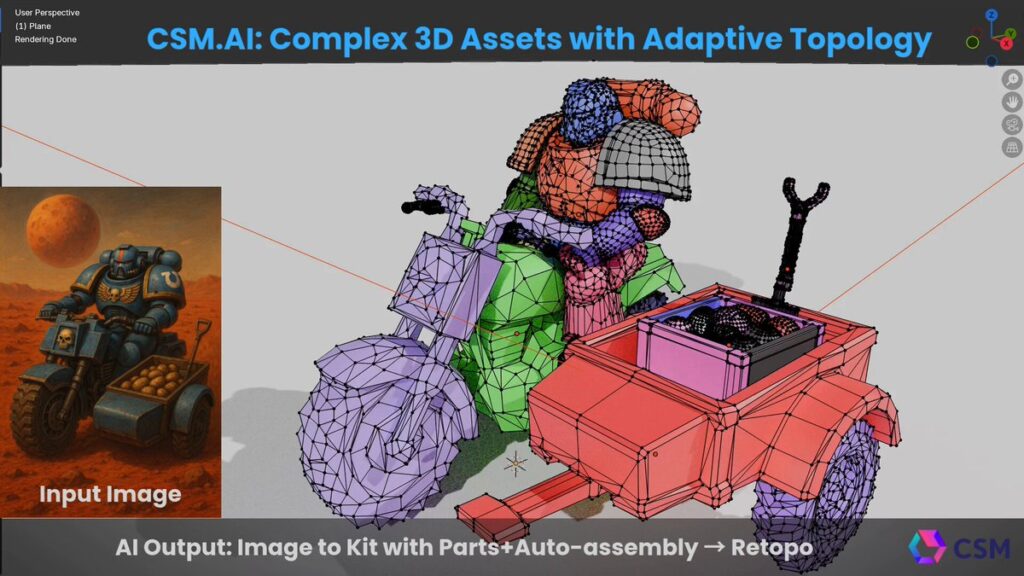 Common Sense Machines AI-generated 3D asset workflow. Image via Common Sense Machines.
DeepMind advances physical-world modeling beyond text and images
Google DeepMind, a London-based artificial intelligence research company owned by Google, has recently expanded its work on AI systems designed to model physical properties rather than operate only on text or static images. In December 2025, the company announced a partnership with the UK government to establish a fully automated research laboratory combining robotics and AI to conduct autonomous experiments in materials science. The facility will integrate with Gemini, DeepMind’s large-scale AI model suite, and focus on identifying new superconducting materials through automated experimentation. That effort reveals a persistent constraint in advanced AI research: translating model outputs into representations that reflect real-world structure, physical behavior, and experimental validity rather than abstract prediction alone.
A separate DeepMind collaboration illustrates the same constraint at a different stage of the workflow. Working with designer Ross Lovegrove, Lovegrove Studio, and Modem, researchers used generative image systems within Gemini to produce design concepts that were later fabricated using metal 3D printing. The project required human-guided refinement to preserve structural logic and material feasibility before concepts could be translated into a physical object. Moving from image generation to manufacturable form exposed limits in how current models represent geometry, depth, and material constraints. Together, these projects show that while DeepMind’s systems can generate visual and conceptual outputs, reliable conversion from two-dimensional representations into structured three-dimensional forms remains a technical bottleneck.
 From sketch generation to the final chair design. Image via Google.
The 3D Printing Industry Awards are back. Make your nominations now.
Are you building the next big thing in 3D printing? Join the 3D Printing Industry Start-up of the Year competition and expand your reach.
Subscribe to the 3D Printing Industry newsletter to stay updated with the latest news and insights.
Featured image shows Common Sense Machines AI-generated 3D asset workflow. Image via Common Sense Machines.