
Key Points
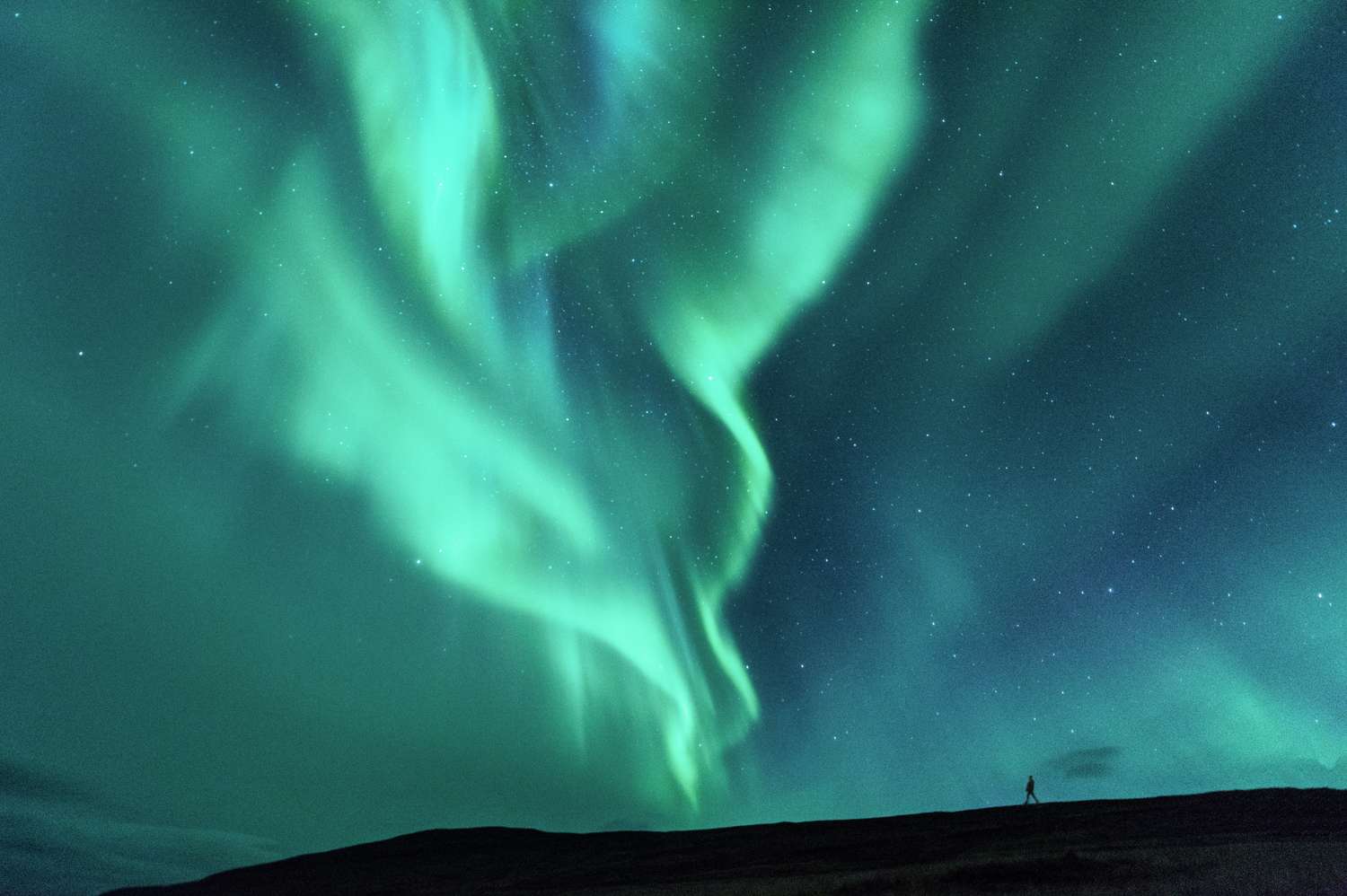
A surge in solar activity, including an X8.3-class solar flare from fast-growing sunspot Region 4366—has triggered multiple coronal mass ejections.These CMEs could cause minor G1 to G2 geomagnetic storms, creating a chance to see the northern lights on Thursday, February 5. The aurora may be visible across parts of Alaska and the northern U.S., with the best viewing window between 10 p.m. and 2 a.m. local time, especially from dark, north-facing locations away from light pollution.
Skywatchers could be in for a dazzling celestial show this week.
That’s because the sun has been especially active lately, unleashing a series of powerful solar flares, including an X8.3-class eruption, which is the strongest solar flare observed so far this year. The fast-growing sunspot Region 4366 is responsible for releasing these solar flares, Spaceweather.com reports.
The solar activity resulted in several coronal mass ejections (CMEs). While none of them appear to be squarely Earth-directed, glancing blows expected throughout the week could spark minor G1 to G2 geomagnetic storms.
This means that there may be a chance to spot the northern lights this week on Thursday, February 5, according to the National Oceanic and Atmospheric Administration’s Space Weather Prediction Center (SWPC). The Kp index is expected to peak at 5 on a scale of 9. The higher the number, the further south the northern lights could appear.
Currently, the forecasted aurora view line for tomorrow night includes parts or all of Alaska, Washington, Idaho, Montana, North Dakota, South Dakota, Minnesota, Wisconsin, Michigan, and Maine. The view line indicates the southernmost point where the auroras may be seen, and it can change throughout the day.
Conditions continue to fluctuate based on the CME’s speed, direction, and magnetic orientation, and the lights may be visible in states even further south.
The best time to spot the aurora borealis is after sunset through the early morning hours, with peak visibility happening between 10 p.m. and 2 a.m. local time. Head to a north-facing point with a clear view of the horizon, far away from light pollution. Be sure to give your eyes time to adjust and use your phone’s camera to scan the sky since it’s better at picking up faint auroras than the naked eye.