
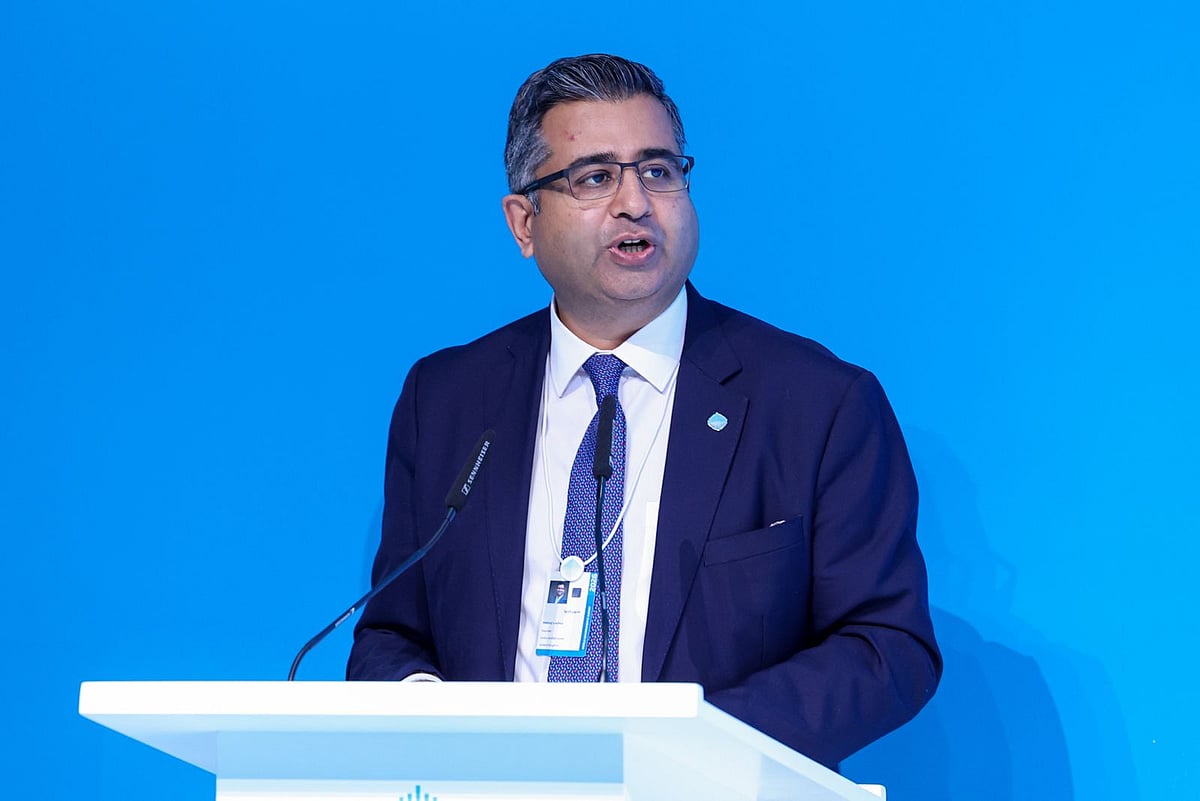
Opening the Emerging Economies Forum, Manoj Ladwa, Founder and Chairman of India Global Forum, said economies long described as emerging are now central to global growth dynamics.
“They are no longer peripheral to the global system. They are absolutely central to the system,” Ladwa said, noting that emerging economies account for close to half of global GDP growth and host the world’s youngest and fastest-urbanising populations.
Shifts in geopolitics, supply chains and capital allocation have accelerated the move away from dependence on a narrow set of markets. Growth strategies anchored to a single currency, corridor or region are becoming harder to sustain in a more fragmented global environment, he added.
UAE–India partnership in focus
Against that backdrop, he cited the UAE–India relationship as an example of how regional collaboration is evolving through trade, capital and people-to-people ties. Ladwa said the partnership reflects how economic integration is increasingly driven by networks that cut across regions.
“This relationship has evolved into one of the most dynamic partnerships in the world,” he said, pointing to the role of people in sustaining momentum. India’s global diaspora of more than 30 million, including a large community in the UAE, acts as what Prime Minister Narendra Modi has described as “a living bridge connecting economies, cultures and ideas”.
Diaspora networks, Ladwa said, are playing a growing role in linking capital with opportunity and supporting businesses expanding across borders.
Digital infrastructure as a growth enabler
Digital public infrastructure featured prominently in the discussion on how emerging economies are reshaping global integration. India was highlighted for building nationwide platforms spanning identity, payments and service delivery that have brought large sections of the population into the formal economy.
“That’s not just innovation,” Ladwa said. “It’s indigenous, relevant innovation at its most potent. Solutions designed with skill, scale and speed and, most importantly, affordability, but with global relevance.”
Similar approaches are emerging across Africa, Asia, Latin America and the Middle East, where technology is being used to support inclusion, reduce costs and improve delivery at scale.

Nivetha Dayanand is Assistant Business Editor at Gulf News, where she spends her days unpacking money, markets, aviation, and the big shifts shaping life in the Gulf. Before returning to Gulf News, she launched Finance Middle East, complete with a podcast and video series.
Her reporting has taken her from breaking spot news to long-form features and high-profile interviews. Nivetha has interviewed Prince Khaled bin Alwaleed Al Saud, Indian ministers Hardeep Singh Puri and N. Chandrababu Naidu, IMF’s Jihad Azour, and a long list of CEOs, regulators, and founders who are reshaping the region’s economy.
An Erasmus Mundus journalism alum, Nivetha has shared classrooms and newsrooms with journalists from more than 40 countries, which probably explains her weakness for data, context, and a good follow-up question.
When she is away from her keyboard (AFK), you are most likely to find her at the gym with an Eminem playlist, bingeing One Piece, or exploring games on her PS5.