
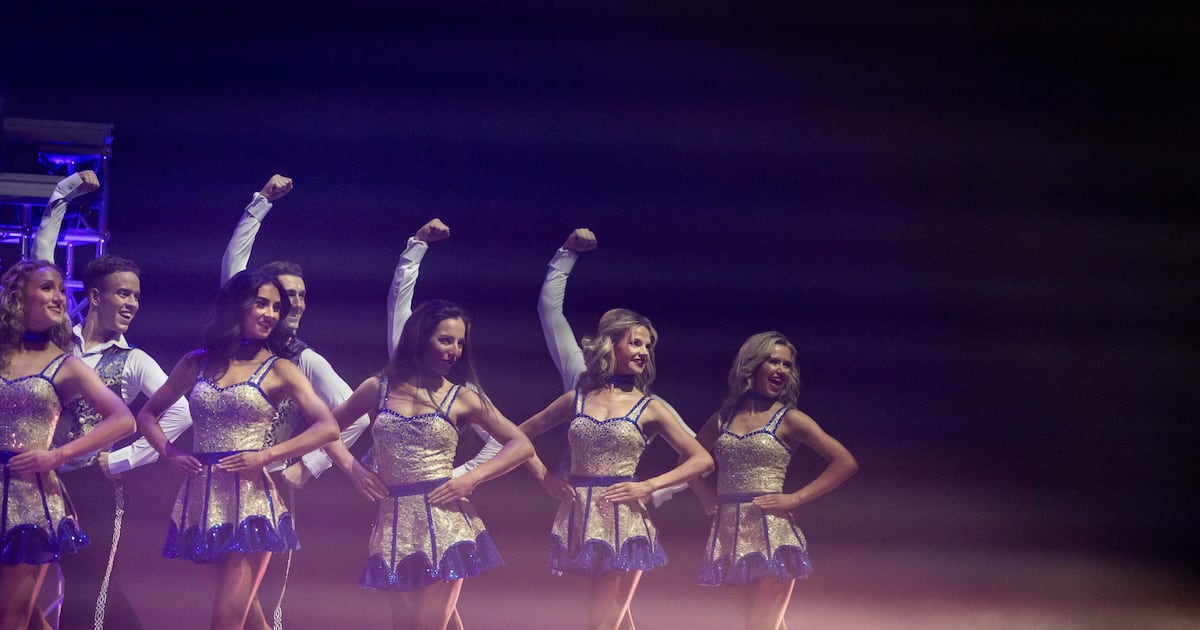
It’s hard to watch the 30th anniversary performance of Lord of the Dance, a tale of a simple dance aristocrat’s battle with the forces of darkness, without thinking of its creator Michael Flatley’s recent court travails.
“My show, Lord of the Dance, is the story of good versus evil and I promise you the good guys always win in the end,” says the man himself as he introduces the show alongside the original cast and a phalanx of child dancers.
I should point out that good and evil in this metaphorical scenario could either be Flatley or Switzer Consulting, the entertainment company with which he is wrangling over control of the show. We’re not taking sides.
Switzer maintains that Flatley is in breach of a contract permitting them to run the show. They managed to get a ban on Thursday night’s performance, which was subsequently lifted and then, on Wednesday, Flatley’s legal team were granted permission to access a set and costumes.
There’s a very enthusiastic crowd here (most likely not all lawyers). Many younger readers won’t know that when Riverdance first emerged, it represented Irish soft power. It was what we had instead of a nuclear arsenal or a good motorway to Cork.
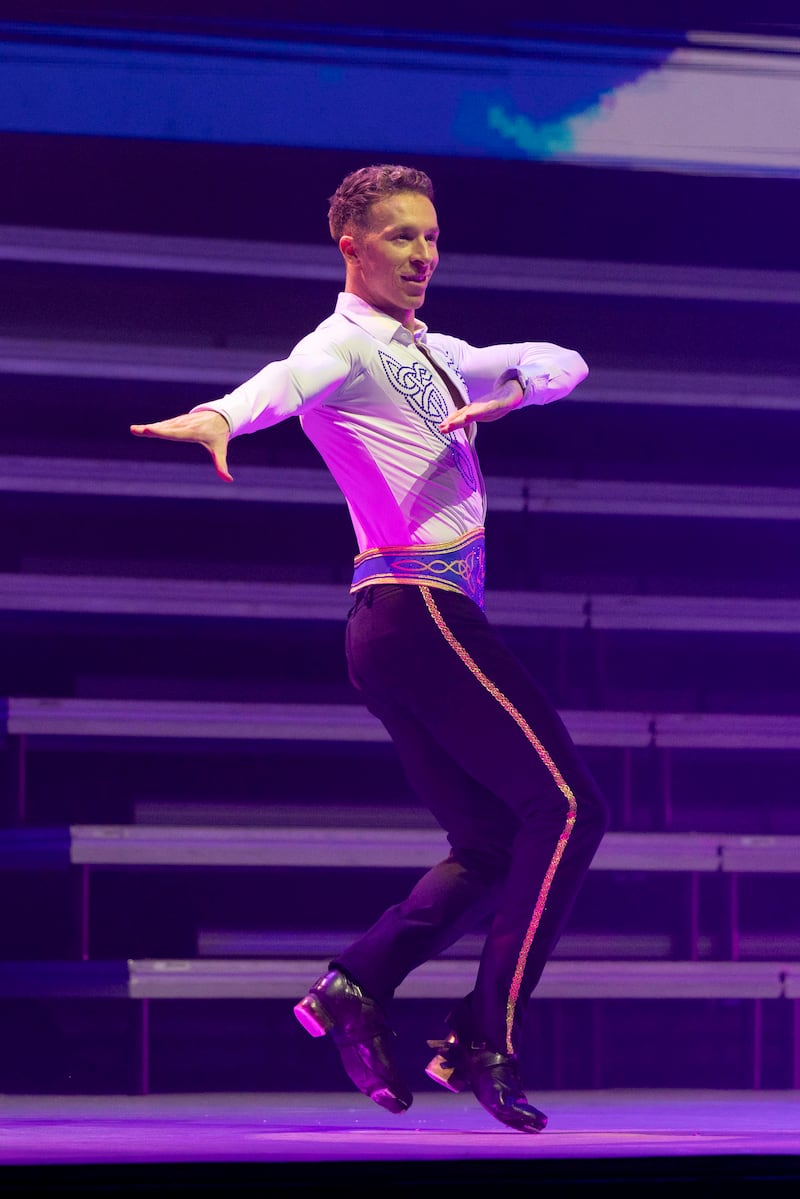 Principal dancer Macaulay Selwood in action on Thursday night.
 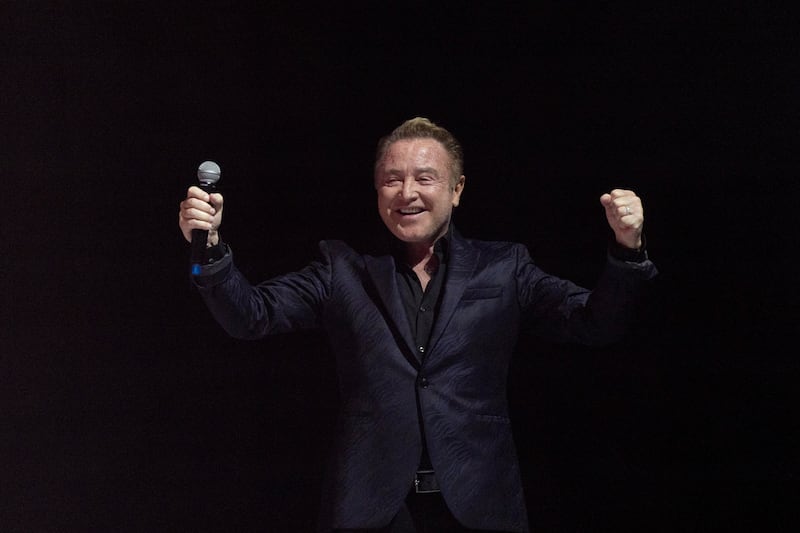 Michael Flatley during Lord of the Dance at the 3Arena.
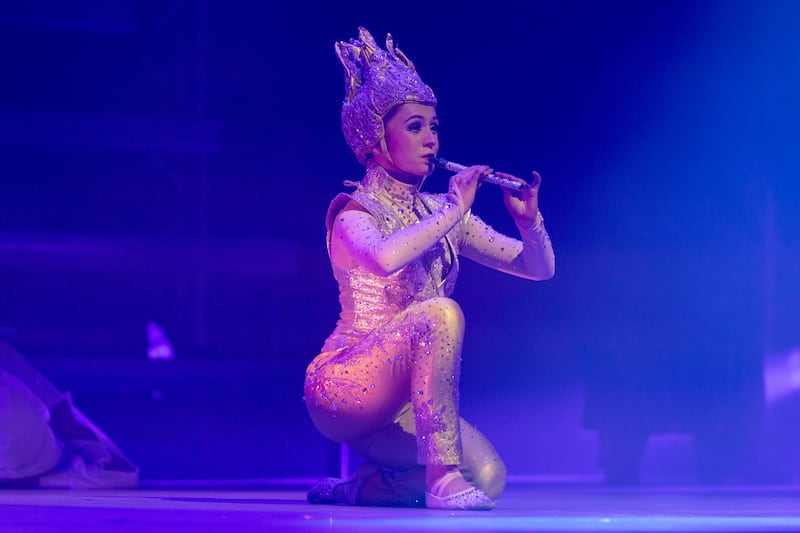 Evia Hayter (Little Spirit) on stage during the performance.
It revealed that Irish dancers had arms and it took beautiful trad-style melodies and orchestrated them to sound huge (the natural endpoint of Irish trad’s fantastical Enyafication). Two years later, the show’s Irish-American star created Lord of the Dance, and before we knew it, he was living among us, perfecting our accent and depleting the national supply of baby oil.
Lord of the Dance starts with a golden-costumed faerie called the Little Spirit (Evia Hayter), a literal manic pixie dream girl, who plays tin whistle whilst surrounded by robed Druids holding glowing orbs (very “Stone‘enge”) to awaken a troupe of dancers. Enter the Lord of the Dance (Macauley Selwood). His job is to leap across the stage doing Superman gestures and clacking his heels. He’s good at entrances and, also, using dance as a mode of transport.
The Lord of the Dance is a complicated man and nobody understands him but his women, plural. They dance at him. There’s “Saoirse” (Katie Coates), a blonde primary schoolteacher with a site on her family’s land (I’m basing this on her sensible dance style) and, “Morrighan the Temptress” (Olivia Allen), who, thanks to nominative determinism, is a temptress. Look, the Lord himself wishes there were more than two kinds of women. But there just aren’t. It’s the ancient past: 1996.
The helmeted, face-painted antagonist is the Dark Lord (Zoltan Papp), who is conquering Planet Ireland, where this story is set, with an army of skull-faced toughs. He snaps the Little Spirit’s tin whistle in two, which is an appropriate response to someone playing a tin whistle, to be fair. But the Dark Lord also does bad things. He gets Morrighan to nick the Lord of the Dance’s cool fashion belt. He orchestrates a big brawl with the Lord of the Dance’s chums. Later, he straight-up murders the Lord of the Dance, but before we can even eulogise him properly (“He really loved dancing, like, a lot. It was kind of his thing”), the Little Spirit resurrects him.
Yes, resurrection. The Lord of the Dance is, apparently, Dance Jesus. It’s hard not to feel that Dance Jesus is possibly Michael Flatley’s pet name for himself, too (he appears several times on video cuts over the course of the evening, like a watchful Big Brother).
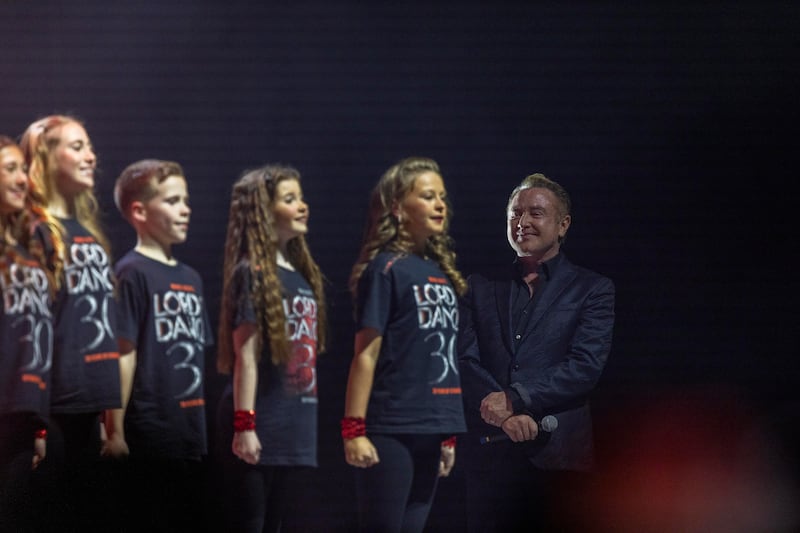 Michael Flatley on stage with cast members.
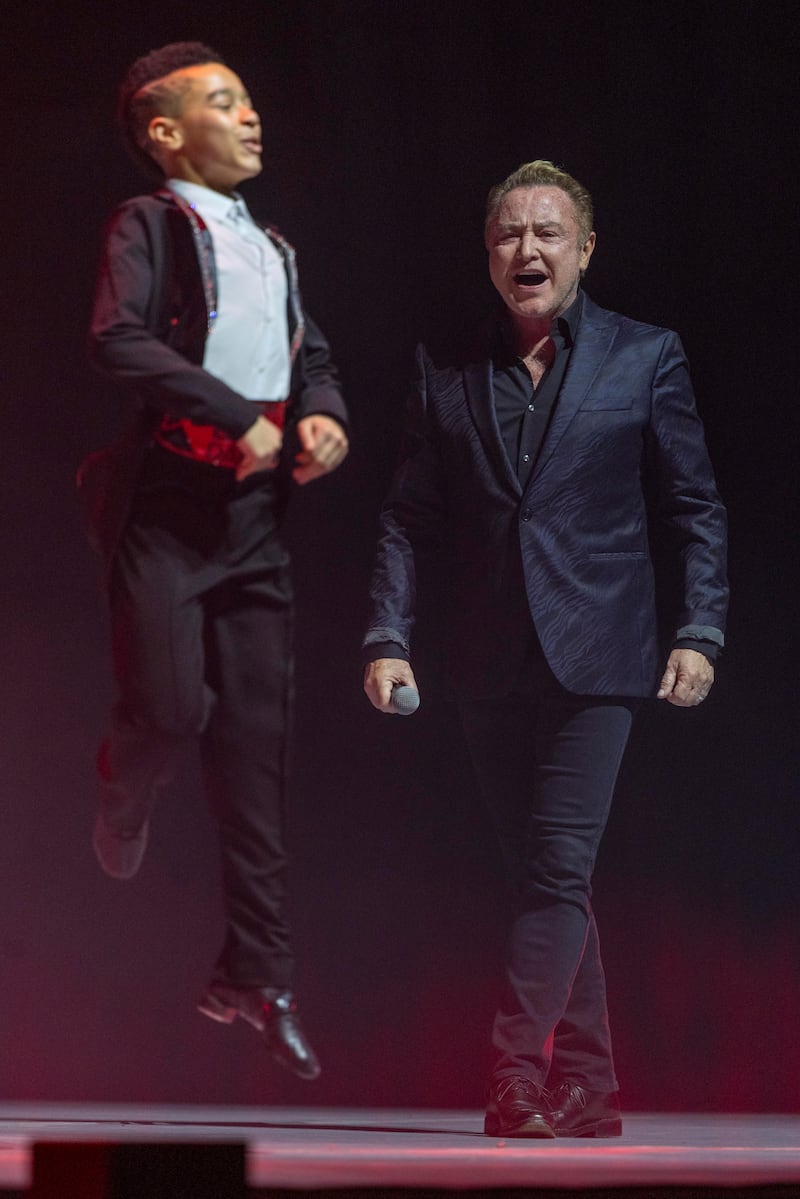
It feels like a bit of a stretch that the Little Spirit can resurrect the dead when earlier she had a meltdown over a broken whistle, but I guess plot coherence isn’t the point. The story’s main purpose is really just to facilitate song-and-dance set pieces in which the performers can lep and croon virtuosically. I like the classic trad songs sung by the grandly named Erin the Goddess (Cleo Griffin) and the sequinned string-bashing fiddlers and the misty landscapes on the LEDs and all the flames and when the dancers change costumes Bucks Fizz-style and the general use of dance as an intimidation tactic (note to self: try this on the late bus home). It’s the whole Celtic kitschen sink, really.
The Lord of the Dance and the Dark Lord ultimately settle things the only way they know how: with a fighty dance-off. Before the night’s out, Michael Flatley is out once more with all the dancers hoofing away and there’s a standing ovation (this is helped by the genius subtitle for the show: 30 Years of Standing Ovations).
Yes, peace has returned to Planet Ireland. Will peace come to the behind-the-scenes legal battles? I propose a dance-off.