
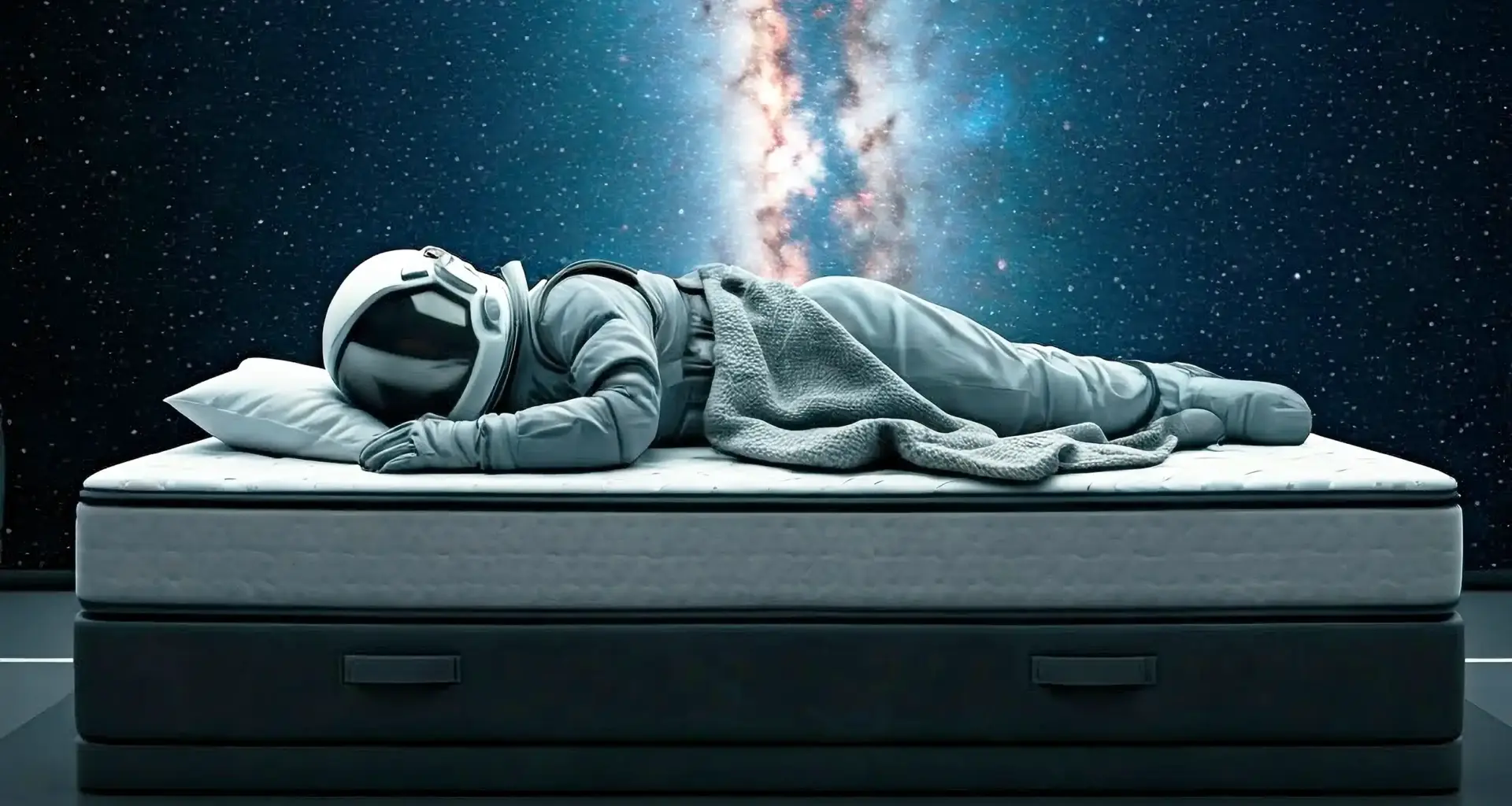
Pressure-absorbing foam created for NASA aircraft seats has become the foundation of modern memory foam mattresses.
That shift from flight hardware to household comfort recasts space exploration as a quiet force that can shape ordinary life.
From NASA missions to markets
The transition unfolded through a steady stream of mission-driven engineering problems whose solutions did not remain confined to spacecraft.
At NASA, the Technology Transfer program actively tracked these solutions, licensing them as engineers and partners carried them into commercial use.
Its long-running Spinoff publication recorded this flow in specific cases, showing space-built tools reappearing in medicine, manufacturing, and public safety.
“NASA’s work has always delivered returns well beyond the mission itself,” said NASA Administrator Jared Isaacman.
A magazine turns fifty
After 50 years, Spinoff kept tracking commercial uses of space technology, one story at a time, in its latest edition.
For the cover, astronaut Alan Bean held an environmental sample container of Apollo 12 lunar soil, photographed in November 1969.
Charles Conrad Jr. took the picture, and his reflection in Bean’s visor quietly shows how close the crew worked.
That image also signaled what the magazine keeps arguing, that exploration only lasts when the tools keep helping back home.
Printing habitats, building homes
For lunar bases, printers had to create strong shapes from little material, and Branch Technology brought that approach to Earth buildings.
The company used large-scale 3D printers to form open lattice panels, so crews could finish walls faster with less waste.
In Texas, ICON used a similar, layer-by-layer approach to print walls for a 100-home subdivision.
Printed houses can rise quickly, but builders still must meet local codes, inspect materials, and prove long-term strength.
NASA Robots take on chores
Keeping astronauts working outside Earth means machines must handle dull upkeep, and NASA backed robotics that already moved into workplaces.
One team wrote robot operating software, code that coordinates sensors and motors, and the same system now guides bathroom-cleaning machines.
Another group built a humanoid robot, a machine shaped like a person, for warehouse lifting and assembly line moves.
“Incredible feats on distant worlds require incredible innovation,” said Dan Lockney, Technology Transfer program executive at NASA Headquarters in Washington.
A heart stays watched
To avoid emergency trips, an implantable heart monitor, a small device under the skin, can track patients at home and flag trouble.
Doctors placed it under the skin, where it recorded heart rhythm changes and sent the data to clinicians.
NASA engineers built earlier sensors for astronauts on the International Space Station, and that work later informed monitoring for heart failure.
Remote alerts can prevent some hospital stays, but patients still need follow-up care and clear rules for health data privacy.
Personal locator beacons developed by NASA
When hikers or sailors vanish, personal locator beacons, small emergency transmitters that send location, can call for help far away.
NASA satellite communication work helped designers improve those beacons, because satellites can pick up weak signals across huge areas.
Search crews then received coordinates faster, which cut the time spent sweeping coastlines, valleys, or open water by eye.
These devices work best when users register them and keep batteries fresh, since false alarms can strain already busy responders.
Food rules built for Apollo
During Apollo, NASA and Pillsbury designed HACCP, a food-safety plan that controls hazards during production, to prevent astronauts from getting sick.
The method forced factories to find risky steps, then set checks that stop contamination before it spreads through a whole batch.
Food companies worldwide adopted HACCP ideas, because the system fits everything from canned meals to fresh produce packing lines.
HACCP does not eliminate every outbreak, yet it gives regulators a clear way to audit how plants protect consumers.
Why NASA foam feels different
Unlike springy cushions, memory foam responds slowly, so it spreads pressure across a wider area when someone lies down.
The material is viscoelastic, soft under pressure and slow to rebound, because its polymer structure lets it flow for seconds.
Manufacturers adjusted density and ventilation, which changed how the foam traps heat, supports joints, and holds shape overnight.
Some sleepers love that snug support, but others dislike slow movement or warmth, so fit still comes down to preference.
Cameras, lenses, and headsets
Spacecraft needed compact imaging and clear communication, and those demands helped shrink electronics that now sit in pockets and bags.
NASA designed camera systems that used less power, so engineers could pack sensors and processors into tight spaces.
That push fed modern digital imagery, while scratch-resistant lenses gained hard coatings and wireless headsets built on hands-free astronaut audio.
Even with NASA roots, consumer gadgets also rely on many other advances, so no single agency can claim the whole credit.
What spinoffs mean now
A simple pattern appears across the stories: harsh exploration constraints push inventions, and companies adapt them for daily life.
Spinoff 2026 listed 20 licensing-ready technologies in its “Spinoffs of Tomorrow” section, drawn from 1,300 available inventions.
Together, these offerings show how technologies built for distant missions continue to cycle back, quietly reshaping everyday systems on Earth.
Information from a NASA press release.
—–
Like what you read? Subscribe to our newsletter for engaging articles, exclusive content, and the latest updates.
Check us out on EarthSnap, a free app brought to you by Eric Ralls and Earth.com.
—–