
The killer moment came not on the pitch where Ireland were out-thought, outgunned and outclassed, it came in the hush that followed a French win every bit as handsome as the one they claimed in Dublin a year ago.
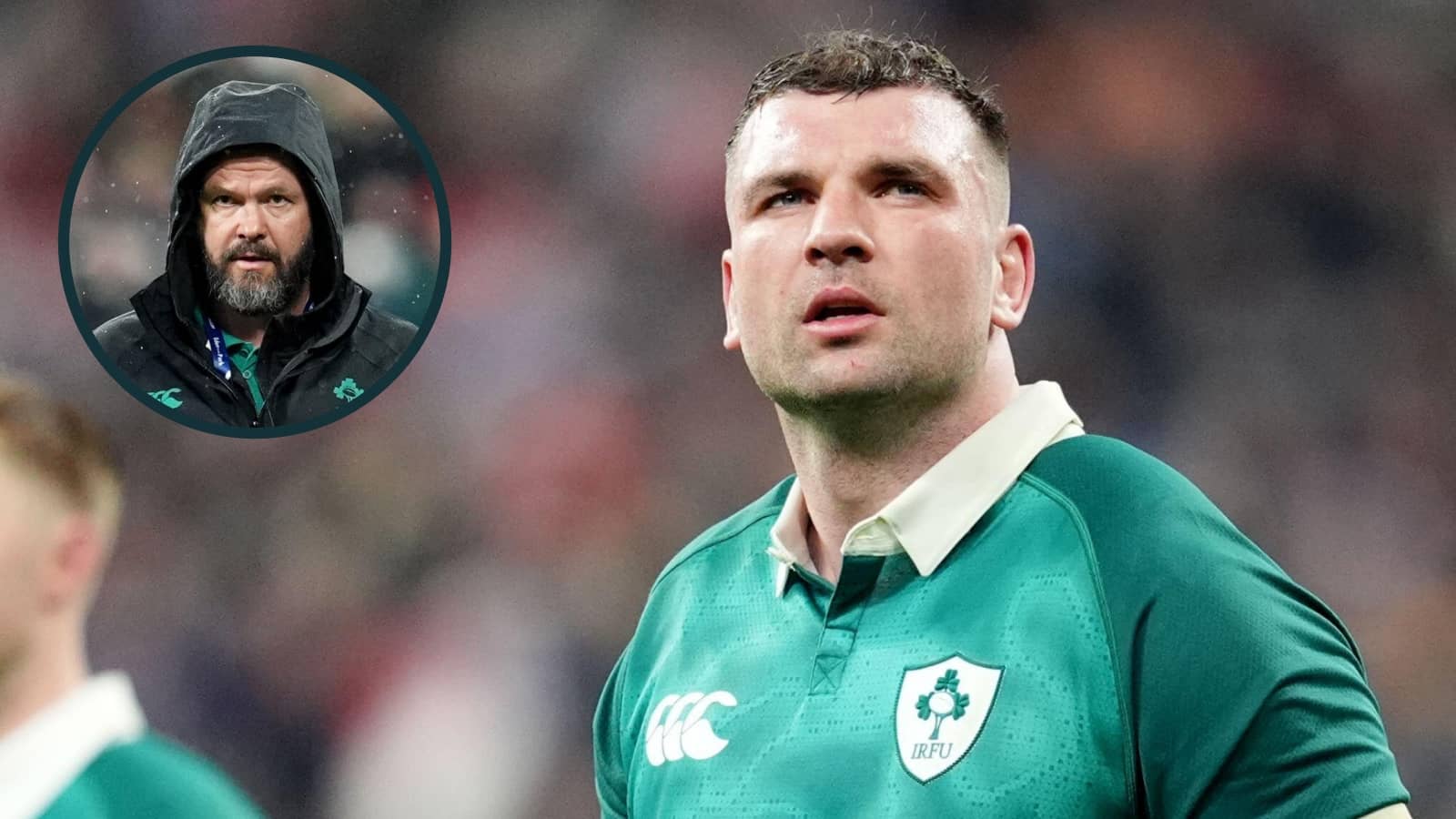
Andy Farrell, Ireland’s shellshocked head coach, had just vacated the interview booth, leaving behind soundbites the like of which he rarely drops in a public place.
Ireland are vulnerable
Pitch side stood Brian O’Driscoll, if not Ireland’s greatest ever player certainly a strong contender for the title.
O’Driscoll was asked by ITV anchor Jill Douglas what he thought of Farrell’s scathing verdict that Ireland “lacked intent” and “reacting when it’s a little bit too late isn’t the way we want to do things”.
O’Driscoll, zipped up in a dark puffer jacket against the Parisian chill, took a deep breath.“What concerns me,” he said, “is that now there is a vulnerability to this team.
“Other sides will be looking at us and think, ‘Do you know what, this is nothing like the Irish team that was at the World Cup in Paris two years ago. This is a team very much in transition and there are scalps to be had.
“Italy will come to town next week and there will be other sides as well that will go, ‘Do you know what, we can actually beat this Irish team’, where I don’t know if that has truly been realistic in some cases in previous years.”
A year after conceding 34 unanswered points to France at the Aviva, Ireland shipped 29 without reply and, with almost an hour on the clock, had still to get off the mark.
For the first time since Twickenham in 2020 they failed to trouble the scorers before half-time and by the time the masterful Louis Bielle-Biarrey bagged his second France had a bonus point and were over the hill and far away.
In the first Thursday match in tournament history this was a horror show for the men in green, who would have fallen behind to France’s first attack inside two minutes had Charles Ollivon not knocked on with the line at his mercy.
Luckless
They did trail soon after, to Bielle-Biarrey’s first, and conceded a second on 22 minutes to the magician Matthieu Jalibert. When Ollivon righted his earlier wrong and made it three shortly past the half hour, it was hard to think of a single thing Ireland had done right.
“You make your own luck in this game,” said Farrell. “Without the ball, I thought we lost that [intensity] battle in the first half. The things like the high ball and winning the scraps on the floor, running through tackles or missing tackles – that’s the main part of our game.
“We certainly came off second best in that regard in the first half. Our response was gallant, but that’s not what we want to be, we don’t want to be a responding team. We needed to show it from the get-go.”
In the space of two games Ireland’s aura has evaporated. This time 12 months ago they were reigning Six Nations champions and ranked number two in the world.
They are a shell of that team: scrummaged into oblivion by South Africa on the final weekend of autumn, ripped apart by France on the opening evening of spring. They are lacking both in punch and pace.
To make things worse they knew exactly what was coming their way because Shaun Edwards all but drew them a diagram on the pitch beforehand, announcing they had two objectives for the evening: “ambition and excitement”.
How the champions met both of those, playing with the emotion Mako Vunipola had warned they would bring to this fixture when speaking to Planet Rugby earlier in the week.
The England and Lions great, who plies his trade in France with Vannes, had seen the reaction of the country to fellow prop Uini Atonio’s heart attack and immediate enforced retirement and warned the national team would step it up a level.
England could feast
Add into the mix this was Antoine Dupont’s first Six Nations start since rupturing his ACL against Ireland, last time the sides met in circumstances the French were none too happy about, and it was not hard to foresee the passion play which unfolded.
“We were pretty passive defensively, 19 missed tackles and a number of soak tackles as well that allowed them to flourish with their keeping the ball alive, attacking game,” Ireland captain Caelin Doris conceded.
“That first 30 minutes we couldn’t find our feet, we allowed them to get phases and score. It was the collisions that let us down.
“If you want to win a championship you need strong defence and we didn’t have that today. We have a lot of lessons to learn. We’re going to have to do a lot better at home next week.”
It is very early in the tournament to anoint any nation as champions-in-waiting. France certainly have match winners to fit the bill: Jalibert and Dupont at halfback, Nicolas Depoortere in midfield, Bielle-Biarrey out wide, Thomas Ramos at the back and the hugely impressive Mickael Guillard up front.
Yet woeful as Ireland were, they still drew the second half and had Ronan Kelleher not had a try chalked off for a knock-on, the visitors would have scored three in 14 minutes and put the fear of god into a home side which had knocked off early.
Want more from Planet Rugby? Add us as a preferred source on Google to your favourites list for world-class coverage you can trust.
It is hard to imagine England not feasting on complacency were it to be repeated on the final weekend. Or Scotland at Murrayfield in round four for that matter.
That is the beauty of the Six Nations. It is a tournament that can turn on the slightest of momentum swings.
Which is why Farrell returns home beaten but not broken and Fabien Galthie, chuffed though he will be feeling today, knows better than to start popping the Dom Pérignon just yet.