
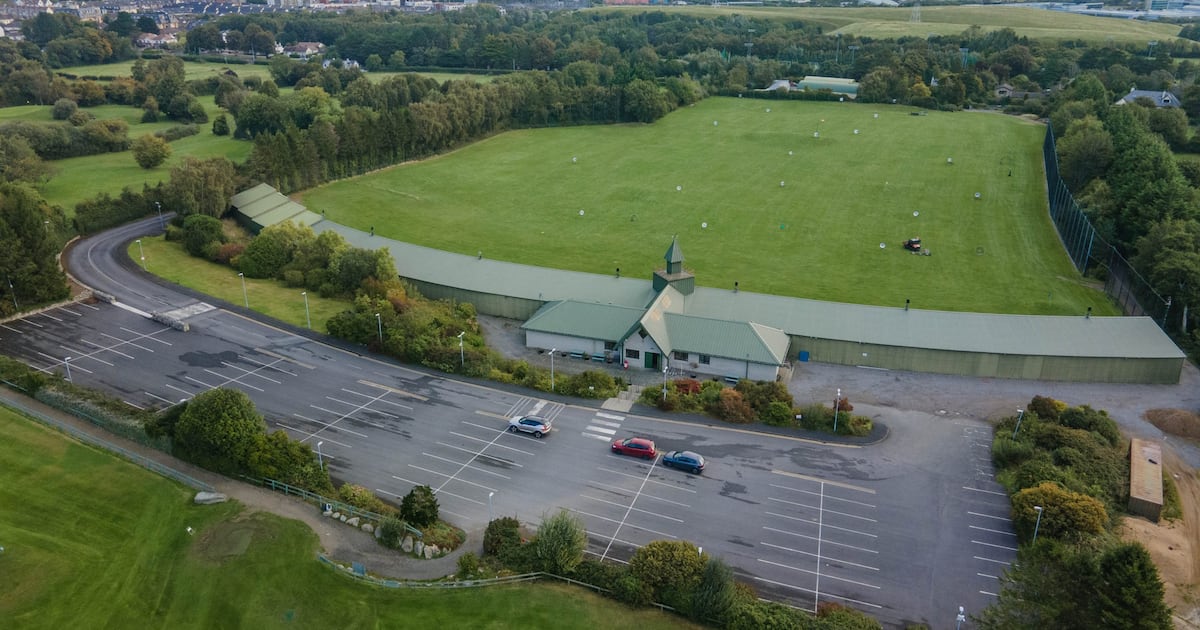
The owner of a south Dublin golf facility at the centre of a row over its future designation as a site for housing has “no intention” of redeveloping the lands and does not want them rezoned.
Dún Laoghaire-Rathdown County Council plans to redesignate lands at the Stepaside Golf Centre, currently zoned for agriculture and amenity use, to “long-term strategic and sustainable settlement” that “may deliver housing” in the years ahead.
The council’s plans have provoked fury locally with residents branding the proposals as “shameful” and an “outrage”. Other said they show an “abhorrent disregard” for local amenities and would “destroy the very fabric of the area”.
Proposed amendments to the county development plan, to increase housing capacity on sites across south Dublin, follow an edict last summer from Minister for Housing James Browne that local authorities must rezone significant additional land to help tackle the housing crisis.
More than 600 submissions have been made on the amendments to a number of locations, but about two-thirds are objections to potential future housing at the Stepaside golf facilities.
Generally, landowners petition local authorities to rezone their sites for housing if they are property developers seeking to build on lands they have bought speculatively, or if they are owners hoping to sell their land to a developer and want it rezoned to achieve an uplift in value.
 A man playing at Stepaside golf course. Photograph: Jamestown Par 3 Golf Course
However, Rosa Roe, the owner of Stepaside Golf Centre, a 40-bay driving range and 18-hole par three course, is opposing the rezoning of her lands, which she said would be “disastrous” for her family and the wider community.
“This was the family farm, my deceased husband’s grandfather came here to farm it many years ago and we had cows grazing here up until about 1997,” she said.
The size of the landholding and changes in agriculture meant it was no longer viable to keep farming the land, Roe added.
“We didn’t want to sell – we still don’t want to sell – and we wanted to keep it in the family so we started to develop it first for pitch and put and then for golf.”
The family has for 30 years worked hard to build the business, which employs a largely local workforce of up to 20 people, she said.
It is a popular local amenity and is used by schools such as Wesley College and Mount Anville and third-level institutions including UCD and Trinity College. It is also a “community hub”, she said, being used by car clubs.
“Our customers have been very supportive and that’s why we enjoy the work and we want to keep going.”
The lands were previously targeted for rezoning by the council, but the proposal was narrowly defeated in a vote of county councillors.
“People do say to me why don’t you sell up, take the money, but I don’t really like the thought of that,” Roe said. “I’ve seen people get what seems like huge amounts of money before for land, and it just ends up dwindling away.
“In the decisions I make, I try to think about what my husband would have wanted. I know he would have wanted us to hold on to it. We make a reasonable living out of it and I want to keep it for my son and daughter-in-law and my two grandchildren.”
Any future housing development on the land would require it to be rezoned. However, even if it was rezoned, Roe would not be forced to sell the land or develop it for housing and would have the right to retain it for recreational use.
“I don’t think they’d be able to make us sell up, but I don’t know for sure, and none of us know what they might decide about it in the future. I hope they wouldn’t, I just don’t want to have to worry about it.”
Submissions on the proposed changes to the development plan will be considered by the council’s executive, after which councillors will vote on whether to implement them.