
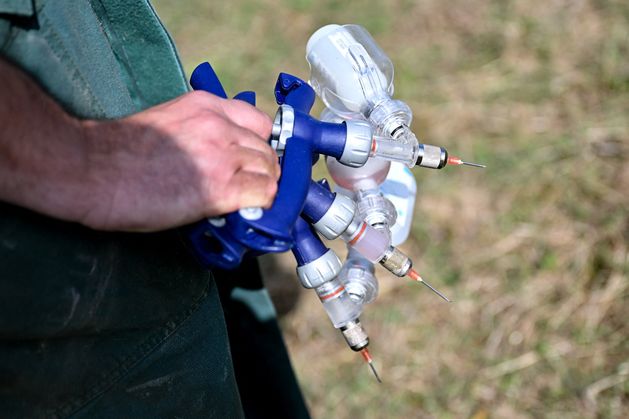
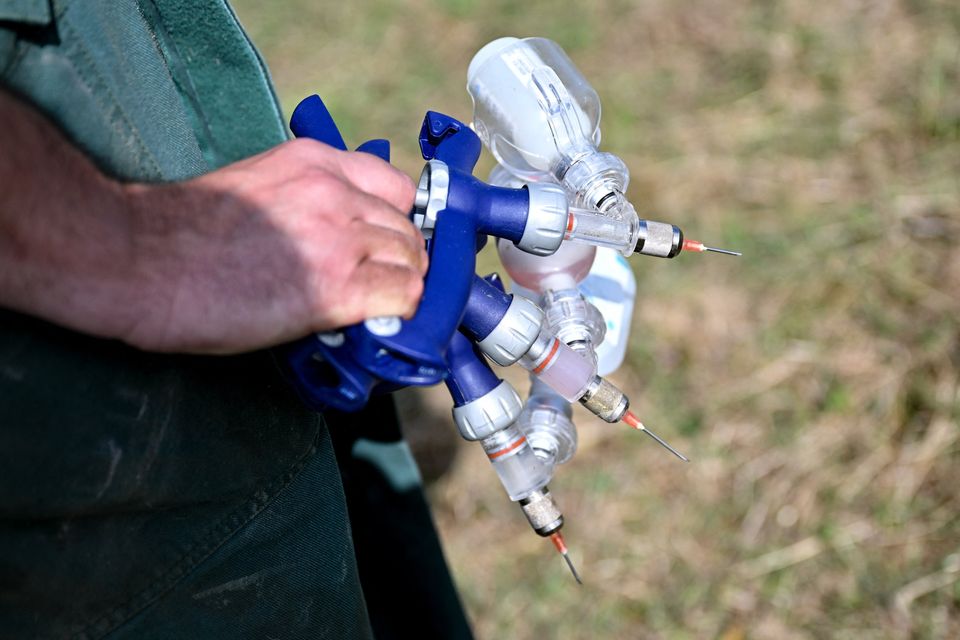
This photograph shows vaccines after a vaccination campaign on cows in France. (Photo by LOU BENOIST/AFP via Getty Images)
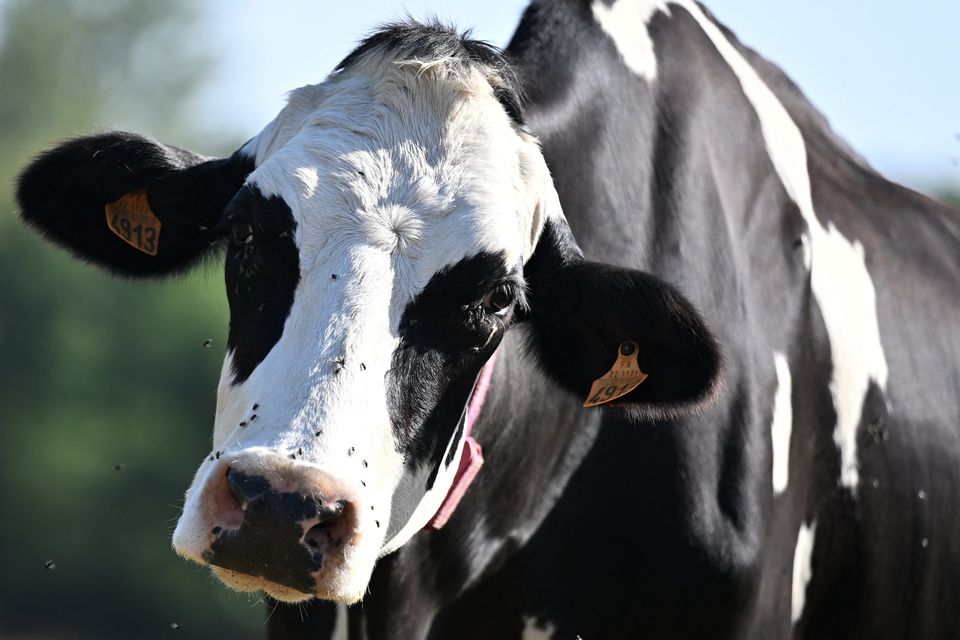
A confirmed case of bluetongue in Co Wexford has ended Ireland’s disease‑free status and sparked fresh concerns for the livestock sector. This photograph shows a Holstein cow during a vaccination campaign against bluetongue disease, in the region of Brittany in France. (Photo by LOU BENOIST/AFP via Getty Images


Nearly two weeks on from the first case of bluetongue disease being identified on a farm in Co Wexford, and then in subsequent herds on other farms, the Irish Farmer’s Association chair of animal health has said it is “reasonable to expect that more cases will be detected in the days and weeks ahead” as surveillance is carried out.
Speaking from his own farm, David Hall revealed “the disease is spread by a midge and can only spread when temperatures are above 12 to 15 degrees, so there’s a low risk of onward spread at this time of year.”
There are currently no restrictions on the movement of cattle or sheep within the country except from farms who have a positive animal or are currently under surveillance.
There are no live export restrictions to our largest live export markets in Europe. The Netherlands, France and Spain have not implemented any restrictions, and trade can continue as normal. However other markets have implemented some additional regulations.
A week ago, China suspended imports of beef from the Republic of Ireland, just two weeks after the market was reopened.
Mr Hall advised farmers to discuss with their vet “whether or not your farm needs to consider vaccination.”
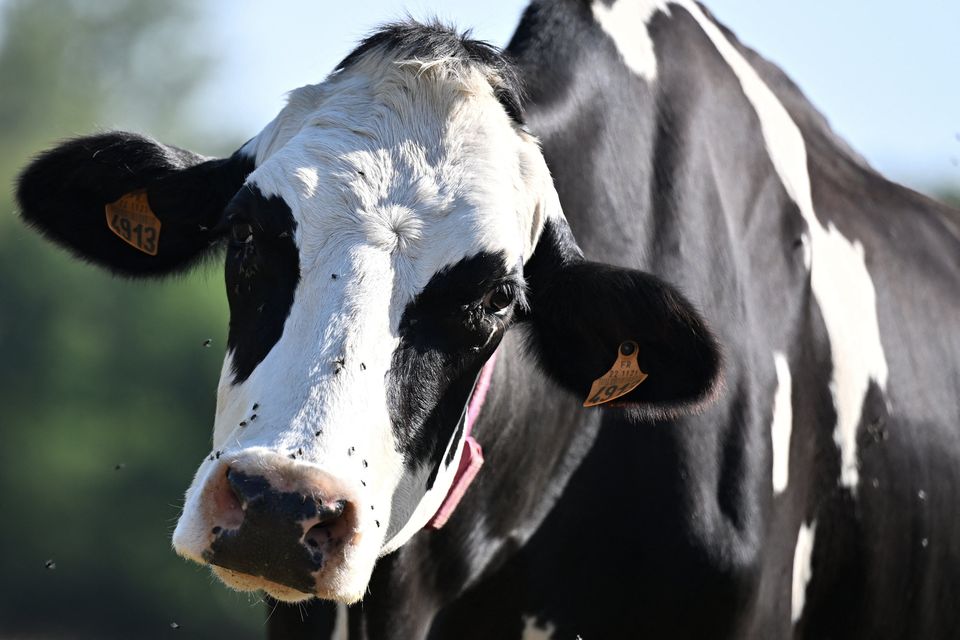
A confirmed case of bluetongue in Co Wexford has ended Ireland’s disease‑free status and sparked fresh concerns for the livestock sector. (Photo by LOU BENOIST/AFP via Getty Images
The use of bluetongue vaccination against bluetongue serotype-3 (BTV-3) was recently permitted in cattle and sheep in Ireland in 2026.
Farmers can consider the option to vaccinate against bluetongue serotype-3 in Spring 2026 to protect livestock in advance of any midge-borne virus spread in the warmer summer and autumn months.
Ireland had remained free of bluetongue until late last year when cases were detected in Northern Ireland. The virus has been in ongoing circulation throughout Europe. In recent years, however, BTV 3 has spread rapidly.
It was detected in the Netherlands, Belgium, Germany and Great Britain from autumn 2023 and has successfully overwintered in several countries. By 2024 it had also been confirmed in France, Luxembourg and Denmark. Other serotypes continue to circulate in southern Europe.