
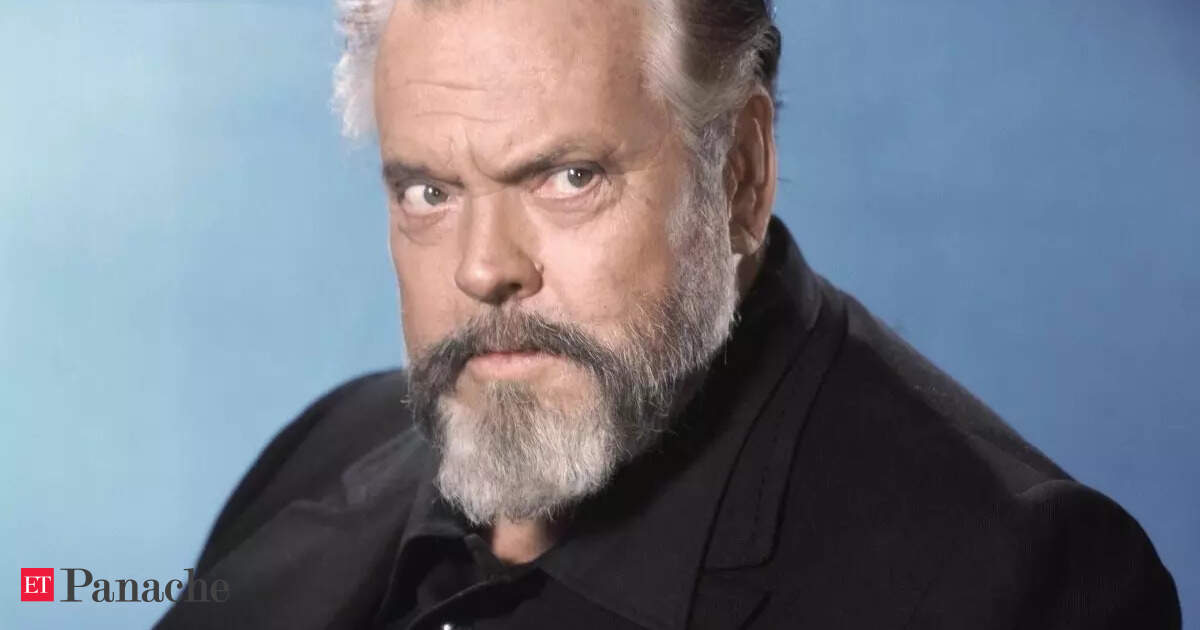
Loneliness is a condition humanity encounters repeatedly, woven into the very fabric of existence. Few creative minds have articulated this reality as thoughtfully as legendary actor and director Orson Welles, who reflected deeply on the solitude that shadows human life. He once observed, “We’re born alone, we live alone, we die alone. Only through our love and friendship can we create the illusion for the moment that we’re not alone.” That stark yet tender insight mirrors both the depth of his philosophy and the emotional complexity that defined his artistic legacy.
Celebrated for groundbreaking contributions across cinema, radio, and theatre, Welles remains one of the most towering and influential figures in the history of visual storytelling. His work consistently challenged conventions, reshaped narrative structures, and expanded the boundaries of performance and direction, earning him a place among the greatest filmmakers of all time.
Remarkably, Welles achieved prominence at an age when most artists are still finding their voice. At just 21, he was entrusted with directing major theatrical productions for the Federal Theatre Project in New York City. His 1936 reinterpretation of Macbeth, staged with an all–African American cast, drew widespread attention for its bold vision. This was followed by the politically charged musical The Cradle Will Rock in 1937, a production that further cemented his reputation as a fearless and innovative director. Alongside producer John Houseman, Welles co-founded the Mercury Theatre, an independent repertory company that brought ambitious and socially conscious productions to Broadway, including a modernized, politically resonant Julius Caesar in 1937.
Welles’ fame soon crossed mediums. In 1938, his radio program The Mercury Theatre on the Air became the platform for his most notorious broadcast—an adaptation of H. G. Wells’s The War of the Worlds. Presented as a series of simulated news bulletins, the program led some listeners to believe an actual alien invasion was underway. The broadcast propelled the 23-year-old into international notoriety overnight.
His cinematic debut, Citizen Kane in 1941, marked a seismic shift in filmmaking. Serving as co-writer, producer, director, and lead actor, Welles crafted a film that would go on to be consistently hailed as one of the greatest ever made. Over the years, he directed a dozen additional feature films, including widely acclaimed works such as The Magnificent Ambersons, Othello, Touch of Evil, The Trial, and Chimes at Midnight. His signature style embraced nonlinear storytelling, dramatic lighting, unconventional camera perspectives, deep-focus compositions, extended takes, and sound techniques influenced by his radio background.
Despite his genius, Welles often clashed with studio systems over creative freedom. As a result, he increasingly worked independently, frequently struggling to secure funding. Alongside directing, he maintained a prolific acting career, delivering memorable performances in films like Jane Eyre, The Third Man, and A Man for All Seasons.
Widely praised as the ultimate auteur, Welles amassed numerous honors, including an Academy Award, multiple Grammy Awards, and some of cinema’s highest distinctions. He was later voted the greatest film director ever in British Film Institute polls and continues to be recognized as one of Hollywood’s most enduring and formidable talents.
Add  as a Reliable and Trusted News Source