
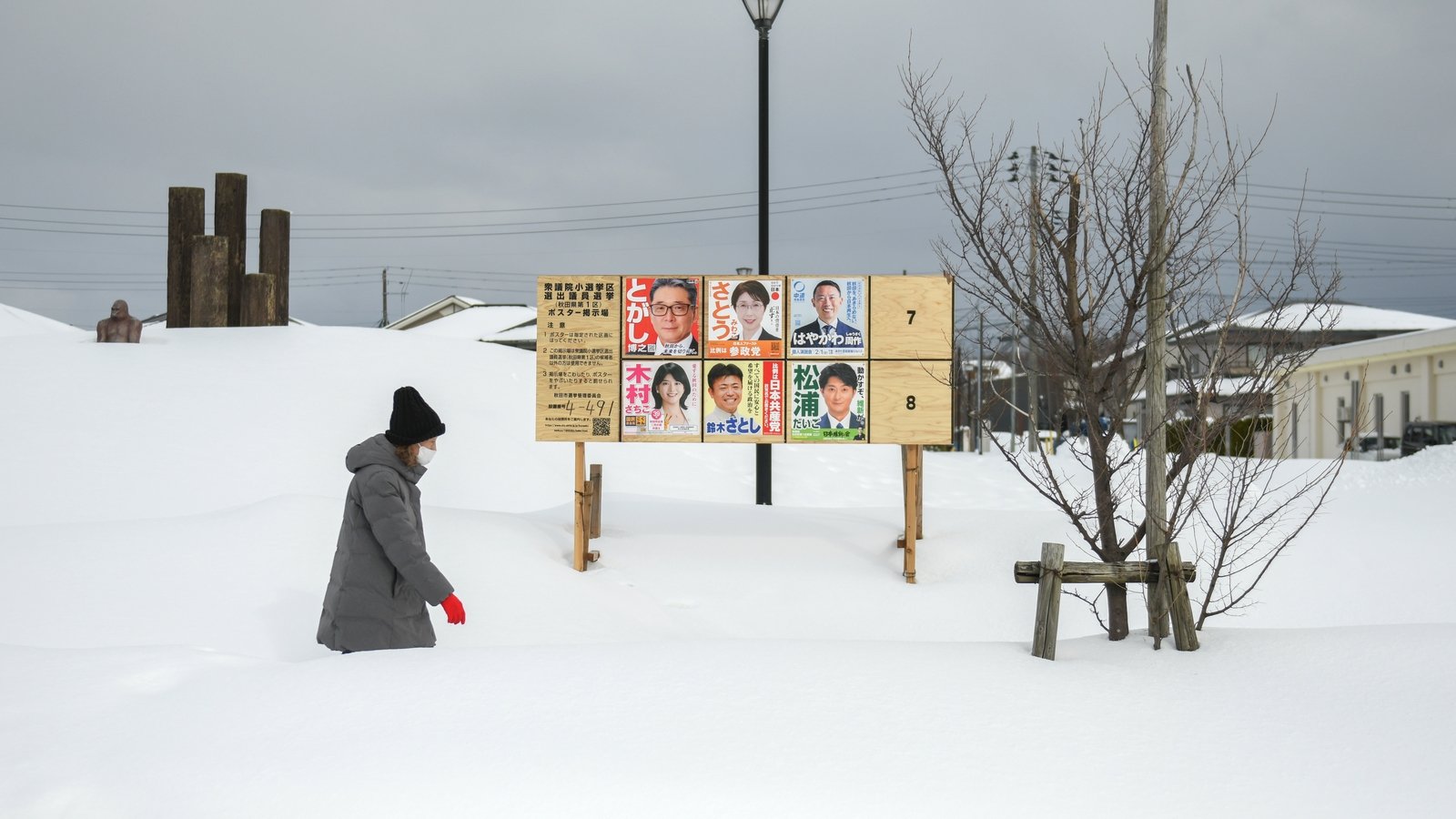
Japanese voters are casting their ballots in an election predicted to hand Prime Minister Sanae Takaichi a win, but record snow in some parts of the country snarled traffic and could dent turnout.
Multiple opinion polls suggest the conservative coalition of Ms Takaichi, the nation’s first woman leader, is on track to win around 300 of the 465 seats in the lower house of parliament, a large gain from the 233 it is defending.
Outside a polling station in a small town in the central prefecture of Niigata, where snow piled up more than 2m in places, teacher Kazushige Cho, 54, said he was determined to vote for Ms Takaichi’s Liberal Democratic Party despite the conditions.
“She’s shown strong leadership and pushes various policies forward,” he said, adding: “I think things could turn out quite well”.
Ms Takaichi, 64, who became prime minister in October after being selected LDP leader, called the rare winter election to try to ride a wave of personal popularity.
With a straight-talking style and an image as a hard worker that have won her support, Ms Takaichi has accelerated military spending to counter China, angering Beijing, and pushed for a sales tax cut that has rattled financial markets.
“If Takaichi wins big, she will have more political room to follow through on key commitments, including on consumption tax cuts,” said Seiji Inada, managing director at FGS Global, a consultancy.
“Markets could react in the following days and they could come under renewed pressure,” he added.
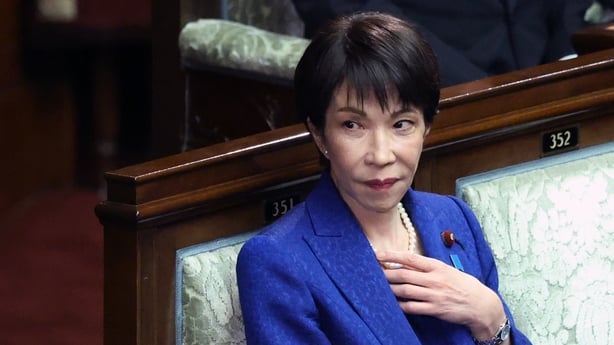
Sanae Takaichi received the endorsement of US President Donald Trump
Her promise to suspend the 8% sales tax on food for two years to help households cope with rising prices has spooked investors concerned about how the nation – with the heaviest debt burden among advanced economies – will fund the plan.
Niigata resident Mineko Mori, 74, walking through the snow with her dog, said she worried that Ms Takaichi’s tax cuts could saddle future generations with an even bigger burden.
Ms Mori planned to vote for Sanseito, a small far right party that broke through in a 2025 upper house ballot with promises to control immigration among other measures.
But younger voters are among the most supportive of Ms Takaichi, with a recent poll finding more than 90% of those under 30 favoured her.
The prime minister has sparked an unlikely youth-led movement called “sanakatsu”, roughly translated as “Sanae-mania”.
Products that she uses, such as her handbag and pink pen, are in high demand.
That young cohort, however, is less likely to vote than the older generations that have long been the bedrock of LDP support.
On Thursday, Ms Takaichi received the endorsement of US President Donald Trump, a signal that may appeal to right-leaning voters.
If the coalition of Ms Takaichi’s LDP with the Japan Innovation Party, known as Ishin, wins a super majority of 310 seats, she could override the upper chamber, where the coalition does not have a majority.
If the polls have it all wrong and Ms Takaichi loses control of the lower house, she has vowed to step down.
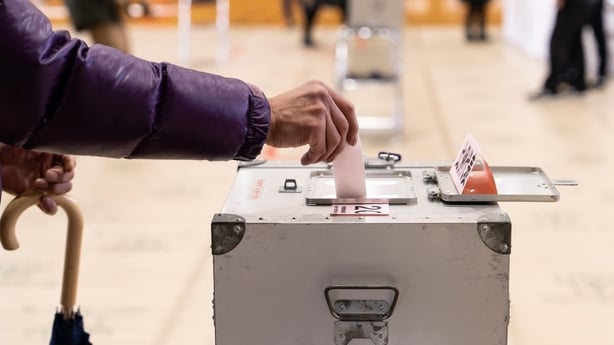
Turnout in recent lower house elections has hovered around the mid-50% range
With up to 70cm of snow forecast in northern regions, some voters will battle blizzard conditions to cast their ballot.
It is only the third post-war election held in February, with elections typically called during milder months.
Even the capital Tokyo was given a rare covering of snow, causing some minor traffic disruptions.
Nationwide, 37 train lines and 58 ferry routes were halted and 54 flights cancelled as of this morning, according to thetransport ministry.
Turnout in recent lower house elections has hovered around the mid-50% range.
Any slump could amplify the influence of organised voting blocs.
One of those is Komeito, which last year quit its coalition with the LDP and has merged into a centrist group with the main opposition Constitutional Democratic Party of Japan.
Komeito has close ties to the lay-Buddhist Soka Gakkai group, which claims at least 8 million members nationwide.
Voters will pick politicans in 289 single-seat constituencies, with the rest decided by proportional-representation votes for parties.
Polls close at 8pm (11am Irish time), when broadcasters are expected to issue projections based on their exit polls.