
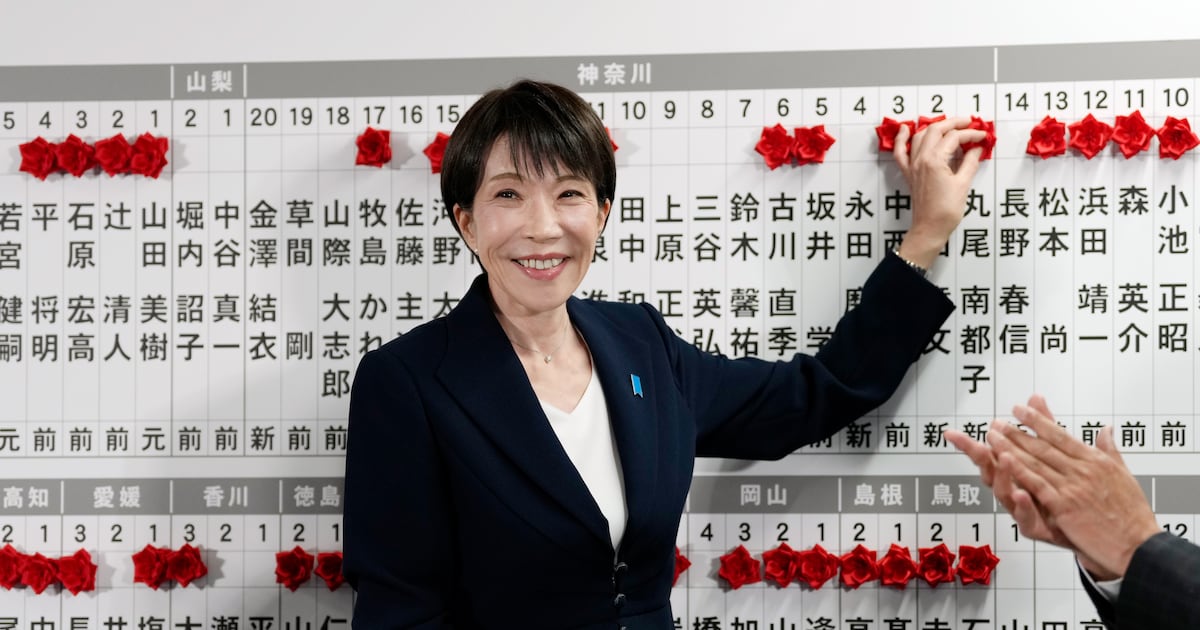
Like her idol Margaret Thatcher, Sanae Takaichi (64) wields a sturdy dark handbag in and out of official meetings. While Thatcher’s famous sidearm was a symbol of her forceful political style, the Japanese prime minister’s designer accessory has become shorthand for her startling popularity.
Soaring demand for Takaichi’s €735 leather handbag has forced Hamano, the venerable Tokyo company that makes them, to put customers on a nine-month waiting list. A poll by the rightwing Sankei Shimbun newspaper claims support for Takaichi among the under-30s at an unheard of 92 per cent.
Online devotees of the ultraconservative leader have coined the phrase sanakatsu, a mash-up of her first name and oshikatsu, a word derived from fan culture meaning devotion to an idol. Some have praised Takaichi’s ability to energise the politically listless young with this wide but shallow brand of image-driven politics, but her predecessor, Shigeru Ishiba, is not among them. Last week he grumbled that the election campaign, the shortest in Japan’s postwar history, had been “nothing but social media and slogans,” that treated voters like “idiots”.
Yet, Takaichi’s decision to roll the dice on her personal appeal with a snap winter election appears to have paid off. With results still coming in, her Liberal Democratic Party (LDP) was on course to win at least 274 of the 465 seats in the lower house, up from 198. Public broadcaster NHK predicted the coalition government could go from a wafer-thin hold on the chamber to a supermajority. Many of these gains came at the expense of the main opposition Central Reform Alliance, a hastily cobbled together coalition of centrist parties.
If confirmed, the result means that the LDP, despite being deeply unpopular with voters after a string of scandals, is again a dominant force in Japanese politics, largely thanks to the star power of the party’s straight-talking leader. A prime minister many thought likely to quickly join the long line of short-lived Japanese leaders now has a shot at being one of its more consequential.
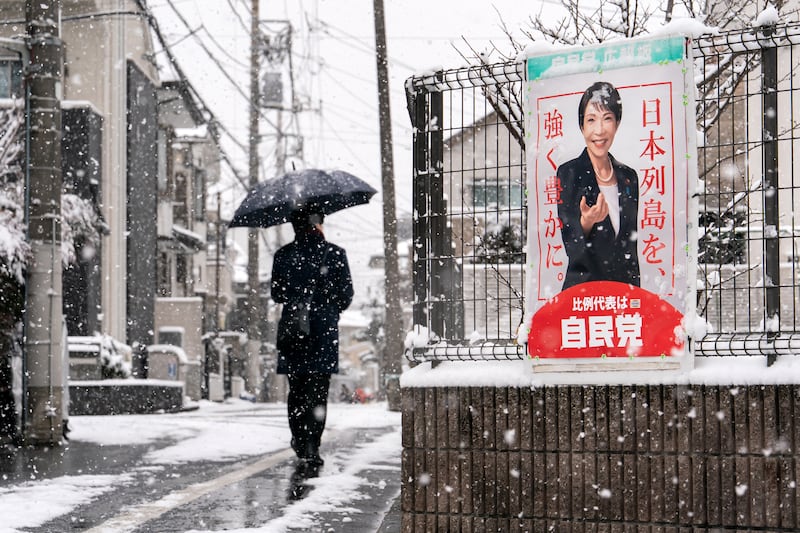 The mid-winter election campaign was the shortest in Japan’s post-war era. Photograph: Tomohiro Ohsumi/Getty Images
The thumping win insulates Takaichi from pressure to compromise on two key issues: government spending and defence. Despite pressure from fiscal conservatives, she has pushed to cut food prices by suspending an 8 per cent consumption tax. The proposed tax cut by the leader of the most indebted country in the developed world rattled markets last month and her plans will be closely monitored in coming weeks.
Sunday’s result is also likely to embolden Takaichi’s hawkish instincts. The prime minister has already said she will accelerate annual military spending to 2 per cent of gross domestic product, two years ahead of schedule. She may now push for more: US president Donald Trump, who endorsed her candidacy a few days before polls opened, has urged Japan and other allies to hike spending to 5 per cent, in line with the US national defence strategy. Takaichi is due to meet Trump in March.
[ Japan’s new prime minister is surfing a wave of popularity – can it last?Opens in new window ]
Takaichi has ignited a major diplomatic row by suggesting that Japan would intervene militarily if China invaded Taiwan. As she kicked off her campaign last month, Beijing’s spokesperson Guo Jiakun said Takaichi’s threats and Japan’s “remilitarisation” had severely threatened the “political foundation of China-Japan relations.” Her supporters will now expect her to stand up to what they see as Beijing’s bullying.
Takaichi’s allies also hope her win will inject some life back into the movement to rewrite Japan’s pacifist constitution. Revising article nine, which bans Japan from maintaining a conventional army, has been the holy grail of LDP politics since the party’s foundation in 1955. A parliamentary supermajority, meaning two thirds of lawmakers in both chambers, is needed before an amendment can be put to a public referendum.
Whatever happens, Takaichi has managed to wash the record of a party steeped in scandal and put it and her back in the driving seat.