
We are, for the foreseeable future, stuck with right and left yelling about racially controversial casting on TV and in films. The “perfect harmony” promised by that famous Coke commercial from 1971 will not be with us anytime soon. When a person of colour is cast in a role normally allotted to a white person, the same 5,000 wiseacres will continue to make the same stale gag in the comments. “But ok if Sydney sweeney is cast as martin luther king I suppose hahaha,” Norman Nobrain notes.
It does, however, seem as if the conversation has got louder over the past few months. Depending on who you believe, this indicates either that “woke is doomed” (because of all the supposed grassroots objections) or that “diversity has triumphed” (because there is so much to object about).
Where to begin? There was the recent report, commissioned by the BBC, arguing that significant numbers of its audience were wearying of “clunky” efforts to superimpose diversity on subject matter. Mention was made of anticolonial messages being worked into Agatha Christie adaptations. The report acknowledged complaints about a mixed-race actor playing Isaac Newton in Doctor Who.
Read a little deeper and the objections seem less overwhelming than headlines initially suggested. “A third of those polled said the BBC tries too hard to represent different groups, slightly outweighed by those who think it is doing a good job,” The Times reported. So let us just say the audience seems divided on the topic.
We are also in the middle of an absurdly knotty debate about whether it is appropriate for Jacob Elordi, an Australian of Basque descent, to play Heathcliff in Emerald Fennell’s upcoming, unavoidable “Wuthering Heights”. As recently as 15 years ago this would barely have been an issue, but many now believe that character is implicitly – or even explicitly – identified as a person of colour in Emily Brontë’s source novel.
Then there is the contrary case of Odessa A’zion. The breakthrough star of Marty Supreme recently announced she was withdrawing from the role of Zoe Gutierrez, a Mexican, in Sean Durkin’s take on Holly Brickley’s novel Deep Cuts.
A’zion, the daughter of the Jewish actor Pamela Adlon, responded promptly when Latino activists objected to the news of her casting. “I am with all of you and I am not doing this movie,” she wrote on Instagram. “I hadn’t read the book and should have paid more attention to all aspects of Zoe.”
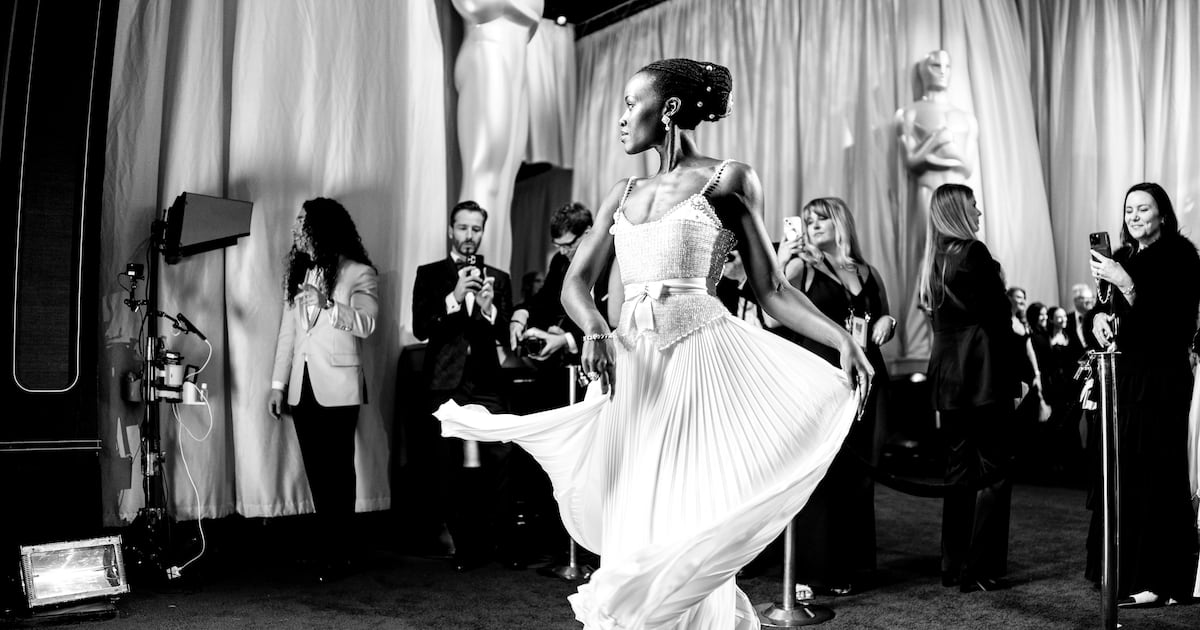
Simultaneously, we have endured bizarre fury at the rumour – just a rumour, mind – that Lupita Nyong’o, the Oscar-winning star of Kenyan descent, is to play Helen of Troy in Christopher Nolan’s upcoming The Odyssey.
After a few days of ahistorical online blather, no less a figure than Elon Musk put in his oar. “Chris Nolan has lost his integrity,” he wrote in reply to an X post saying any such casting would be an “insult to the author”.
Once again, at time of writing, it hasn’t even been confirmed that Nyong’o is playing the daughter of the thunder-dispensing god Zeus and the top swan impersonator Leda of Aetolia.
I have hailed the recent, dramatic shift towards greater diversity in casting. As a committed Dickensian, I was happy to see Armando Iannucci’s The Personal History of David Copperfield, which employed colour-blind casting throughout, anointed The Irish Times’ favourite film of 2020. Count me among the woke.
Too many spurious comparisons miss that the racially flexible approach works differently in different contexts. It is one thing to cast an actor with an Indian father as Isaac Newton in a fantasy such as Doctor Who. It would be altogether another to cast a white person as Martin Luther King in a historical drama where his race is of thematic significance.
A’zion’s choice acknowledges that, for all the new flexibility, Latino actors too rarely get to play roles specifically defined as such. One can understand how they – and other performers of colour – remain protective of characters who share their backgrounds. It is not as if white roles are hard to come by in the western entertainment industry.
At the same time, acting is about becoming someone and something else. Nobody wants casting directors to be administering DNA tests to establish the genetic suitability of any auditioning actor. The freedom delivered by “colour conscious” projects (to use the producers’ preferred phrase) such as Bridgerton should ultimately open doors for actors of all races.
There remains some way to go. The current disputatious fug confirms that, following a cultural shift, we are still waiting for the subsequent emotional turbulence to die down. Orson Welles cast Eartha Kitt as Helen of Troy more than 75 years ago. The world can stand Nyong’o following in those distinguished footsteps – if, indeed, that is what is actually happening.